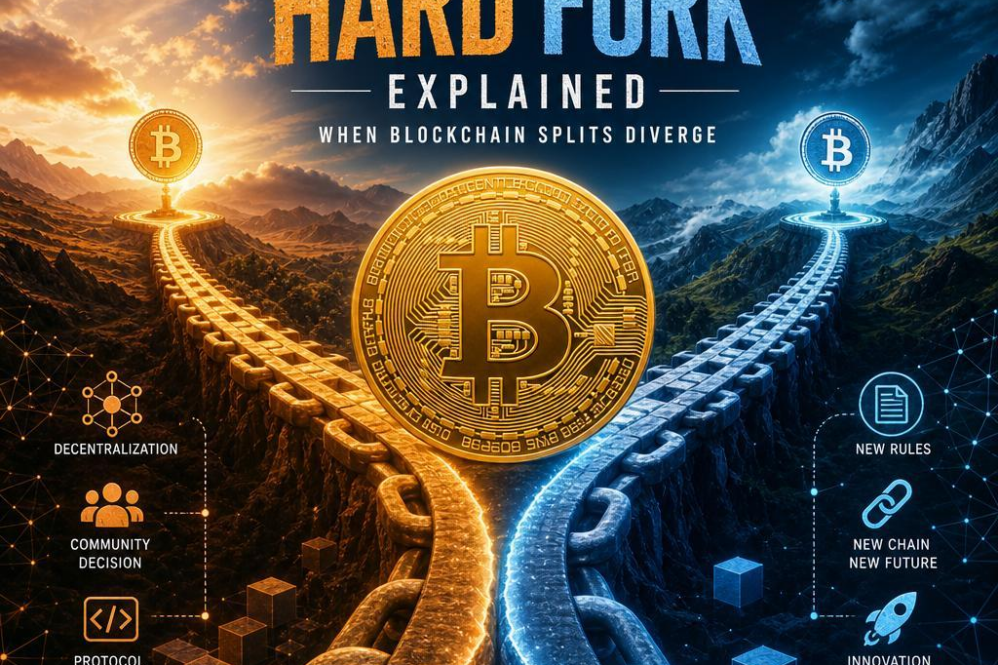
bitcoin Hard Fork Fundamentals and Their Impact on Cryptocurrency Networks
At its core, a hard fork occurs when a blockchain community implements a change to the protocol rules that is not backward compatible, resulting in a split. This divergence creates two separate networks-one following the original rules and another adopting the new protocol. The critical aspect of a hard fork is that nodes running the old software reject blocks created by upgraded nodes, leading to incompatible chains that can coexist but do not communicate. This mechanism fundamentally allows for innovation and flexibility within blockchain ecosystems but also introduces risks and complexities.
The impact of such splits ripples through the entire cryptocurrency landscape. Users and miners must choose which chain to support, which often hinges on ideological, technical, or economic preferences.This decision process can lead to uncertainty, temporary network instabilityand fragmentation of community resources. Additionally, exchanges and wallets face operational challenges in managing distinct assets born from the fork. Despite these hurdles, hard forks also present opportunities for experimentation, enabling features such as increased transaction throughput, improved security measuresor governance changes without disrupting the original chain.
Key consequences and considerations in a bitcoin hard fork include:
- Duplicate Coins: Users holding bitcoin before the fork often receive equivalent balances on both chains, effectively doubling their tokens temporarily.
- Network Security: Splitting miners between two chains can weaken overall security and increase vulnerability to attacks on one or both chains.
- Community Division: Ideological splits may lead to long-term fragmentation, impacting developer collaboration and ecosystem cohesion.
| Aspect | Impact | Example |
|---|---|---|
| Protocol Changes | Introduce new rules breaking backward compatibility | Block size limit increase |
| Coin Distribution | Creation of new tokens on both chains | bitcoin Cash split from bitcoin |
| Community Reaction | Potential division or unity depending on shared vision | Debate over scalability vs decentralization |
Analyzing Major bitcoin Hard Forks and Their Consequences for Investors
When bitcoin undergoes a hard fork, the blockchain diverges into two distinct paths, often resulting from disagreements within the community on protocol upgrades or transaction processing.These splits create a parallel chain, preserving the original history while introducing new rules. Key examples such as bitcoin Cash and bitcoin SV exemplify how ideological differences about scaling and governance can lead to essential changes in the network’s operation, each designed to address scalability, transaction feesor decentralization in unique ways.
For investors, these forks represent both opportunity and risk. On one hand, holders of bitcoin on the original chain receive an equivalent amount of tokens on the new chain, effectively doubling their assets. Yet, this windfall can be tempered by market volatility and liquidity challenges. Investors must also grapple with determining which fork will maintain community support and infrastructure development, as this directly influences long-term value retention.The fragmentation also complicates asset management, requiring careful security measures to safeguard multiple wallets and private keys.
Below is a concise overview of major bitcoin hard forks with their core distinctions and direct impacts on investors, showcasing the evolving landscape of bitcoin’s lineage:
| Fork | Primary Change | Investor Impact |
|---|---|---|
| bitcoin Cash (BCH) | Increased block size to 8MB | Received BCH tokens; increased portfolio diversification |
| bitcoin SV (BSV) | Restored original bitcoin protocol with 128MB blocks | Split community sentiment; price unpredictability |
| bitcoin Gold (BTG) | Changed mining algorithm to resist ASIC dominance | Opportunity for smaller miners; additional token holdings |
Technical Mechanisms Behind Blockchain Splits and ensuring Network Security
At the core of blockchain splits, commonly known as hard forks, lies a complex interplay of consensus rules and protocol upgrades. When a segment of the network opts to implement changes that are not backward-compatible, the blockchain effectively bifurcates into two separate chains. Each chain independently validates transactions based on its own set of rules. This divergence enables communities to innovate or resolve disagreements over upgrade paths without compromising the original blockchain’s operation.
To preserve the security and integrity of each resulting blockchain, rigorous technical mechanisms come into play. Nodes on the new chain must enforce the updated protocol by validating blocks with the new rule set, while miners signal support for these changes through block creation. Simultaneously occurring, the original chain continues to function under the previous consensus model. This dual-chain existence ensures that any transaction history before the split is preserved, while new transactions reflect the preferences of each community’s network participants.
| Technical Aspect | Role in Blockchain Split | Impact on Network security |
|---|---|---|
| Consensus Rules | Defines valid transactions and blocks | Ensures block validity and prevents double-spending |
| Node Validation | Enforces protocol upgrades at software level | Maintains chain integrity post-fork |
| Miner Support | Signals and secures network through hash power | Protects against attacks like 51% takeover |
Security considerations extend to network partitioning, replay attacksand maintaining economic incentives. Developers implement replay protection to prevent transactions from being valid on both chains simultaneously, which could otherwise cause accidental double-spending. Moreover, each chain fosters its own ecosystem of miners, exchangesand users, which bolsters resilience through decentralization. The intricate balance of technical safeguards and community consensus ensures that even with splits, blockchain networks continue to operate securely and transparently.
Strategic Recommendations for Navigating bitcoin Hard Fork Events Successfully
Effectively managing the challenges posed by bitcoin hard forks requires a well-informed strategy grounded in risk mitigation and proactive interaction. Investors and traders should prioritize secure storage of their assets during the period surrounding a hard fork. This includes using wallets that fully support segmentation and provide robust backup options, ensuring access to both coins in the event of a split. Consulting official announcements from core development teams and reputable sources can prevent missteps caused by misinformation or scam attempts masquerading as fork news.
Another essential component is timing your transactions carefully. Since network instability and increased congestion often accompany a fork, delays or transaction failures can impact financial outcomes. Holding off on major trading or transfers until nodes and exchanges confirm network stability will reduce risk exposure. Setting alerts for critical update points-such as snapshot dates and chain split indicators-helps stakeholders prepare to act decisively when the fork’s outcome becomes clear.
For institutional players and miners, strategic computational and resource allocation directly influences profitability. Reviewing the fork’s proposed protocol changes and assessing potential shifts in mining difficulty or hash rate distribution allows for tactical realignment of mining equipment.Collaborative engagement with community governance forums also aids in anticipating network consensus trends, thereby guiding investment decisions. Below is a simplified overview of key actions to consider before, during, and after a hard fork:
| Phase | Recommended Action | Benefit |
|---|---|---|
| Before Fork | secure assets, verify wallet compatibility | Protects against loss and facilitates smooth fork access |
| During Fork | Pause large transactions, monitor official updates | Minimizes transaction failures and misinformation risks |
| After Fork | Rebalance holdings, participate in governance forums | Maximizes potential gains and ensures alignment with network direction |