What SegWit Means for bitcoin’s Transaction Efficiency
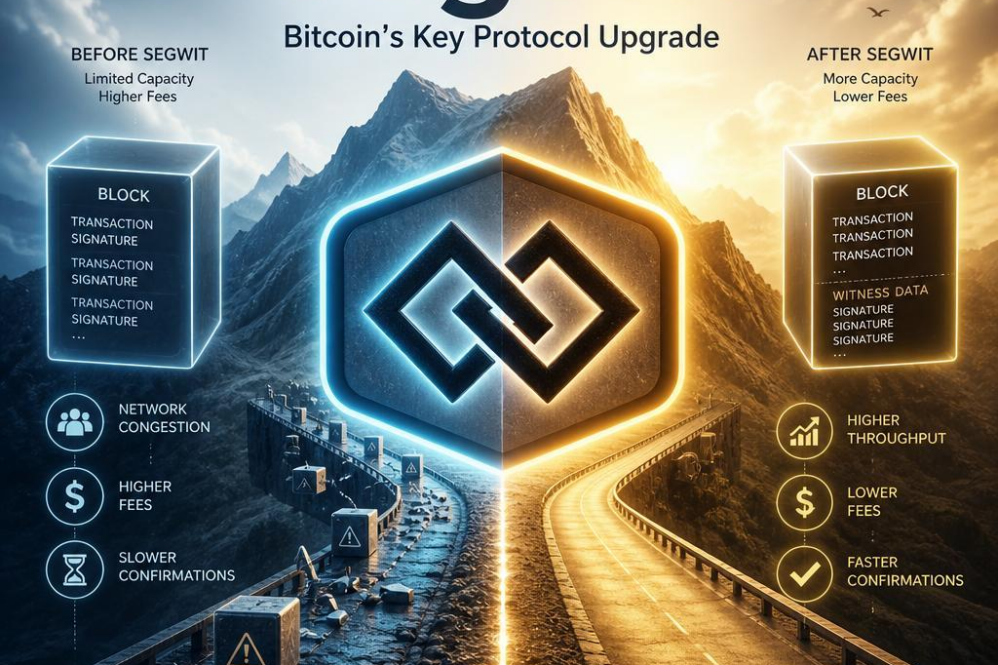
Segregated Witnessor SegWit, revolutionizes bitcoin transactions by restructuring how data is stored within each block. Rather than including the witness data directly in the transaction, it is separated-or “segregated”-from the transaction itself. This ingenious adjustment decreases the effective size of transactions, allowing more transactions to fit into a single block without increasing the actual block size limit. The result? A notable boost in transaction throughput and an alleviation of network congestion.
Key improvements brought by this protocol upgrade include:
- Increased block capacity: Even though the block size limit remains at 1 MB, SegWit’s restructuring enables blocks to hold up to roughly 4 MB of transaction data by counting witness data differently.
- Lower transaction fees: With more efficient use of block space, miners can include more transactions per block, reducing competition and thus fees.
- Enhanced transaction malleability fixes: By moving witness data outside the transaction hash, SegWit prevents certain types of transaction tampering that previously complicated off-chain scaling solutions.
| Metric | Pre-SegWit | Post-SegWit |
|---|---|---|
| Max Block Size (effective) | ~1 MB | ~4 MB |
| Avg Transactions per Block | 2,000 – 3,000 | 3,500 – 4,500 |
| Typical Transaction Fee | 50,000 sats | 30,000 sats |
Technical Mechanisms behind SegWit’s Protocol Changes
SegWit revolutionizes bitcoin’s transaction structure by separating the signature data, known as the witness, from the transaction’s core data.This separation not onyl optimizes block space but also mitigates transaction malleability – a vulnerability where transaction IDs could be altered before confirmation.By relocating witness data to a new structure appended to the original transaction, SegWit effectively increases the blockchain’s capacity without increasing block size limits.
At the core of the upgrade lies a clever adjustment to the transaction serialization format. SegWit transactions handle data in two parts: the original transaction data and the witness data. Miner nodes validate transactions by computing the transaction ID (txid) without the witness, while the network consensus rules verify the witness separately. This bipartite structure enhances security and paves the way for future scalability solutions such as the Lightning Network.
| Feature | Pre-SegWit | Post-SegWit |
|---|---|---|
| Transaction Malleability | Vulnerable | Mitigated by witness segregation |
| Block Capacity | 1 MB limit | Effectively up to ~4 MB (weight units) |
| Signature Storage | Part of transaction data | Stored outside main transaction data |
- New Transaction ID Calculation: Excludes witness data for stable txids
- Witness commitment: Includes a commitment in the coinbase transaction linking to the witness data
- Backward Compatibility: Fully compatible with legacy nodes via soft fork deployment
Impact of SegWit on bitcoin Scalability and Security
SegWit fundamentally transformed bitcoin’s network by addressing the scalability bottleneck that had long limited transaction throughput. By separating signature data (witness) from the transaction payload, SegWit effectively increased the block size limit without altering the actual block size parameter. This architectural shift allowed more transactions to fit within a single block, boosting transaction capacity by up to 70% and reducing congestion during peak network usage.
On the security front, SegWit introduced a pivotal fix to a long-standing vulnerability known as transaction malleability. Prior to SegWit, altering the signature data could change a transaction’s ID without invalidating the signature itself, complicating the development of second-layer solutions. With SegWit, since signatures are stored separately, tampering with them no longer impacts transaction IDs. This upgrade has enabled the safe deployment of sophisticated enhancements like the Lightning Network and atomic swaps, ushering in a new era of bitcoin usability.
| Aspect | Pre-SegWit | Post-SegWit |
|---|---|---|
| Block Capacity | ~1 MB | Up to 4 MB (weight units), effectively ~2-4 MB |
| Transaction Throughput | ~3-4 transactions/sec | ~5-7 transactions/sec |
| Transaction Malleability | Vulnerable | Resolved |
| Support for Layer 2 | Limited | Enabled (Lightning Network) |
- Increased block effectiveness by separating signature data.
- Resolved transaction malleability vulnerabilities for improved reliability.
- Facilitated development of scaling solutions that extend bitcoin’s capabilities beyond the base layer.
Best Practices for implementing SegWit in Wallets and Exchanges
When integrating SegWit support into wallets and exchanges, ensuring complete testing across diverse transaction scenarios is paramount. Developers should simulate various SegWit transaction types-such as native SegWit (bech32) addresses and wrapped SegWit (P2SH) addresses-to confirm seamless handling of each. This helps in mitigating compatibility issues with legacy systems while maximizing efficiency gains from reduced transaction sizes and lower fees.
A robust approach involves implementing layered validation processes. Start with protocol-level checks to verify transaction formats, followed by rigorous security audits focusing on signature verification improvements introduced by SegWit. Wallets and exchanges must also update their fee estimation algorithms to reflect SegWit’s impact on virtual transaction size, ensuring users receive accurate and competitive fee suggestions without overpaying.
| Best Practise | key benefit |
|---|---|
| Comprehensive Support for Address Types | Wider user compatibility and adoption |
| Enhanced Transaction Validation | Improved security and reliability |
| Dynamic fee Estimation Updates | Optimized fees and faster confirmations |
Maintaining continuous education and communication with users is also essential. Clearly informing wallet users and exchange clients about the benefits, possible issuesand instructions for using segwit addresses strengthens trust and increases adoption rates. Proper labeling in interfaces that distinguishes SegWit transactions can alleviate confusion and encourage widespread use of this critically important bitcoin protocol advancement.