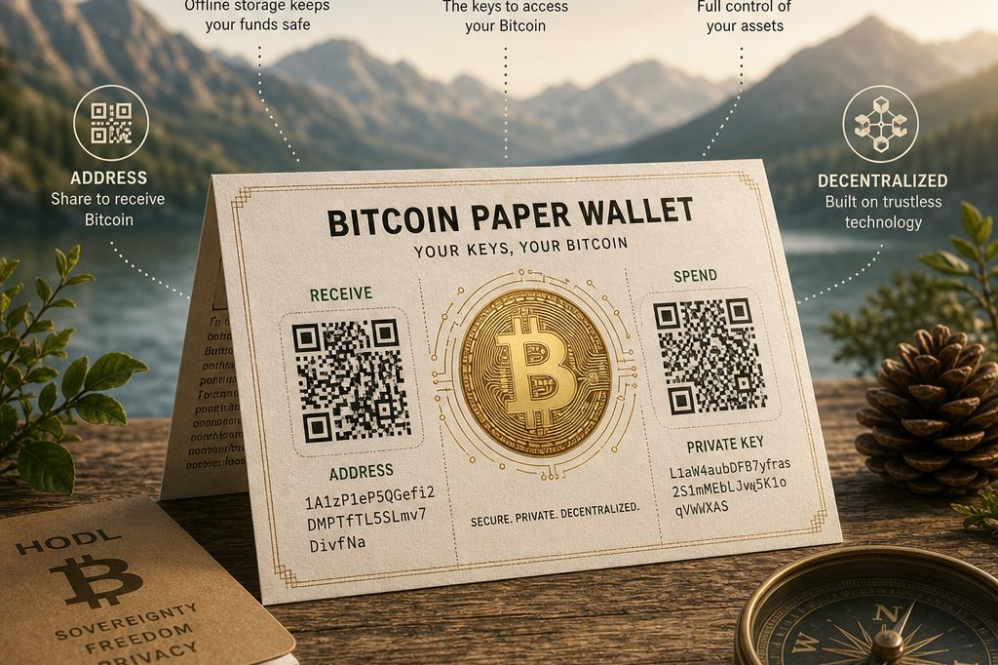
Understanding the Structure and Components of bitcoin Paper Wallets
At the heart of every paper wallet lies two fundamental components: the public address and the private key. The public address acts like an account number, allowing others to send bitcoin to the wallet safely without revealing sensitive details. This address is a string of alphanumeric characters displayed prominently on the paper wallet, frequently enough encoded as a QR code for swift scanning.The private key, conversely, is the critical secret that authorizes spending and transferring the bitcoin stored at the public address. It is imperative to keep the private key offline and secure, as anyone with access to this key effectively controls the funds.
The structure of a bitcoin paper wallet is intentionally straightforward to maximize security and ease of use. Typically, it consists of:
- Public Address: Visible and shareable with others for receiving payments.
- Private Key: Hidden or covered for protection, often printed in an encrypted or QR code format.
- Backup instructions or warnings: Reminders to safeguard the physical document from damage or theft.
Some advanced designs may include additional cryptographic hashes or validation marks, but the essence remains the separation between public visibility and private secrecy.
| Component | Description | Purpose |
|---|---|---|
| Public Address | Alphanumeric string/QR code | Receive bitcoin securely |
| Private Key | Alphanumeric string/QR code, secret | Authorize spending of funds |
| Security Notices | Printed text | Protect paper wallet integrity |
Securing Private Keys and Managing access Risks
When managing bitcoin paper wallets, it is paramount to ensure that private keys are guarded against any form of compromise. As the private key grants complete control over the corresponding bitcoins, any exposure-physical or digital-can lead to irreversible loss. Effective protection starts by storing the paper wallet in secure, dryand tamper-evident environments such as safes or safety deposit boxes. Avoid common pitfalls like photographs or digital scans of the keys, wich can be intercepted by malware or cloud vulnerabilities.
access risks don’t only stem from physical theft but also from social engineering and insider threats. Thus, adopting a multi-layered security approach is crucial. This often involves:
- Segmenting access: Limit who knows the wallet’s location and share access only on a strict need-to-know basis.
- Utilizing backup strategies: Secure secondary copies stored in geographically separate locations to mitigate risks of damage or loss.
- Employing passphrases: When supported, adding a passphrase to the seed or private key can provide an additional cryptographic barrier.
| Security Measure | Benefit |
|---|---|
| Physical Safes | Protects against theft and environmental damage |
| Geographic Backup | Reduces risk of complete loss from disasters |
| Encrypted Storage | Prevents digital interception or unauthorized digital access |
| Access Control Policies | Minimizes insider threat risks |
step-by-Step Guide to generating and Printing a Safe Paper Wallet
Creating a secure bitcoin paper wallet begins with generating a fresh bitcoin address paired with its private key. You can use a reputable offline tool or website that supports the generation of cryptographic key pairs without exposing your data online. Once the key pair is generated, never share your private key with anyone, as it grants full access to your funds. To ensure your wallet remains secure, it’s crucial to perform this step on an air-gapped computer or in a fully offline environment, minimizing the risk of hacking or malware interference.
After generating your keys, the next step is to print the paper wallet. Use a printer that is directly connected via USB, avoiding wireless or network printing options which could be intercepted. The printing medium should be high-quality, acid-free paper or a more durable material like waterproof synthetic paper to safeguard against physical damage. Test your printer beforehand to confirm the QR codes and text print clearly and can be scanned easily by any bitcoin wallet app. Be sure to print multiple copies and store them securely in separate locations to mitigate loss or theft.
Managing your paper wallet requires you to track a few essential pieces of information. Use the table below as a quick reference for the components of a paper wallet and their security status:
| Component | Purpose | Security Note |
|---|---|---|
| Public bitcoin Address | Receive funds | Safe to share publicly |
| Private Key | Spend funds | Highly confidential |
| QR Codes | Easy scanning | Must be kept intact |
Best Practices for Storage and Long-Term Preservation of Paper wallets
Securely storing paper wallets requires a combination of physical protection and redundancy. To prevent damage from water, fireor fading, use acid-free paper and consider laminating or plastifying your wallet. This approach shields it against moisture and physical wear while ensuring the printed keys remain legible for years. Avoid adhesives or tapes that can degrade paper quality or obscure crucial information.
For long-term preservation, it is advisable to keep multiple copies in geographically dispersed, secure locations. Consider placing a copy in a home safe, a bank safety deposit boxor another trusted private facility.Ensure that all storage locations are guarded from unauthorized access and environmental hazards. Document the existence and location of these copies safely, so you or your heirs can retrieve them when needed.
When handling paper wallets, always follow best security practices:
- Never store digital copies or photos of your paper wallet on internet-connected devices
- Avoid exposure to direct sunlight, which may cause fading of ink or toner
- Use tamper-evident envelopes or sealed containers to detect unauthorized access
- Regularly inspect stored paper wallets for signs of degradation or damage
Maintaining these safeguards ensures that your bitcoin assets remain intact and retrievable for the long haul.
