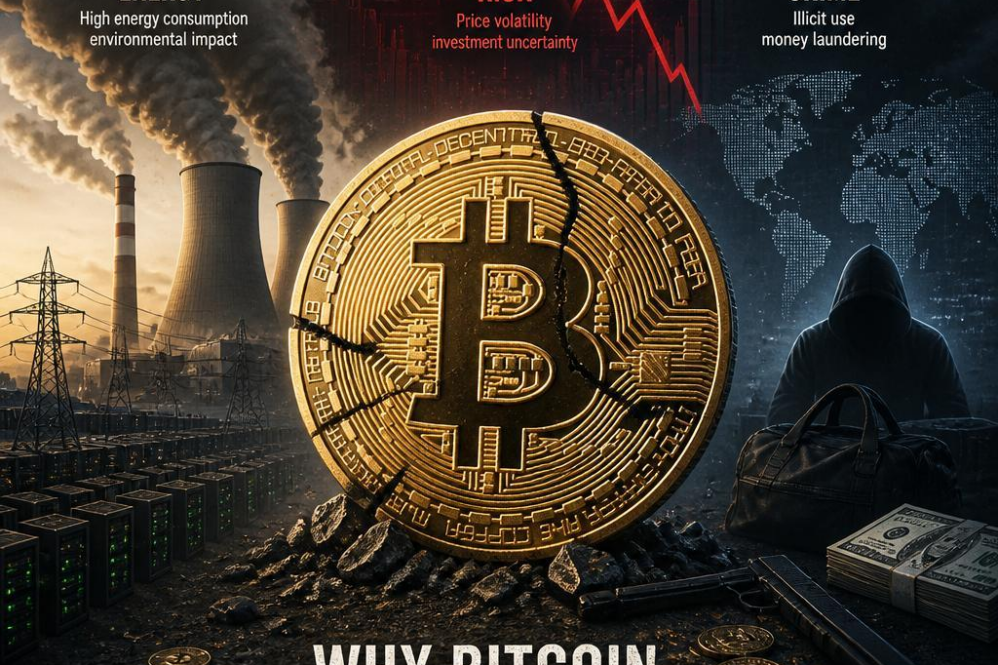
Why do some people criticize bitcoin? The answer usually comes down to three concerns: the electricity used to run the network, the risk of sharp price swingsand its use in some criminal activity. None of those issues tells the whole story on its own, but together thay explain why bitcoin remains controversial even as it has become more widely known.
bitcoin and energy use
bitcoin uses a proof-of-work system, in which miners compete to add transactions to the blockchain. That process requires specialized computers and a significant amount of electricity. For many critics, the concern is straightforward: when that power comes from fossil-fuel-heavy grids, the environmental cost can be substantial.
The picture is not identical everywhere. A mining operation powered by renewable energy or electricity that would otherwise go unused has a different impact from one drawing heavily from a carbon-intensive grid during periods of high demand. Even so, those differences are often hard to assess from the outside. Mining locations change, electricity sources vary by season and regionand estimates of the network’s overall emissions rely on incomplete facts.
That is why better disclosure matters. Mining companies and large operators can be more open about where they operate, how they source electricity, whether they participate in demand-response programsand how they calculate emissions. Transparent reporting would not erase bitcoin’s environmental footprint. It would simply make it easier for communities, investorsand regulators to evaluate claims on the evidence available rather than on broad promises from either side of the debate.
The risk of price swings
bitcoin can rise or fall sharply in a short period. Its price may react to economic news, regulatory announcements, exchange problems, large trades, social-media speculationor shifts in investor sentiment. That makes it a challenging asset to rely on for money needed soon for rent, tuition, debt paymentsor emergencies.
The risk is not limited to a falling market. Some people put too much of their savings into bitcoin, borrow to buy itor take investment advice from promoters who downplay the possibility of loss. others leave funds with platforms they have not properly researched. Because bitcoin transactions are generally irreversible, a mistaken transfer or successful scam can be hard to undo.
A sensible approach starts with treating bitcoin as speculative. It should not be confused with a guaranteed savings account or a dependable short-term store of value. People considering it should avoid using borrowed money, keep essential funds elsewhere, protect their account and wallet access carefully, and maintain records of purchases, sales, feesand transfers. Thes precautions do not remove the risk, but they can limit the damage when something goes wrong.
Crime and pseudonymity
bitcoin is sometimes described as anonymous,but that is not quite right.Its blockchain is public: anyone can see transactions and follow funds from one address to another. What the ledger does not automatically reveal is the real-world identity behind an address.
That distinction matters. Investigators may be able to connect an address to a person through records held by exchanges, payment providers, seized devicesor other evidence. Without that connection,however,an address is just a string of letters and numbers. Funds can be traced, while proving who controlled them may take much more work.
bitcoin has been used in ransomware demands, fraud, dark-web marketsand attempts to move criminal proceeds across borders. Critics point to those cases as evidence that digital assets can make certain crimes easier to carry out or harder to investigate in their early stages. Supporters frequently enough respond that the public ledger can also help investigators follow suspicious transactions. Both points can be true: bitcoin is traceable in crucial ways, but its pseudonymous design can still create room for misuse.
This is one reason regulators pay close attention to exchanges and other services that convert cryptocurrency into conventional money. Those businesses may be in a position to verify customers, flag suspicious activityand provide records that turn an on-chain trail into usable evidence.
Rules that focus on real harm
Reasonable bitcoin policy does not have to mean banning the technology.A more practical approach is to focus on the places where people are most likely to be harmed: deceptive advertising, weak safeguards for customer funds, poor security practicesand businesses that ignore rules designed to prevent fraud and money laundering.
For exchanges and custodians, strong protections matter as customers are trusting another company to hold or move their assets. Clear information about fees, risksand how customer holdings are handled can help people make better decisions. Independent financial records, reliable complaint proceduresand consequences for misuse can also reduce avoidable losses.
Mining policy is more local. communities have legitimate questions about electricity demand, noise, grid upgradesand emissions. Rather than relying on vague assurances or blanket restrictions, local authorities can ask large operations to disclose material power use, follow permitting and grid rulesand account for their environmental impact. Residents should have enough information to decide whether a proposed facility’s jobs or tax revenue justify its demands on local resources.
Why the criticism persists
bitcoin’s critics are not all making the same argument. Some are mainly concerned about emissions. Others focus on the possibility of large financial losses, while others worry about fraud and illicit finance.The common thread is accountability.
bitcoin may continue to evolve, but its hardest questions will not disappear on their own. Clearer information about energy use, honest discussion of investment riskand effective action against fraud can make the debate more grounded. The goal is not to pretend bitcoin is harmless or uniquely perilous. It is to be clear about where the risks lie and who is responsible for managing them.