What Defines a bitcoin hard Fork and Its Impact on the Blockchain
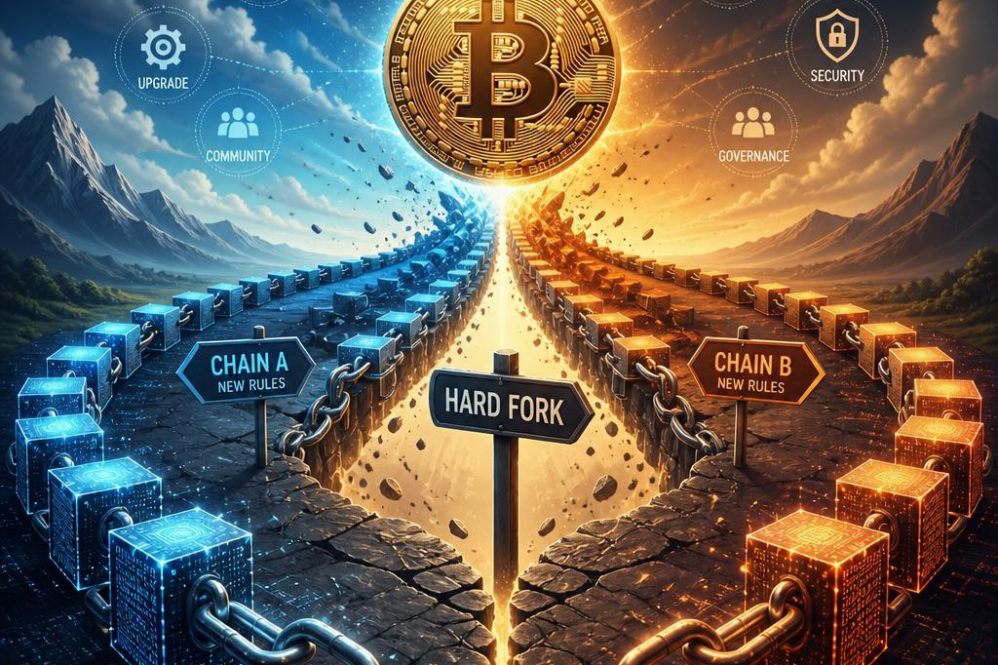
At its core, a hard fork occurs when a blockchain’s protocol undergoes a fundamental change, creating a divergence within the network. This change means that nodes running the old software reject blocks created by the new software, effectively splitting the chain into two separate and incompatible versions. Unlike soft forks, which maintain backward compatibility, hard forks require all participants to upgrade or risk operating on a different chain. This split frequently enough happens to implement critically important improvements, resolve technical disputesor address security vulnerabilities.
The impact of a hard fork extends beyond mere technical adjustments. Users, minersand developers find themselves at a crossroads:
- Users must decide which version of the blockchain to support, often influenced by community sentiment or perceived long-term viability.
- Miners play a crucial role by choosing which chain to validate,affecting the network’s hash power and security.
- developers drive the evolution of each fork, supporting distinct roadmaps and innovation paths.
Consequently, assets like bitcoins can be duplicated across both chains, creating a situation where holders receive coins on each forked blockchain, altering the economic landscape.
| Aspect | Old Chain | New Chain |
|---|---|---|
| Protocol Compatibility | Maintains legacy rules | Implements new rules |
| Community support | Existing users & miners | Innovators & proponents |
| Network Security | May weaken without upgrades | Perhaps stronger post-update |
| coin Balance | Original coins persist | New coins created equally |
Technical Mechanisms Behind Blockchain Splitting During a Hard fork
When a hard fork occurs in the bitcoin blockchain, the underlying protocol undergoes a fundamental change that invalidates the previously accepted rules, causing the network to split into two distinct chains.This process hinges on consensus divergence: nodes running the new software version begin rejecting blocks that comply with the old protocol but violate the new set of rules, while nodes on the legacy chain continue to except blocks under the original protocol. This results in two blockchains sharing a common history up to the fork block but diverging onward.
The technical core of blockchain splitting lies in differing validation rules and block acceptance criteria. Miners, who package transactions into blocks, must upgrade their software to comply with the revised protocol. If some miners switch while others don’t, two chains can produce blocks concurrently. The original chain and the newly forked chain then coexist until network effects and user adoption drive one chain’s dominance. Key mechanisms involved include:
- block Versioning: Each block references the protocol rules it follows, allowing nodes to distinguish between legacy and upgraded blocks.
- Chain Reorganizations: Nodes automatically select the longest valid chain according to their rules, which can lead to irreversible chain splits.
- Transaction Replay Protection: Implemented in some forks to prevent transactions valid on one chain from being replayed on the other.
| Feature | Legacy Chain | Forked Chain |
|---|---|---|
| Consensus Rules | Original protocol | Modified protocol |
| Block Validation | Previous rules upheld | New rules enforced |
| Transaction Handling | Old transaction formats | May support new transaction features |
| Network Support | Nodes not upgraded | Nodes running upgraded software |
Evaluating the Consequences for Miners, Developersand bitcoin Holders
When a bitcoin hard fork occurs, the ripple effects are deeply felt by miners, developersand holders alike. Miners face immediate operational decisions: continuing to support the original chain or shifting resources to the new fork. This choice can be influenced by potential profitability, network securityand long-term viability. In many cases, miners must upgrade or alter their hardware and software setups to accommodate the new protocol, which can lead to significant expenses and strategic recalibration.
Developers are at the heart of these transitions,as their code dictates the new chain’s features and stability. A hard fork often reflects divergent visions within the community, with developers championing changes ranging from scalability improvements to differing ideological principles. Their work extends beyond coding- they must also manage bug fixes, coordinate with exchanges and walletsand provide clear dialogue to ensure a smooth user experience. The risk of contentious forks can splinter the community, amplifying the importance of developers’ leadership.
bitcoin holders are among the most sensitive stakeholders, as their assets effectively exist on both chains post-fork, but with varied liquidity and value. They might receive an equivalent amount of the new coins alongside their original holdings, yet this duplication also presents security concerns and potential confusion in managing wallets and transactions. To illustrate, here is a rapid comparison table of stakeholder impacts:
| Stakeholder | Key Impact | Primary Concern |
|---|---|---|
| Miners | Resource allocation & equipment upgrades | Profitability & network security |
| Developers | Codebase maintenance & community coordination | Stability & adoption acceptance |
| bitcoin Holders | Dual asset management & value fluctuation | Security & asset accessibility |
- Miners must evaluate electricity costs and potential returns on competing chains.
- Developers frequently enough engage in extensive testing and contingency plans to prevent network failures.
- Holders are advised to stay informed and take caution with wallet compatibility after a fork.
Strategic Best Practices for Navigating and Managing Hard Fork Events
successful navigation through a bitcoin hard fork demands an understanding of the underlying protocol changes and their impact on network consensus. Stakeholders should prioritize early communication with community leaders, developers, and miners to gauge support and identify potential risks. This collaborative approach helps in anticipating divergent outcomes, allowing entities to prepare contingency plans for both the original and resulting blockchains.
From an operational perspective, protecting assets and maintaining transaction integrity are paramount. It is advisable to segregate wallets and avoid transacting promptly post-fork to prevent replay attacks,where transactions on one chain could be maliciously replicated on another. Additionally,updating client software to versions compatible with the forked chain ensures seamless synchronization and enables users to claim new tokens created by the fork if applicable.
| Best Practise | Key Consideration |
|---|---|
| Community Engagement | Gauge consensus support |
| Wallet Management | Mitigate replay attacks |
| Software Updates | Ensure client compatibility |
| Asset Segregation | Safeguard funds on each chain |
Strategicallyorganizations should integrate hard fork scenarios into their risk management frameworks. This includes running simulated forks internally to evaluate system resilience, training staff on fork-related protocols, and establishing clear communication channels with customers and investors. By institutionalizing these measures, stakeholders not only minimize disruption but also capitalize on opportunities presented by fork events, such as acquiring new tokens or participating in evolving governance structures.