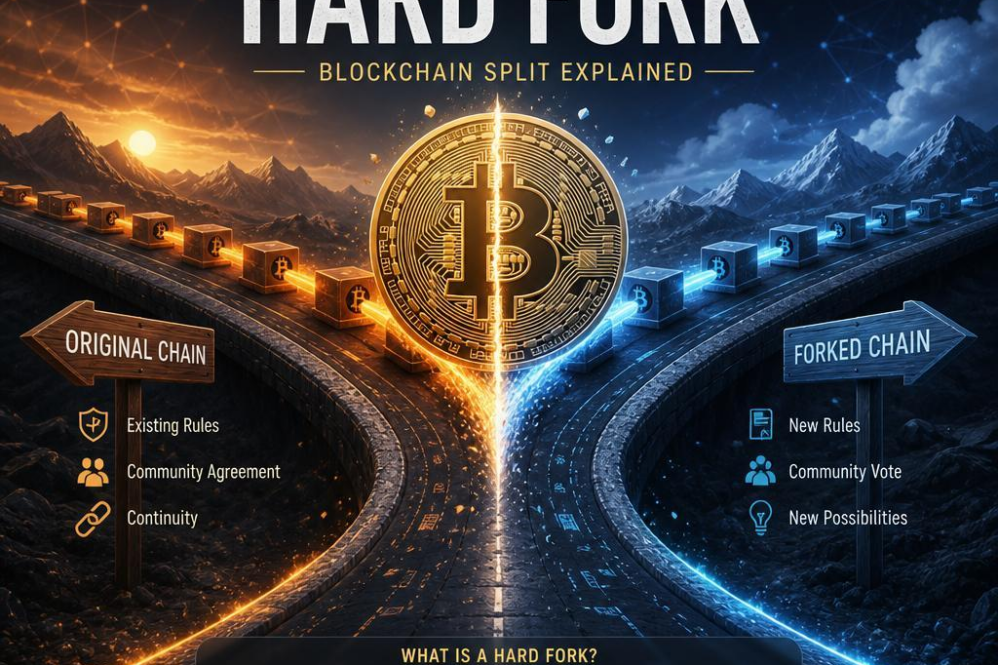
What Defines a bitcoin Hard Fork and What Triggers It
bitcoin operates on a decentralized ledger, governed by a strict set of consensus rules that every participant must follow. A hard fork occurs when a change is introduced too these rules that is not backward compatible. This means nodes or miners upgrading to the new rules will reject blocks created by nodes still running the old software. The divergence creates two separate blockchains – effectively splitting the network and its community into two different paths.
Several factors can trigger a hard fork, frequently enough rooted in disagreements over protocol upgrades or community visions. Common catalysts include:
- Protocol upgrades: Implementations that alter essential transaction formats or block sizes.
- Security fixes: Critical vulnerabilities requiring immediate and incompatible patches.
- Philosophical divides: Conflicts over decentralization, governanceor monetary policy.
| Trigger Type | Exmaple | Outcome |
|---|---|---|
| Protocol Upgrade | Block size increase | Split: bitcoin Cash created |
| security Patch | Critical vulnerability fix | Network consensus restored |
| Philosophical | Decentralization debate | New chain option emerges |
Technical Mechanics Behind Blockchain Splits in bitcoin
At its core, a blockchain split occurs when consensus rules are changed in a manner that is not backward compatible. This divergence often arises due to fundamental disagreements among network participants-such as miners,developers,and users-over protocol upgrades. When a subset of this ecosystem adopts a new set of rules while the rest maintain the original, two separate chains emerge, each independently validating transactions and securing its own version of history. These independent chains retain the entire transaction history up to the split point, ensuring security continuity despite the division.
The mechanics driving this split revolve around the protocol’s consensus algorithms and block validation criteria. Upon reaching a block that enforces incompatible rules, nodes adhering to different rule sets will reject each otherS blocks. This divergence crystallizes into two distinct networks, each propagating its own valid chain. Within the network, miners play a pivotal role; their hashing power determines which chain gains momentum, influencing the economic viability and security of each blockchain version. the choice between chains can impact everything from transaction speeds to long-term network security.
| Aspect | Purpose | Impact on Network |
|---|---|---|
| Consensus Rules | Defines valid transactions and blocks | Determines which chain is recognized |
| Hashing Power | Secures the chain by mining new blocks | Supports chain dominance and security |
| Node Behavior | Validates and propagates blocks | ensures network participation or splits |
Understanding these technical details is essential for grasping the complexity and risks associated with blockchain splits. The ramifications extend beyond the technical realm, influencing investor confidence, developer collaboration, and user trust. Consequently, these splits underscore the delicate balance between innovation and consensus in decentralized systems.
Implications for Network Security and Transaction Integrity
Hard forks inherently introduce a critical juncture were network consensus is disrupted,posing distinct challenges to network security. When two competing chains coexist, miners and nodes must allocate resources carefully, increasing the risk of split mining or double-spending attacks. This fragmentation can dilute the overall hash power securing both blockchains, potentially making each more vulnerable to 51% attacks until their respective networks stabilize. Thus,maintaining robust security protocols during and after a fork is crucial to preserve trust and deter malicious actors.
Transaction integrity faces considerable scrutiny in the event of a hard fork. Transactions confirmed on the original chain might not carry over to the new chain, causing user confusion and potential losses if coins are spent on both branches unknowingly. It’s imperative for users and service providers to exercise heightened vigilance during this period to avoid replay attacks-where transactions valid on one chain are maliciously repeated on the other. Implementing replay protection mechanisms,such as unique chain identifiers or transaction flags,becomes a necessary safeguard to uphold transactional fidelity across split ledgers.
| Security Aspect | Potential Issue | Mitigation Strategy |
|---|---|---|
| Hash Power Dilution | Increased risk of 51% attacks on both chains | Encourage miner consolidation and increased network participation |
| Replay Attacks | Duplicate transaction execution across chains | Implement replay protection via protocol upgrades |
| Transaction Conflicts | double-spending risks due to chain divergence | enhanced wallet and exchange transaction validation |
ultimately, these complexities underline the importance of diligent coordination between developers, exchanges, minersand users to safeguard the integrity and continued security of the bitcoin ecosystem as it navigates the aftermath of a hard fork.
Best Practices for Users and Developers During a Hard Fork
In the event of a hard fork, vigilance becomes paramount for users. Thay must keep their wallets updated to the latest software versions to ensure compatibility and security across the diverging blockchain paths. Additionally, it is indeed essential to back up private keys and seed phrases before the fork happens, as these credentials provide sole access to the user’s assets on both blockchain branches. Carefully monitoring announcements from trusted developers and community leaders helps avoid scams and misinformation that frequently enough accompany network splits.
Developers play a critical role in facilitating a smooth transition during a hard fork. Their duty includes meticulously testing the proposed protocol changes on testnets to identify and fix vulnerabilities early on.Communication is key – releasing clear,detailed technical documentation and coordinated release schedules reduces confusion and fosters trust within the community. providing contingency plans for potential rollback scenarios or unintended forks demonstrates foresight and commitment to network stability.
| Best Practice | User Actions | Developer Actions |
|---|---|---|
| Preparation | Backup keys & wallet data | Deploy and test code on testnets |
| Communication | Follow official updates closely | Publish clear progress reports |
| Security | Avoid suspicious offers and unofficial software | Implement robust validation and auditing |