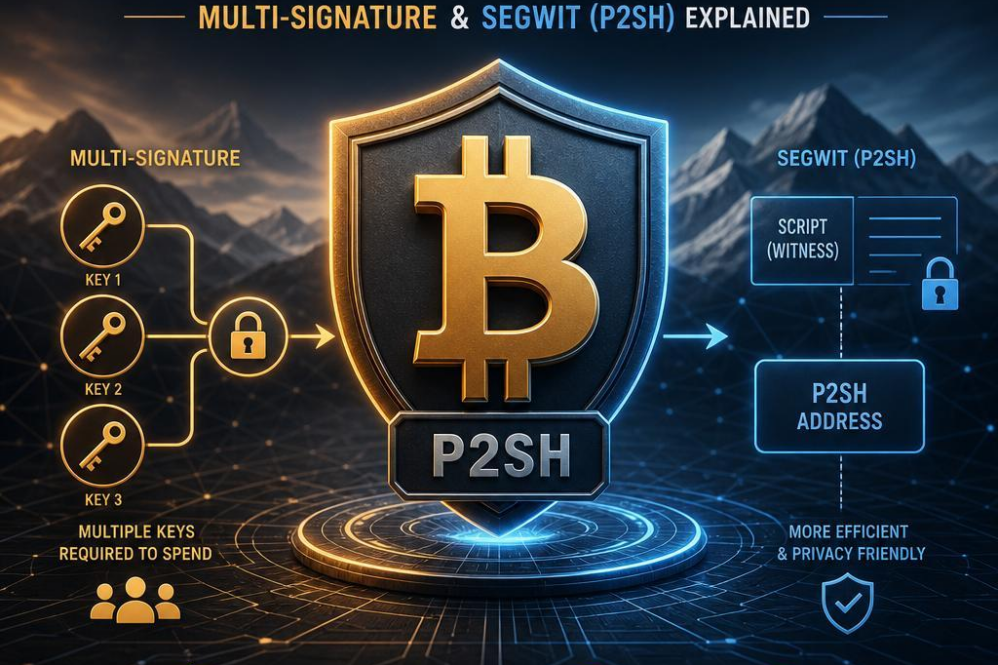
bitcoin Three Addresses Overview: Understanding the Basics of multi-Signature and SegWit
Multi-signature (multi-sig) addresses revolutionize bitcoin security by requiring multiple private keys to authorize a transaction.This collective authorization enhances control, especially useful for shared wallets or corporate accounts. Rather of a single signature, a predefined number of signatures, such as 2-of-3 or 3-of-5, must approve transfers, reducing the risk of theft and mismanagement. these addresses start with the number ”3,” differentiating them from legacy addresses beginning with “1” and SegWit bech32 addresses starting with “bc1.”
Segregated Witnessor SegWit, is a protocol upgrade that reorganizes how transaction data is stored on the blockchain, improving scalability and reducing transaction fees. When combined with P2SH (Pay-to-Script-Hash), SegWit enables complex scripts, like multi-sig, to be embedded in a single, concise address format. This encapsulation simplifies transactions and preserves backward compatibility, allowing wallets and services that support P2SH to process SegWit transactions seamlessly.
| feature | Description | Benefit |
|---|---|---|
| Multi-Signature | Requires multiple signatures for transaction approval | enhanced security and shared control |
| SegWit Integration | Separates signature data from transaction data | Lower fees and increased block capacity |
| P2SH Address | Encodes complex scripts behind a simple address | Improved compatibility and user experience |
Mastering these technologies allows users to safeguard their assets while benefiting from bitcoin’s evolving infrastructure. The “3” addresses serve as a practical gateway into advanced wallet functionality, blending security with efficiency. Understanding their nuances empowers users to make informed decisions about wallet configurations that best fit personal or organizational needs.
Technical Foundations of Multi-Signature in bitcoin Three Addresses
The crux of bitcoin’s multi-signature (multi-sig) technology lies in its ability to require multiple cryptographic signatures to authorize a transaction.In the context of the so-called “3” addresses-specifically those beginning with the digit 3-this mechanism is implemented through Pay-to-Script-Hash (P2SH). What P2SH does is abstract the complexity of the redeem script away from the user,allowing users to send funds to a script hash rather than a public key hash.This versatility enables multi-sig wallets, where multiple private keys must sign off before funds can be moved, enhancing security by distributing control.
Technically, a P2SH multi-sig address encodes a script that defines the conditions needed to spend the associated bitcoins. For a typical 2-of-3 multi-sig scheme, three public keys are included in the redeem scriptand spending requires signatures from any two of these keys. The checksum and hashing steps use RIPEMD-160 combined with SHA-256 to create the address, which starts with the digit 3. This ensures backward compatibility and easy integration with existing wallets while reducing the size of witness data on the blockchain when combined with Segregated Witness (SegWit).
Key technical elements include:
- Redeem Script: Defines signature requirements and public keys involved.
- Script Hash: Acts as a hashed portrayal of the redeem script.
- Signature Verification: Enforces the M-of-N signature rule before spending.
- SegWit Compatibility: Reduces transaction malleability and allows smaller fees.
| Component | Function | Benefit |
|---|---|---|
| Redeem Script | Defines multi-sig rules | Flexible spending policies |
| Script Hash (P2SH] | Encodes redeem script as address | Simple address format for complex scripts |
| multi-Signature Signatures | Required signatures for spending | Enhanced security & control |
| SegWit Integration | Separates signatures from transaction | Reduced fees & improved scalability |
SegWit and P2SH Integration: Enhancing Security and Efficiency
Segregated Witness (SegWit) revolutionized bitcoin by separating transaction signatures (witness data) from the transaction data itself. This separation not only increased the block capacity but also considerably enhanced transaction malleability resistance, enabling a more secure and efficient network. By integrating SegWit with Pay-to-Script-Hash (P2SH), users can now create more complex scripts while benefiting from reduced fees and faster confirmations. This fusion simplifies wallet implementation and ensures backward compatibility with older bitcoin addresses, facilitating a smoother transition and broader adoption.
At the heart of this integration lies the ability to embed advanced spending conditions within a P2SH address, often recognized by the ‘3’ prefix. These addresses allow for multi-signature wallets, where multiple private keys are required to authorize a transaction – an essential feature for enhancing security in organizational and high-value user contexts. The combination of SegWit’s efficiency and P2SH’s versatility means that transactions not only consume less block space but also provide stronger fraud prevention mechanisms, making them highly desirable for both individual and institutional bitcoin users.
Here’s a speedy comparison highlighting key benefits of this integration:
| Feature | SegWit | P2SH | Combined |
|---|---|---|---|
| Security | Improved transaction signature validation | Enables multi-signature protection | Robust multi-party authorization with malleability fix |
| Efficiency | Reduces transaction size | Simplifies complex script deployment | Lower fees with complex script capabilities |
| Compatibility | Backward compatible with legacy wallets | works with older bitcoin clients | Seamless integration across wallet generations |
Practical Benefits and Use Cases of Multi-Signature SegWit Addresses
Multi-signature SegWit addresses are revolutionizing bitcoin security by requiring multiple private keys to authorize a transaction. This feature is particularly valuable for organizations and individuals who desire enhanced control over funds, protecting against single points of failure or theft. For example, in a corporate environment, a transaction might need approval from multiple executives before funds are moved, preventing fraudulent or unauthorized spending.
Beyond improved security, these addresses significantly optimize transaction efficiency. By combining SegWit’s witness data with multi-signature validation, transaction size and associated fees are minimized. This makes multi-sig SegWit useful not only for high-stakes transactions but also for regular users looking to save on fees without compromising security. Popular use cases include escrow services, shared wallets for families or partnersand secure cold storage setups.
| use Case | Benefit | Typical Setup |
|---|---|---|
| Corporate Treasury | Mitigates insider risk with multi-authorization | 3-of-5 signatures required |
| Escrow Transactions | Ensures trust with neutral third-party approval | 2-of-3 signatures,including escrow agent |
| Family Wallet | Shares financial control among members | 2-of-3 signatures among family members |
Ultimately,multi-signature SegWit addresses blend security,flexibility,and cost-effectiveness,making them a foundational tool for anyone serious about managing bitcoin responsibly and efficiently.
Best Practices for Managing and Securing bitcoin Three Addresses
When handling bitcoin ‘3’ addresses, which leverage multi-signature and segwit (P2SH) technology, prioritizing security through structured key management is essential. Store private keys offline in hardware wallets or secure cold storage to minimize exposure to online threats. Regularly back up all required keys and redeem scripts in encrypted formats, ensuring that no single point of failure exists. Moreover, maintain a strict policy on key distribution among co-signers to balance convenience with security-never centralize access in one location.
Operational best practices include:
- Using multi-factor authentication wherever applicable for access to wallets or signing devices.
- Testing multi-sig transaction workflows with small transfers before executing large-value transfers to avoid costly errors.
- Keeping software and firmware updated on wallets and signing devices to benefit from recent security patches.
- Implementing clear dialogue protocols among all signatories to verify transaction intents and prevent social engineering attacks.
| Aspect | Recommendation |
|---|---|
| Key Backup | Use encrypted, geographically distributed backups |
| Transaction Validation | Confirm transaction details via out-of-band communication |
| Device Security | Keep signing devices offline when not in use |
| Access Control | Limit multi-sig cosignatories to trusted parties only |
Future Developments and Recommendations for Adopting Multi-Signature SegWit Solutions
As the bitcoin ecosystem continues to evolve, the adoption of multi-signature SegWit (P2SH) solutions is poised to play a critical role in enhancing both security and transaction efficiency. Developers are actively working on refining wallet interfaces and improving network-level interoperability, ensuring that multi-signature wallets become more user-friendly and accessible to a broader audience. Embracing SegWit’s transaction malleability fix, combined with multi-sig’s improved authorization model, is expected to reduce transaction fees and increase throughput on the blockchain.
Future enhancements will likely include seamless integrations with hardware wallets and multi-party computation (MPC) protocols,pushing the boundaries of decentralized custody and trust models. Users and organizations should be encouraged to adopt these solutions by focusing on key benefits:
- Stronger security: multiple private keys reduce single points of failure.
- Cost efficiency: SegWit lowers transaction size, leading to lower fees.
- Improved privacy: Multi-signature setups obscure spending patterns.
Below is a summary table of recommended next steps for users and developers aiming to adopt or build on multi-signature SegWit frameworks, complete with best practices and considerations:
| Aspect | Recommendation | Key Benefit |
|---|---|---|
| Wallet compatibility | Ensure P2SH SegWit support in software and hardware wallets | Maximize security and transaction efficiency |
| Key Management | Implement robust backup and recovery methods for multi-sig keys | Mitigate risk of loss or theft |
| Network Adoption | Promote open-source standards for multi-sig SegWit | Enhance interoperability and user trust |