
June 7, 2026

Capitalizations Index – B ∞/21M

WeChat Trials Using Blockchain Tech to Reimburse Employee Expenses

Wechat trials using blockchain tech to reimburse employee expenses

WeChat Trials Using Blockchain Tech to Reimburse Employee Expenses


Wechat blockchain
Advertisement

WeChat, a messaging, social media and financial services app owned by Tencent Holdings Limited, has deployed a blockchain electronic invoice system at Shenzhen Guomao Rotary Restaurant, making the city of Shenzhen the first in China to issue invoices with blockchain technology.

The blockchain invoice process, which encompasses payment, invoicing and reimbursement, was created in partnership with Shenzhen Taxation Bureau and Kingdee Software.

This system was developed to simplify the process of reimbursing company employee expenses. Previous paper and electronic invoicing processes led to a cumbersome and elongated process of invoice verification, submission, review, and tax returns filing before eventually settling with employees.

How It Works

With this blockchain invoice system, the process is substantially shortened, removing all intermediary actions between invoicing and reimbursement. Any payment made through the WeChat self-checkout is thus effectively a one-click reimbursement process.

For example, an employee of a company after having a company dinner can make payment via the WeChat mobile payment platform. The data from that transaction is the “invoice” and the information from this invoice is synchronized to the financial system of employee’s company and the tax bureau in real time.

This way, information is not tampered with or lost, thereby simplifying the process for all parties involved in the transaction namely the merchant, the employer, tax authorities, and the employee.

Merchants get to save on time and personnel since the invoices are issued automatically at checkout, rather than manual invoice issue and entry of relevant details of the employee’s company for tax purposes. The employee’s company on its part can easily verify invoice by simply logging into its financial system.

The tax regulator can then monitor the entire process of invoicing, circulation and reimbursement in real time, ensuring full and timely tax collection, while the employee can claim reimbursements online.

Tencent-Shenzen Partnership Begins to Pay Dividends
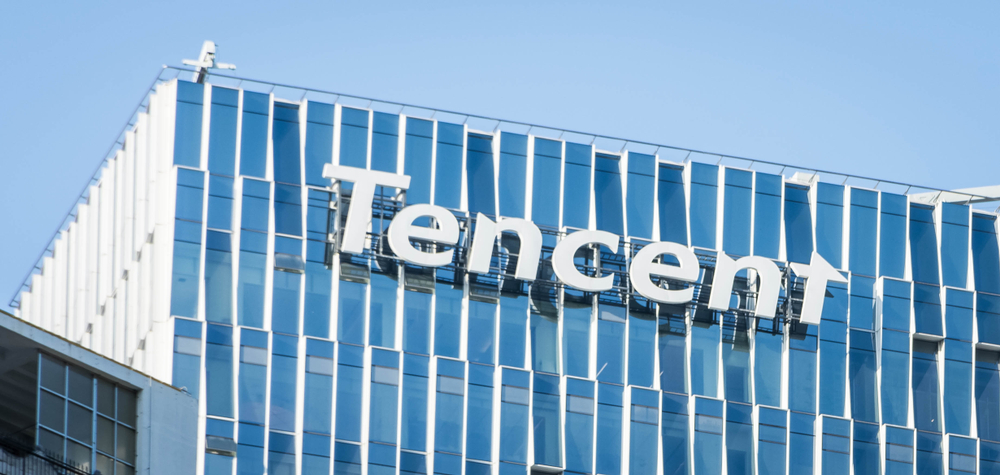
Tencent blockchain

The blockchain powered invoicing solution is a product of the partnership announced in May 2018 between Tencent and The Shenzhen Municipal Office of the State Administration of Taxation.

Speaking about the development, Li Wei, deputy director of Shenzhen tax bureau, said:

“The digital invoice based on blockchain technology has features such as complete traceability of the whole process and non-disruptive information, which consistent with invoice logic, can effectively avoid false invoices, and improve the invoice supervision process.”

At present, Shenzhen Guomao Rotating Restaurant, Baoan District Sports Center Parking Lot, Kaixin Auto Trading Co., Ltd., and Image Tencent Impression Coffee Shop are the first merchants to access and utilize the blockchain electronic invoicing system.

In April, CCN reported that Tencent was developing its own blockchain platform called MySQL, a solution designed  to provide an enterprise class blockchain infrastructure to support reliable blockchain cloud services.

Images from Shutterstock

Follow us on Telegram or subscribe to our newsletter here.
Join CCN’s crypto community for $9.99 per month, click here.
Want exclusive analysis and crypto insights from Hacked.com? Click here.
Open Positions at CCN: Full Time and Part Time Journalists Wanted.

Advertisement


Published at Sat, 11 Aug 2018 00:58:16 +0000

Blockchain News[wpr5_ebay kw=”bitcoin” num=”1″ ebcat=”” cid=”5338043562″ lang=”en-US” country=”0″ sort=”bestmatch”]

Previous Article

Gülden Karaböcek – Sen Evlisin (Official Audio)

Next Article

Ink Protocol: A Decentralized Transaction System For Any Marketplace

You might be interested in …

Комиссия по ценным бумагам Китая призвала централизовать блокчейн

ForkLog Комиссия по ценным бумагам Китая призвала централизовать блокчейн Глава технологического отдела китайской Комиссии по регулированию ценных бумаг Чан Йе призвал государственный сектор Китая использовать технологии искусственного интеллекта и блокчейна для предоставления госуслуг. При этом […]

Global Banking System Under Threat As Hackers Crack NSA, SWIFT Again

Hacker group Shadow Brokers has allegedly proved the US National Security Agency (NSA) hacked SWIFT international banking network.


NSA ‘Documents And Files’ Show SWIFT Transactions ‘Monitored’

In “documents and files” released Friday, Reuters reports, the group said it had evidence the NSA used SWIFT to “monitor money flows among some Middle Eastern and Latin American banks.”

The news marks the second time Shadow Brokers has laid claim to compromising NSA secrets. In August 2016, the group said it had entered an agency affiliate and taken details of cyberweapons, which it planned to auction for one million bitcoins.

If true, it is also a further blow to SWIFT, which last year recorded several high-level security failures worth hundreds of millions of dollars.

“NSA hacked a bunch of banks, oil and investment companies in Palestine, UAE, Kuwait, Qatar, Yemen, more,” Mustafa Al-Bassam, computer science researcher at University College London, commented on the findings.

bitcoin Core Dev: Implications Beyond Spying ‘Burning Question’

Reactions from within the cryptocurrency community meanwhile focussed on the broader implications of Shadow Brokers’ latest attack.

Core developer Wladimir van der Laan wrote on Twitter “(finding) indication of tools for manipulation of banks/markets, more than spying” was now the “burning question.”

//platform.twitter.com/widgets.js

As the traditional financial system comes under increasing threat from cyber criminals, bitcoin could emerge as the go-to method for storing wealth thanks to its decentralized blockchain and SHA 256 encryption, especially when compared to the ‘honeypot’ of banks’ centralized databases.

Microsoft Back In Spying Spotlight

The released data does not only focus on SWIFT, but also on Microsoft. Having been outed as involved in NSA spying activities by Wikileaks’ Vault 7 dump in March, the corporation this time is facing stolen code for compromising Windows, “at least some of which still work.”

In a responsorial statement, Microsoft protested ignorance. No official correspondence regarding the threat had been received.

“Other than reporters, no individual or organization has contacted us in relation to the materials released by Shadow Brokers,” it told Reuters.

Windows 10

Regarding the specifics of the SWIFT hack, it appears Dubai-headquarted service bureau Eastnets could be a major target.

Like Microsoft, the SWIFT intermediary denied any malicious activity had occurred.

The reports of an alleged hacker-compromised EastNets Service Bureau network is totally false and unfounded,” the BBC quotes a spokesperson as saying. “The EastNets Network Internal Security Unit has run a complete check of its servers and found no hacker compromise or any vulnerabilities.”

NSA spying activities are claimed to have affected not just companies, but politicians and even everyday consumers.

As part of Vault 7, WikiLeaks suggested end-user electronic devices such as smartphones and smart TVs could have become microphones for intelligence officers to listen in on.

Even Donald Trump and his family may have fallen victim.

What do you think about the Shadow Brokers’ latest claims? Let us know in the comments below!


Images courtesy of Swift, Twitter, Shutterstock

The post Global Banking System Under Threat As Hackers Crack NSA, SWIFT Again appeared first on Bitcoinist.com.

Opinion: ICOs Are Dead, Killed By Regulations

Bitcoinist.com Opinion: ICOs Are Dead, Killed By Regulations ICOs may have been the hottest thing in 2017 but, unlike the hundreds of amusing bitcoin obituaries throughout the years, the process of issuing digital tokens to […]