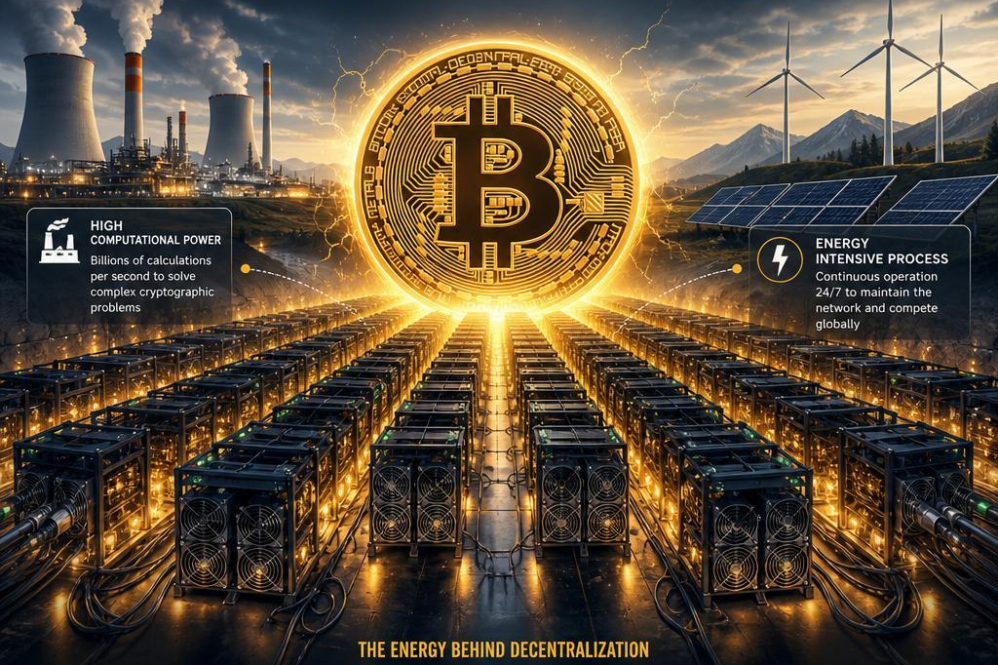
– Understanding the Computational Intensity of bitcoin Mining Algorithms
At the core of bitcoin mining lies a cryptographic puzzle based on the SHA-256 hashing algorithm. This puzzle requires miners to find a specific hash value by iterating countless nonce values, a process that is both deterministic and computationally exhaustive. The algorithm’s design ensures that mining is deliberately intensive to secure the network, making the chance of producing a valid hash a zero-sum game where miners compete through brute-force calculation rather than shortcuts or heuristics. This intentional complexity is vital for maintaining the decentralized trust that underpins the bitcoin ecosystem.
the computational intensity arises from several key factors:
- Exponential difficulty adjustment: The bitcoin protocol automatically increases mining difficulty to maintain an average block creation time of approximately 10 minutes, scaling up the number of hashes required exponentially as more miners join the network.
- Repeated hashing cycles: Miners must perform trillions of SHA-256 calculations every second to stand a chance at solving the cryptographic puzzle first.
- Hardware constraints: Efficient mining demands specialized hardware, such as ASICs (Application-Specific Integrated Circuits), which are designed to perform these calculations at optimized speeds but also consume considerable energy.
| Aspect | Impact on Energy Demand | Role in Mining Process |
|---|---|---|
| Hash Rate | High power consumption proportional to speed | Determines mining competitiveness |
| Difficulty Adjustment | Increases as more miners join,leading to higher energy use | Maintains block time stability |
| ASIC Efficiency | Reduces energy per hash but encourages scaling up operations | Enables faster mining attempts |
– The Role of proof of Work in Energy Consumption
At the heart of bitcoin mining lies a consensus mechanism known as proof of Work (PoW). this system requires miners to repeatedly solve complex cryptographic puzzles to validate transactions and add new blocks to the blockchain.The difficulty of these puzzles adjusts dynamically, ensuring that new blocks are produced approximately every ten minutes regardless of the number of miners competing. This relentless puzzle-solving consumes vast amounts of electrical energy as miners race to discover the winning solution first.
Unlike traditional transaction verification methods, PoW’s competitive nature drives miners to deploy ever more powerful hardware, such as Application-Specific Integrated Circuits (ASICs). These devices run at maximum computational capacity 24/7, resulting in continuous high electricity consumption. The inherent design incentivizes performance rather than energy efficiency, creating an ecosystem where the majority of energy expenditure is dedicated solely to maintaining network security and integrity.
| factor | Impact on Energy Use |
|---|---|
| Computational Difficulty | Increases exponentially as network grows |
| Hardware Efficiency | Improves but still demands high power |
| Mining Competition | Drives continuous peak energy consumption |
| Global Network Scale | Aggregated worldwide electricity demand |
The synergy of these factors under PoW creates a system where energy consumption is not merely a byproduct, but a cornerstone. Miners remain locked in a constant arms race, using large-scale facilities often powered by coal, natural gas, or renewable sources.This ever-increasing demand underscores the critical discussions about bitcoin’s environmental footprint and encourages exploration of more lasting alternatives in cryptocurrency consensus models.
– Environmental Impact of Large-Scale Mining Operations
Large-scale mining operations require vast amounts of physical space and infrastructure. The extraction process often involves clearing extensive tracts of land, which leads to habitat destruction and disruption of local ecosystems. These activities contribute to soil erosion,groundwater contamination,and increased carbon emissions that further exacerbate environmental degradation. Additionally, mining facilities demand substantial water resources, frequently enough depleting local supplies and affecting communities and wildlife alike.
Key environmental concerns of large-scale mining include:
- Deforestation and loss of biodiversity
- Pollution from toxic chemicals used in mineral extraction
- emission of greenhouse gases from heavy machinery and transportation
To visualize the environmental footprint, consider this simplified comparison of resource depletion per hectare:
| Resource | Mining Impact per Hectare | Equivalent Energy Usage |
|---|---|---|
| water Consumption | 2 million liters | Powering 150 homes for a year |
| Land Disruption | Complete vegetation removal | Irreversible habitat loss |
| Carbon Emissions | 12,000 tons CO₂ | equivalent to 2,500 cars annually |
– Strategies for Enhancing Energy Efficiency in bitcoin Mining
One of the moast significant approaches to improve energy efficiency in bitcoin mining lies in optimizing hardware. Application-Specific Integrated Circuits (ASICs) are designed exclusively for mining tasks, offering far superior energy efficiency compared to general-purpose GPUs or CPUs. By utilizing ASICs that deliver more hash power per watt consumed, miners can reduce their overall electricity draw. Additionally, continuous innovation in chip design aims to lower energy consumption without compromising computational output, leveraging advancements in semiconductor technology and power management.
Another critical strategy involves the deployment of renewable energy sources. bitcoin mining operations strategically locate their facilities near abundant and affordable renewable energy, such as hydroelectric, solaror wind power. This not only decouples mining activities from fossil-fuel-based grids but also leverages cheaper and cleaner energy. Many large-scale miners now negotiate direct power purchase agreements (PPAs) wiht green energy providers to ensure a consistent,reliable,and sustainable power supply,further enhancing the environmental profile of their operations.
Operational optimization also plays a pivotal role in driving energy efficiency. Techniques such as dynamic load balancing,real-time monitoring,and efficient cooling solutions ensure that mining equipment runs at optimal performance with minimal energy waste. Below is a speedy reference table showcasing key operational strategies and their impacts:
| Strategy | Energy Saving Potential | Effect on Performance |
|---|---|---|
| Dynamic Load Balancing | High | Maintains Optimal Hash Rate |
| Advanced Cooling Systems | Moderate | Prevents Overheating & Downtime |
| real-time Monitoring | High | Identifies Inefficiencies Quickly |