Understanding bitcoin’s Halving Mechanism and Its Historical Context
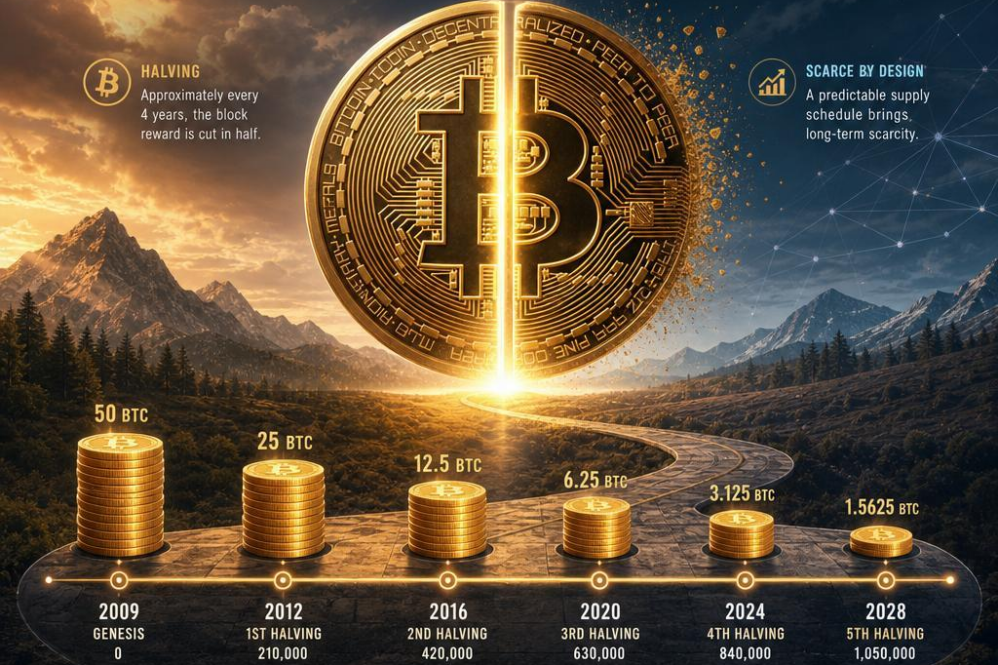
At the core of bitcoin’s design lies a programmed scarcity that fundamentally distinguishes it from conventional fiat currencies. bitcoin’s halving event is a pre-scheduled reduction in the rewards given to miners for validating transactions and securing the network. This mechanism occurs approximately every 210,000 blocksor roughly every four years, ensuring that the supply expansion of new bitcoins diminishes over time. By cutting the reward in half periodically,bitcoin’s protocol enforces a capped supply of just 21 million coins,avoiding the pitfalls of inflation that commonly affect fiat systems.
This automatic adjustment not only controls the issuance rate but also aligns with economic principles of scarcity driving value. historical halvings in 2012, 2016, and 2020 have been pivotal moments, often followed by notable market revaluation. These events compress new supply while demand and network activity continue to grow,setting up a dynamic habitat. It’s crucial to understand that halving doesn’t change bitcoin’s underlying codebase or its security model but directly influences miner incentives and the broader economic dynamics that shape price finding.
| Halving Event | Year | Block Height | Block Reward (BTC) |
|---|---|---|---|
| 1st halving | 2012 | 210,000 | 25 → 12.5 |
| 2nd Halving | 2016 | 420,000 | 12.5 → 6.25 |
| 3rd Halving | 2020 | 630,000 | 6.25 → 3.125 |
Understanding the legacy and timing of these halvings allows investors and enthusiasts to appreciate bitcoin’s engineered deflationary model. Each halving event acts as a reminder of bitcoin’s intentional limited supply and how it diverges sharply from traditional monetary policies where central banks can expand money supply arbitrarily. It is indeed this unique blend of transparent rules and predictable scarcity that continues to fuel bitcoin’s role as “digital gold” in the rapidly evolving financial landscape.
Analyzing the Impact of Halving on bitcoin’s Supply and Inflation Rate
bitcoin’s halving event considerably influences the overall supply dynamics of the cryptocurrency. By design, the block reward given to miners for verifying transactions is cut in half approximately every four years. This mechanic serves as a powerful deflationary control,ensuring that the maximum supply of 21 million Bitcoins is approached at a steady,predictable rate rather than flooding the market prematurely. As new coins enter circulation more slowly post-halving, scarcity is effectively increased, potentially enhancing bitcoin’s intrinsic value over time.
The repercussions on bitcoin’s inflation rate are equally profound. Before halving, bitcoin exhibits a relatively higher inflation rate due to larger block rewards, akin to mining new coins at an accelerated pace. post-halving, this rate drops roughly by 50%, leading to a sharper decline in the issuance of new Bitcoins. Such scheduled contractions in supply inflation create a unique monetary policy mechanism that contrasts sharply with traditional fiat currencies, which can be printed in unlimited amounts.
| Halving Event | Block Reward (BTC) | Annual Inflation Rate (%) |
|---|---|---|
| 1st Halving (2012) | 25 | 10.39 |
| 2nd Halving (2016) | 12.5 | 4.17 |
| 3rd Halving (2020) | 6.25 | 1.80 |
- supply Reduction: Each halving decreases the new supply entering the market.
- Market Scarcity: With fewer new Bitcoins mining rewards, scarcity rises over time.
- Inflation Control: Inflation is systematically decreased, protecting bitcoin’s value.
The Role of Halving in bitcoin’s Price Volatility and Market Dynamics
bitcoin halving is a pivotal event that dramatically influences its price volatility and the behavior of the cryptocurrency market.Every 210,000 blocks mined, the reward given to miners for verifying transactions is reduced by 50%. This halving mechanism serves as a built-in scarcity model, directly impacting the supply of new bitcoins entering circulation. As the influx slows, the market often reacts with heightened anticipation and speculation, which can lead to increased price swings as traders adjust their strategies based on the changing supply dynamics.
Several market dynamics interplay during and after halving:
- Supply shock: With fewer bitcoins rewarded per block, the available new supply tightens, creating upward price pressure if demand remains steady or rises.
- Mining incentives: Reduced rewards may cause smaller or less efficient miners to exit, temporarily affecting network security and transaction processing speed.
- Investor psychology: Anticipation of halving events often drives speculative investment, amplifying volatility even before the supply reduction takes full effect.
| Halving Event | Block Height | Reward per Block (BTC) | Market Reaction |
|---|---|---|---|
| First Halving | 210,000 | 50 → 25 | Significant price surge post-halving |
| Second Halving | 420,000 | 25 → 12.5 | Increased volatility with bullish trends |
| Third Halving | 630,000 | 12.5 → 6.25 | Heightened market speculation and rallies |
Technical aspects Behind bitcoin’s supply Schedule and Mining Rewards
At the core of bitcoin’s architecture lies a meticulously designed supply schedule that governs the rate at which new bitcoins are introduced into circulation. This framework hinges on the process of mining, where miners compete to solve complex cryptographic puzzles and validate transactions. Each prosperous mining event-called a “block”-rewards the miner with a fixed number of bitcoins, initially set at 50 BTC per block. However, this reward does not remain constant but is systematically reduced in a process termed “halving.”
Halving occurs approximately every 210,000 blocksor roughly every four years, cutting the mining rewards by half. This programmed scarcity ensures that even though bitcoins are continuously generated, the total supply approaches a capped limit of 21 million coins. The mathematical certainty of these halvings instills confidence in bitcoin’s deflationary model and contrasts sharply with traditional fiat currencies, which can be inflated by central authorities arbitrarily.
| Halving Event | Block Height | Reward per Block (BTC) |
|---|---|---|
| 1st Halving | 210,000 | 25 |
| 2nd Halving | 420,000 | 12.5 |
| 3rd Halving | 630,000 | 6.25 |
| Projected 4th Halving | 840,000 | 3.125 |
The technical design choices behind bitcoin’s mining rewards also incentivize network security. As rewards decrease, transaction fees are expected to play a larger role in compensating miners, encouraging efficient validation and making the blockchain more resilient to attacks. The gradual reduction of rewards complements bitcoin’s long-term vision, balancing the introduction of new coins with the sustained protection of the decentralized system.
Investment Strategies to Navigate bitcoin Halving Events Effectively
Successfully navigating bitcoin halving events requires a well-thought-out investment approach that balances risk management with opportunity capture. One of the most effective strategies is diversification across holding periods. By allocating capital into both short-term trades to capitalize on volatility spikes and long-term holds to benefit from potential post-halving bullish trends, investors can mitigate downside risks while positioning themselves for gradual accumulation of wealth. Emphasizing scheduled portfolio reviews around halving dates can also help adjust exposure dynamically.
An frequently enough overlooked, yet essential tactic is maintaining a disciplined plan for incremental purchasing.Instead of making lump-sum investments right before or immediately after the halving, spreading purchases over several weeks can smooth out price fluctuations and reduce the psychological stress of market swings. Coupled with stop-loss orders or predefined exit points, this approach fosters a balanced risk-to-reward profile suitable for varying market conditions influenced by halving.
| Strategy | Key Benefit | Risk Mitigation |
|---|---|---|
| Diversified Holding Periods | Capture different market phases | Reduced volatility impact |
| Incremental Buying | Cost averaging and reduced timing risk | Limits exposure to price shocks |
| Pre-halving Preparation | Informed decision-making | Avoid impulsive trades |
Lastly, staying informed through continuous research and leveraging reliable data sources can drastically improve decision outcomes. Understanding how past halving supply reductions influenced liquidity and miner incentives provides valuable context, empowering investors to anticipate potential market reactions. Combining technical indicators with on-chain data offer an analytical edge that elevates investment choices beyond speculation, fostering sustainable long-term growth.
Future Projections and Challenges for bitcoin Post-Halving in the Crypto Ecosystem
The post-halving landscape of bitcoin introduces a complex interplay of factors that will shape its future trajectory in the crypto ecosystem. historically, halvings have led to increased scarcity by halving the block rewards, which directly limits the influx of new bitcoins. This structural shift intensifies miner competition and can amplify price volatility as markets adjust to the reduced supply rate. though, broader adoption and macroeconomic variables will also invariably influence bitcoin’s valuation and utility post-halving.
Key challenges that lie ahead include:
- Mining Sustainability: Reduced block rewards can pressure miners with higher operational costs, potentially leading to network centralization if only the largest players can remain profitable.
- Market Sentiment and Speculation: Halving events often trigger speculative bubbles, but prolonged price stability or decline could undermine confidence and slow institutional adoption.
- Regulatory Landscape: Intensifying global cryptocurrency regulations could impact bitcoin’s reputation as a decentralized asset, introducing new compliance burdens or transaction restrictions.
To contextualize mining profitability trends after halving, consider the simplified projection below:
| Year | Block Reward (BTC) | Estimated Miner Revenue ($M) |
|---|---|---|
| Year 0 (Halving Year) | 6.25 | 350 |
| Year 1 | 6.25 | 320 |
| Year 2 | 6.25 | 300 |
| Year 3 (Next Halving) | 3.125 | 160 |
This snapshot underscores the diminishing miner revenue cycle that demands efficiency and innovation to maintain network security. Ultimately, bitcoin’s evolution post-halving will depend greatly on ecosystem resilience and adoption momentum amid these multifaceted pressures.