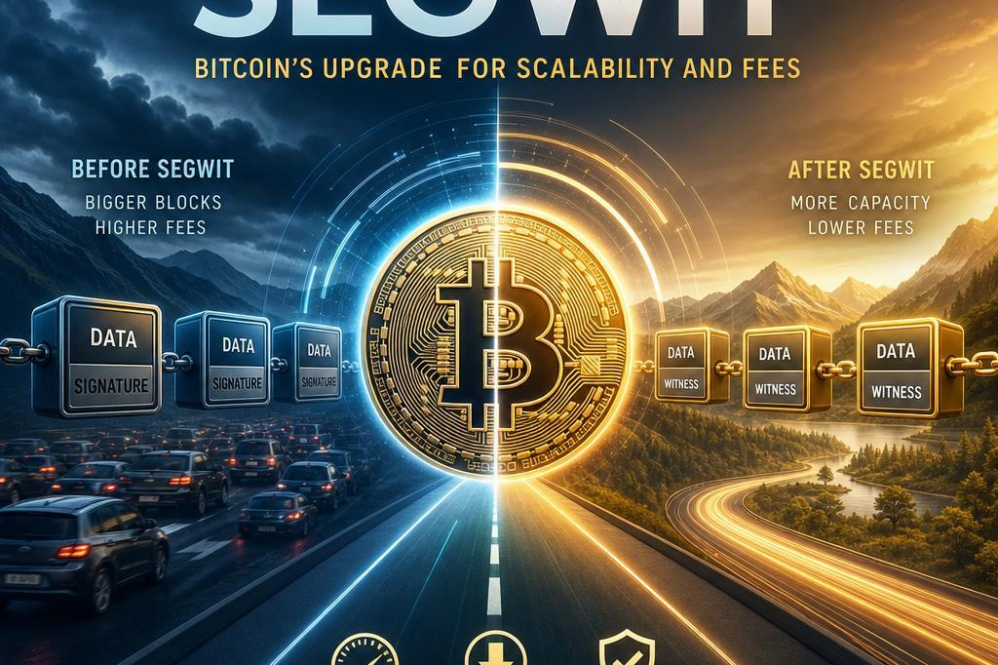
Understanding the Technical Structure of SegWit and Its Impact on Transaction Efficiency
At its core, Segregated Witness (SegWit) introduces a radical restructuring to bitcoin’s transaction format by separating the digital signature data (witness) from the original transaction data. This separation is crucial becuase it effectively reduces the size of each transaction without altering its basic components, allowing more transactions to fit within a single block. The technical mechanism relies on modifying the way transaction IDs are calculated, which sidesteps previous limitations linked to signature malleability and enables enhanced transaction throughput.
Key elements within SegWit’s technical design include:
- Witness data segregation: Signature data is stored outside the base transaction block enabling lighter core transaction data.
- Transaction ID immutability: By excluding signatures from the ID calculation,transaction malleability is eliminated.
- Soft fork deployment: SegWit maintains backward compatibility, allowing older nodes to continue operation alongside SegWit-enabled nodes.
| Feature | Pre-SegWit | Post-SegWit |
|---|---|---|
| Transaction Size | ~300 bytes | ~180 bytes (witness excluded) |
| Max Transactions/Block | ~2,000 | ~2,700+ |
| Signature Malleability | Vulnerable | Resolved |
This breakthrough considerably impacts transaction efficiency by reducing congestion and lowering fees,making bitcoin more scalable and economically viable for everyday use. By refining how data is packaged and validated, SegWit paves the way not only for improved transaction speed but also for subsequent innovations like the Lightning Network, which rely heavily on its robust technical foundation.
Analyzing the Scalability Improvements Brought by SegWit in bitcoin Networks
Segregated Witnessor SegWit, revolutionizes bitcoin’s scalability by fundamentally altering the way transaction data is stored and processed. By separating the witness data (signatures) from the transaction data,SegWit effectively increases the block size limit without the need to change the 1MB block size cap explicitly. This clever restructuring enhances the block’s capacity to hold more transactions, directly contributing to improved throughput and network efficiency.
one of the pivotal benefits realized through this upgrade is the reduction in transaction weight, measured by the block weight metric introduced alongside SegWit. This means that users can fit more transactions in a single block due to the lower “weight” attributed to SegWit transactions versus conventional ones. The network experiences reduced congestion and shorter confirmation times, which collectively lower transaction fees as miners can include more transactions per block.
Key scalability improvements of SegWit include:
- Increased effective block capacity (~4 MB block weight limit)
- Lower transaction fee rates due to improved space efficiency
- Mitigation of transaction malleability, enabling second-layer solutions like the Lightning Network
| Metric | Pre-SegWit | Post-SegWit |
|---|---|---|
| Max Block Size | 1 MB | 1 MB (plus up to 3 MB witness data, effectively ~4 MB) |
| Average tx Capacity per Block | ~2,000 transactions | ~2,800+ transactions |
| Median Tx Fee (satoshis/byte) | ~50 | ~20-25 |
Evaluating Fee Reduction Mechanisms enabled by SegWit Adoption
Segregated Witness (SegWit) fundamentally revamped the way transaction data is structured, enabling a more efficient use of block space.By separating signature data from transaction information, SegWit allows for smaller transaction sizes which directly drives down average transaction fees. This optimized data layout primarily benefits users by reducing the overall demand for block space and thus alleviating fee pressure during periods of network congestion.
The fee reduction mechanisms enabled by SegWit can be observed through the following key factors:
- Weight units: SegWit transactions are measured in weight units rather than traditional byte sizes, allowing more transactions per block and reducing fee per transaction.
- Batching and efficiency: Wallets and exchanges adopt SegWit to pack multiple outputs into fewer inputs, leveraging smaller signatures for lower aggregate fees.
- Lower fee rate variance: With more predictable transaction sizes, users can estimate fees with greater accuracy, avoiding overpayment.
| Transaction Type | Average Size (bytes) | Estimated Fee (sats) |
|---|---|---|
| Legacy | 250 | 1500 |
| SegWit Native | 140 | 840 |
| SegWit Nested | 180 | 1080 |
This table illustrates a clear reduction in transaction size and consequently fee requirements when using segwit formats. By adopting these innovations, the bitcoin network not only scales more gracefully but also makes participation more economically accessible for everyday users.
Best Practices for Integrating SegWit into bitcoin Wallets and Services
Adopting SegWit within bitcoin wallets and services requires meticulous attention to compatibility and user experience. Developers should ensure backward compatibility by maintaining support for both legacy and SegWit addresses, allowing a smooth transition without disrupting existing users. Implementing flexible address formats such as Bech32 for native SegWit and P2SH-wrapped segwit ensures broader network adoption while reducing transaction size and fees. Additionally, wallet UIs must clearly differentiate address types and provide educational prompts to help users understand the benefits and implications of using SegWit addresses.
Robust testing is paramount to avoid pitfalls during the integration. This involves extensive testnet deployment,simulating transactions with various SegWit address formats,and validating signature processes under different network conditions. Wallets should emulate real-world scenarios like transaction batching and multisignature wallets that maximize the efficiency gains SegWit offers. Integrators are encouraged to use libraries and APIs that natively support SegWit’s signature hashing and malleability fixes, minimizing custom advancement effort and enhancing security.
| Best Practice | Benefit |
|---|---|
| Support Bech32 and P2SH-Wrapped SegWit addresses | Maximizes compatibility and lowers fees |
| Implement clear UI indicators for address types | Improves user trust and reduces transaction errors |
| Thorough testnet validation before mainnet deployment | Ensures stable and secure operation |
| Utilize mature SegWit-compatible libraries | Minimizes bugs and enhances maintenance |
![Long bitcoin [btc] if price up to 4400 usd.](https://ohiobitcoin.com/storage/2019/01/7cPjvj.png "Long bitcoin [btc] if price up to 4400 usd.")