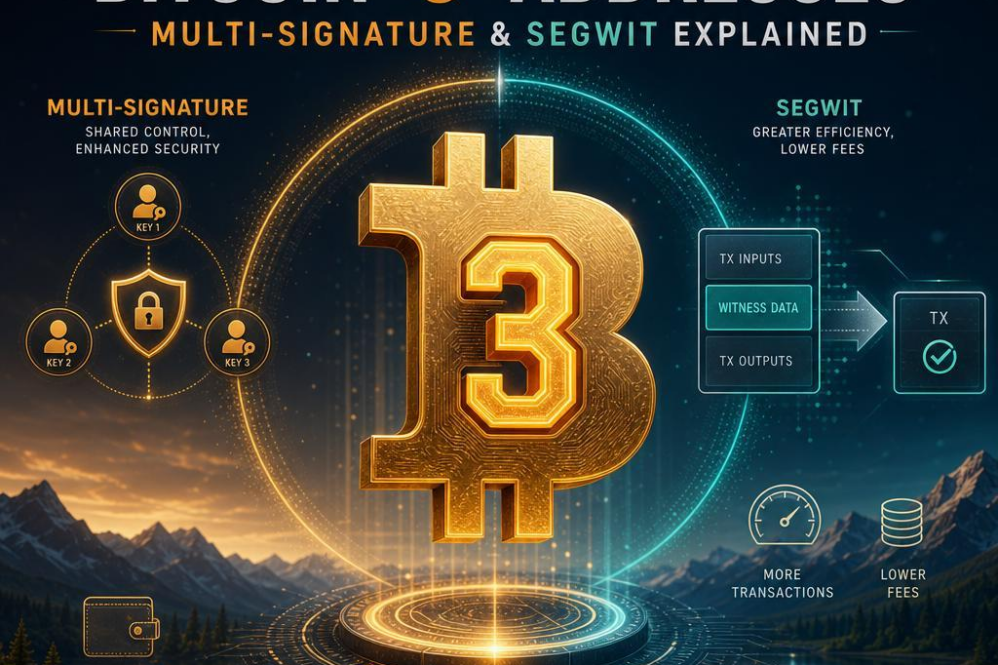
Understanding the Fundamentals of bitcoin ‘3’ Addresses
bitcoin addresses starting with the digit ‘3’ primarily represent pay-to-Script-Hash (P2SH) addresses. These addresses enable more complex transaction scripts beyond the standard single-key mechanism, enhancing both functionality and security.A fundamental use case is the implementation of multi-signature (multi-sig) wallets, requiring multiple private keys to approve a transaction before spending funds. This setup drastically reduces the risk of theft or unauthorized access by distributing control among several parties.
Another important request of ‘3’ addresses is their role in Segregated Witness (SegWit) transactions. SegWit was introduced to optimize transaction malleability issues and increase block capacity by separating the transaction signature data from the transaction data. This advancement improves scalability, lowers transaction fees, and expedites confirmation times. Because SegWit transactions use P2SH for backward compatibility, their addresses begin with ‘3’, helping wallets and exchanges easily identify and manage them.
| Address Type | Prefix | Purpose |
|---|---|---|
| P2SH Multi-Signature | 3 | Requires multiple keys to authorize spending |
| SegWit (P2SH wrapped) | 3 | Improves scalability and reduces fees |
| Legacy | 1 | standard single-key transactions |
- Multi-sig setups can involve 2-of-3, 3-of-5or othre key combinations, offering flexible security models.
- Using ‘3’ addresses for SegWit enables widespread adoption without disrupting legacy infrastructure.
- These addresses act as an crucial bridge towards advanced bitcoin features while maintaining compatibility.
exploring Multi-Signature Technology and Its Security Benefits
Multi-signature (or multisig) technology enhances cryptocurrency security by requiring multiple private keys to approve a transaction, rather than relying on a single key. This mechanism dramatically reduces the risk of unauthorized spending, as no single party can move funds unilaterally. Typically, a multisig wallet uses an “M-of-N” scheme, where M signatures out of N possible signers are required to authorize spending – a significant leap from traditional single-key wallets that depend solely on one user’s control.
Distinct advantages of multi-signature technology include:
- Increased security: Even if one key is compromised, funds remain safeguarded by the need for additional confirmations.
- Trustless collaboration: Ideal for businesses or groups, multisig wallets allow joint control without relying on a single trustee.
- Fraud prevention: Unauthorized transactions are thwarted by requiring consensus among multiple parties.
| Feature | Traditional Single Signature | Multi-Signature |
|---|---|---|
| Number of Approvals Needed | 1 | 2 or more (configurable) |
| Security risk | High if key is lost or stolen | Lower due to multiple keys required |
| Use Case | Personal wallets | Corporate accounts, escrow, joint control |
The Role of SegWit in Enhancing bitcoin transaction Efficiency
Segregated Witness (SegWit) revolutionized bitcoin by fundamentally changing the way transaction data is stored. By separating the signature data (witness) from the transaction itself, SegWit effectively increased the block size limit without requiring a hard fork, enabling more transactions to be processed per block. This separation allows for a more efficient use of space on the blockchain, reducing congestion and lowering transaction fees significantly. SegWit’s introduction also mitigated transaction malleability, a critical vulnerability that previously hindered the implementation of advanced protocols like the Lightning Network.
With SegWit-enabled transactions, bitcoin addresses beginning with “3” (P2SH or Pay-to-Script-Hash) became a standard for multisignature wallets and more complex scripts. These addresses are integral to improving security and adaptability, allowing multiple signatures to authorize a transaction. The combination of SegWit with multisignature setups provides a powerful synergy: boosting transaction throughput while enhancing security. This hybrid approach has allowed businesses and users to confidently adopt bitcoin for more varied,high-stake applications without compromising on speed or cost efficiency.
| Feature | Impact | Benefit |
|---|---|---|
| Transaction Size Reduction | Up to 60% | Lower fees,faster confirmation times |
| Transaction Malleability Fix | Resolved | Enables second-layer solutions like the Lightning Network |
| Multisignature support | Standardized in P2SH (3-addresses) | Increased security and usability |
Ultimately,SegWit has been a critical catalyst for bitcoin’s scalability roadmap.It not only makes everyday transactions more efficient but also lays the groundwork for future innovations that promise to push bitcoin’s utility well beyond simple value transfers. Understanding its role helps demystify why certain addresses start with “3” and clarifies the technical advancements enabling bitcoin’s ongoing evolution as a decentralized financial system.
Technical Breakdown of Address Formats and Compatibility
bitcoin addresses starting with the number ‘3′ represent a significant evolution in the cryptocurrency’s addressing system, primarily denoting multi-signature and Segregated witness (SegWit) functionality. These addresses are rooted in the Pay-to-Script-Hash (P2SH) scheme, where the recipient’s address is a hash of a script rather than a simple public key hash. This abstraction enables address complexity hidden behind a single string, facilitating advanced features such as requiring multiple signatures for transaction approval or utilizing witness data to enhance scalability and reduce transaction fees.
- Multi-signature (Multi-sig): Requires multiple private keys to authorize transactions, enhancing security for wallets shared by multiple users or accounts with high value holdings.
- Segregated Witness (SegWit): segregates transaction signatures from transaction data to optimize block capacity and prevent transaction malleability attacks, which is crucial for Layer 2 solutions.
| Address Type | Prefix | Primary Use | Compatibility |
|---|---|---|---|
| P2SH (Legacy Multi-sig) | Starts with ‘3’ | Multi-sig wallets, complex scripts | Widely supported on most wallets, exchanges |
| P2SH wrapped SegWit | Starts with ‘3’ | segwit benefit, backward compatible | Compatible with most existing bitcoin infrastructure |
| Native SegWit (Bech32) | Starts with ‘bc1’ | Optimized for fees and speed | Support growing but less universal than ‘3’ addresses |
Best Practices for Implementing Multi-Signature SegWit Wallets
When deploying multi-signature SegWit wallets, choosing the right combination of signers is crucial. Typically, a 2-of-3 or 3-of-5 configuration balances security with usability, ensuring that no single party can unilaterally control funds while also preventing locked assets due to inaccessible keys. Always distribute keys across diverse devices and geographic locations to mitigate risks such as hardware failure, theftor natural disasters.Regular audits and test transactions help verify that the wallet setup functions correctly under various scenarios without exposing sensitive data.
Security protocols for key management should be stringent. Use hardware wallets or secure offline storage methods for private keys, and avoid keeping all keys on internet-connected devices. Implement multi-factor authentication (MFA) and enforce strict access controls among signatories. Additionally, ensure compatibility of your wallet software by validating it supports native SegWit (bech32) addresses and the relevant scripting standards (P2WSH or P2SH wrapped SegWit) to maximize fee savings and transaction efficiency.
| Best Practice | Benefit | Implementation Tip |
|---|---|---|
| Multi-Device Key Storage | Reduces single point of failure | Use hardware wallets in different locations |
| regular Backup & Testing | Ensures recoverability | Perform periodic dry-run transactions |
| Strict Access Controls | Prevents unauthorized usage | Implement MFA and role-based permissions |
Navigating Common Challenges and Optimization Strategies
One of the primary challenges when working with bitcoin ‘3’ addresses, which encompass both Multi-Signature (MultiSig) and Segregated Witness (SegWit) technologies, is achieving seamless compatibility across wallets and exchanges.Many platforms still lack full support for the advanced scripts embedded in these addresses, often leading to transaction delays or failures. To mitigate such issues, users and developers must stay informed about wallet firmware updates and adopt wallets known for comprehensive SegWit and MultiSig compatibility. Regularly verifying network support before initiating transactions is a crucial preventive step.
Optimization of transaction costs also plays a significant role in managing bitcoin ’3′ addresses. SegWit’s design inherently reduces transaction data size, leading to lower fees; however, crafting efficient MultiSig configurations requires a balance between security and cost-effectiveness. employing the minimum number of required signatures and avoiding unnecessarily complex scripts can streamline processing and reduce fees. Such as, a 2-of-3 MultiSig setup often offers robust security with reasonable transaction weight, unlike more extravagant arrangements that inflate costs.
| Challenge | optimization Strategy |
|---|---|
| Wallet incompatibilities | Use widely supported wallets with proven MultiSig & SegWit features. |
| High transaction fees | Optimize signature thresholds; leverage SegWit’s reduced data size. |
| Complex script management | Keep MultiSig scripts simple and document key roles clearly. |
Developers and users should adopt a proactive approach by regularly monitoring network upgrades and best practices within the bitcoin ecosystem. Leveraging community insight and open-source tools can significantly ease the navigation of common pitfalls, enabling robust and cost-efficient utilization of bitcoin’s ‘3’ addresses.

