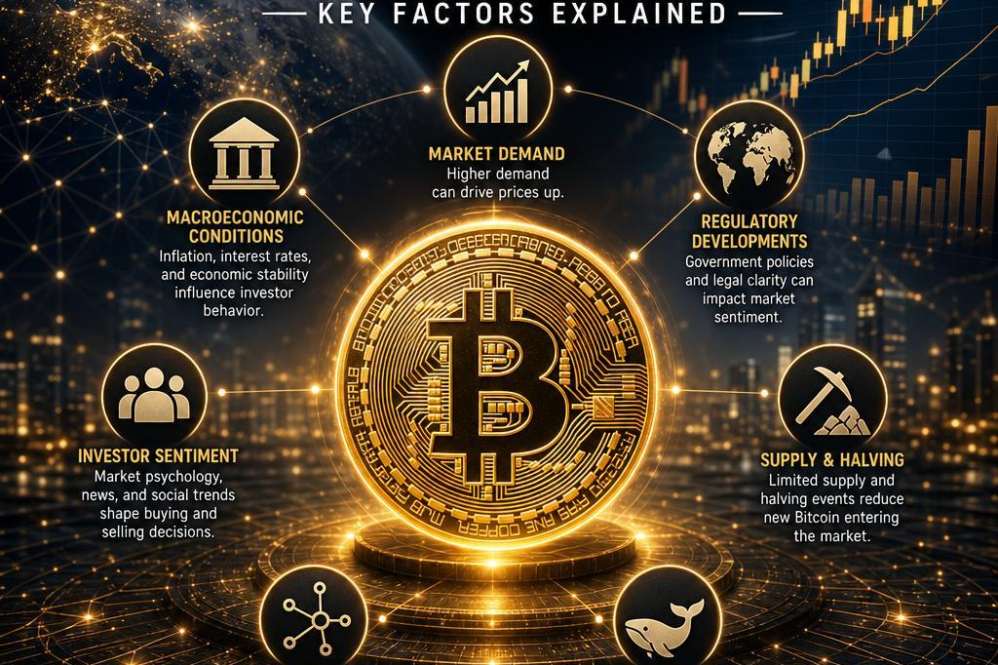
What Influences bitcoin Demand and Supply in the Market
bitcoin’s demand is heavily influenced by a variety of economic and social factors. One primary driver is its perceived value as a digital asset and store of value, frequently enough likened to “digital gold.” Investors gravitate toward bitcoin during times of economic uncertainty or inflation fears, seeking a decentralized choice to customary currencies. additionally, increased adoption by businesses and payment platforms enhances its utility, thus boosting demand. Media coverage and public sentiment also play critical roles, as bullish news can inspire speculative buying and increased interest.
On the supply side, bitcoin’s unique protocol restricts the maximum number of coins to 21 million, creating a capped supply. The mining process, where new bitcoins are generated, occurs at a predictable rate, halving approximately every four years. These “halving” events reduce supply growth, ofen resulting in price adjustments due to scarcity. Moreover, the accessibility of mining technology and the geographical distribution of miners affect liquidity and market availability. Supply can also be affected by large holders who decide to sell or hold, impacting market balance.
| Factor | Impact on Price | Example |
|---|---|---|
| Regulatory Changes | Can cause rapid shifts by influencing investor confidence | Announcement of bitcoin legal status in a new country |
| Market Liquidity | Affects ease of buying/selling,thus price volatility | High trading volumes on major exchanges |
| Technological Developments | improves transaction efficiency and security,enabling broader use | Upgrade from SegWit to Lightning Network |
- Global macroeconomic trends influence investment flows into bitcoin as a hedge.
- Institutional involvement injects ample capital and stability into the market.
- Psychological factors like FOMO and hype cycles drive rapid demand spikes.
The Role of Market Sentiment and Media Coverage on bitcoin pricing
Market sentiment considerably influences bitcoin’s pricing dynamics, often acting as an undercurrent that drives short-term volatility. Traders and investors rapidly react to collective emotions such as fear, greedand optimism, wich can fuel price rallies or exacerbate sell-offs. This sentiment is largely shaped by widespread narratives circulating on social media platforms, forumsand financial news outlets, where real-time details or rumors can prompt swift market reactions.
Media coverage serves as a powerful amplifier of bitcoin’s perceived value and legitimacy. Positive headlines about institutional adoption, regulatory clarityor technological advancements tend to boost confidence among investors, creating upward price momentum. conversely,reports on hacking incidents,regulatory crackdowns,or market manipulation allegations can trigger panic and sharp price declines. The cyclical nature of this interaction means that bitcoin’s price frequently enough reflects not just essential factors but the prevailing stories shaping public opinion.
Understanding how these elements interact is easier when considering their primary channels and effects:
- Social Media: Rapid dissemination and viral spread of market-moving news.
- Financial News Outlets: More in-depth analysis that frames bitcoin’s role in broader economic trends.
- Investor Behavior: Immediate buying or selling decisions influenced by perceived risks and opportunities.
| Factor | Positive Impact | Negative Impact |
|---|---|---|
| media Hype | Increased adoption, price surge | Speculative bubbles |
| Negative News | Market corrections | Large sell-offs |
| Public Sentiment | Investor confidence | Fear-driven panic |
Impact of Regulatory Developments on bitcoin Valuation
Regulatory developments exert a profound influence on bitcoin’s valuation by shaping market confidence and accessibility. When governments announce favorable frameworks, such as clear taxation policies or legal recognition, bitcoin often experiences price thankfulness. Conversely, regulatory crackdowns-like bans on cryptocurrency exchanges or initial coin offerings (ICOs)-can precipitate market sell-offs and increased volatility. Traders and investors closely monitor legislative updates worldwide, since uncertainty or ambiguity in regulations tends to suppress demand, while clarity fosters wider adoption.
Key aspects of regulatory impact include:
- market accessibility: Licensing requirements affect how easily users and businesses can interact with bitcoin.
- Institutional Participation: Clear rules encourage institutional investors to enter, frequently enough driving up prices.
- Compliance Costs: Heightened regulatory burdens can increase operational expenses, influencing market supply.
- Cross-border challenges: Differing regulatory regimes complicate international trading and custody of bitcoin.
| Regulatory Scenario | Typical Market Reaction | Short-Term Price Effect |
|---|---|---|
| Positive Legal Recognition | Increased investor confidence and market entry | Price Surge |
| Exchange Ban | Liquidity reduction, panic selling | Price Drop |
| Ambiguous or Delayed Legislation | Investor uncertainty, cautious trading | Price Stagnation/Volatility |
Analyzing Technological Advances and Network Security as Price Drivers
Technological innovation stands at the core of bitcoin’s evolving value landscape. as the underlying blockchain technology advances, scalability solutions like the lightning Network emerge to tackle transaction speed and cost issues. These advancements enhance usability, fostering greater adoption, which in turn exerts upward pressure on bitcoin’s price. Moreover, developments in hardware-such as more efficient mining equipment-impact the security and decentralization of the network, influencing market confidence.
Network security is paramount to the integrity and trustworthiness of bitcoin. the protocol’s resilience against attacks depends heavily on the computational power dedicated by miners globally. Any meaningful improvements in cryptographic algorithms or consensus mechanisms can reinforce this security, mitigating risks of double-spending or 51% attacks. Conversely, vulnerabilities or forks can erode investor confidence, possibly triggering price volatility.
The dynamic interplay between technological progress and network strength can be summarized as follows:
| Factor | Impact on Price | Example |
|---|---|---|
| Scalability Enhancements | Positive, promotes adoption | Lightning Network |
| Mining Hardware Advances | Strengthens security and decentralization | ASIC Miner Efficiency |
| Protocol Vulnerabilities | Negative, undermines confidence | Network Forks |