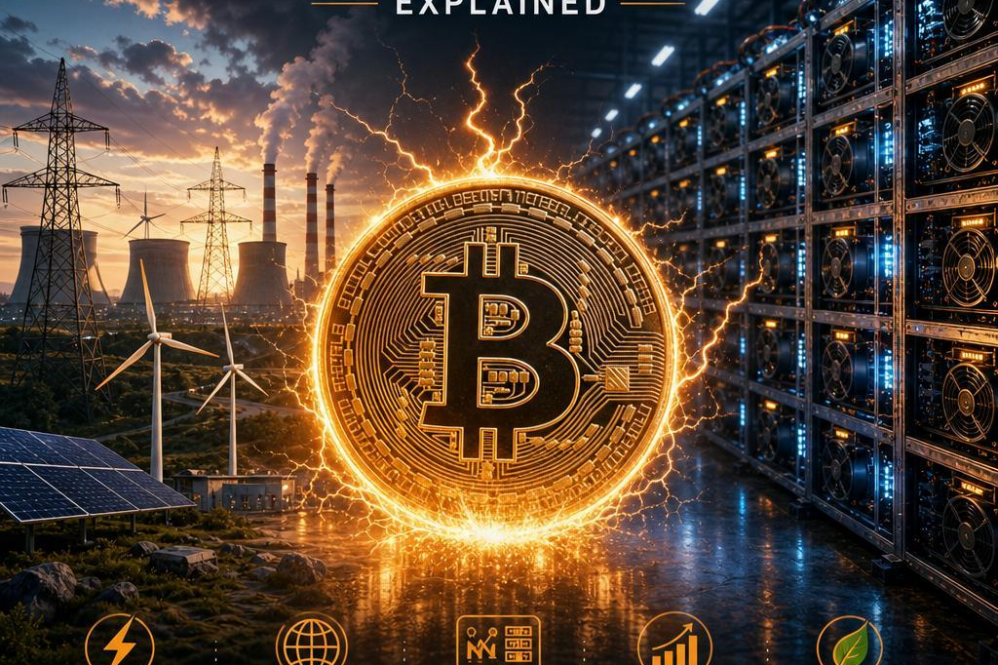
The technical Foundations of bitcoin Mining and Its Energy Implications
The core of bitcoin mining lies in a process known as Proof of Work, where miners compete to solve complex cryptographic puzzles to add new blocks to the blockchain. This competitive task requires immense computational power,as each solved puzzle validates transactions and secures the network against fraud. To achieve this, miners utilize specialized hardware called ASICs (Application-Specific Integrated Circuits) designed for maximum performance in cryptographic hashing. The exponential growth in mining difficulty means that more powerful machines and higher electricity consumption are continuously necessary to maintain mining competitiveness.
One of the critical aspects contributing to bitcoin’s energy-intensive nature is the inherent design of the blockchain’s consensus mechanism. unlike traditional financial systems which rely on verified trust and intermediaries, bitcoin depends solely on decentralized computation power. As a result, energy demand scales with the number of miners and the difficulty of the puzzles, creating a persistent arms race. This has led to massive mining farms often located in regions with cheap electricity and cool climates to reduce operational costs, highlighting the geographic and economic factors intertwined with energy use.
| factor | Description | Impact on Energy Use |
|---|---|---|
| Mining Difficulty | Adaptive algorithm increasing puzzle complexity | Increases computational effort continuously |
| Hardware Efficiency | ASIC advancements reduce energy per hash | Mitigates but does not eliminate overall demand |
| Electricity Source | Fossil vs. renewable energy in mining locations | Determines environmental footprint |
Energy efficiency improvements in hardware have not kept pace with the rapid increases in mining difficulty and network size, resulting in the aggregate electricity consumption remaining extraordinarily high. Additionally, the decentralized and permissionless nature of bitcoin means there is no upper limit on the number of miners or mining power deployed, leading to ever-escalating energy needs. Understanding these technical and systemic characteristics illuminates why bitcoin mining’s environmental impact continues to be a subject of global concern and debate.
Analyzing the Scale and Growth of Energy Consumption in bitcoin Networks
bitcoin mining operates through a process called Proof of Work (PoW), which inherently demands vast computational power.As miners compete to solve cryptographic puzzles to validate transactions, the network’s total energy consumption scales exponentially with increased participation and rising difficulty levels.This growth in energy use is fueled by the need to maintain security and decentralization, resulting in a relentless demand for electricity, often supplied by specialized hardware operating 24/7.
several factors contribute to the rapid escalation in energy consumption:
- Mining Difficulty Adjustment: The bitcoin protocol automatically increases puzzle complexity as more miners join, necessitating greater computational resources.
- Global Miner Expansion: New mining operations launch worldwide,amplifying cumulative energy use exponentially.
- Hardware Efficiency Race: Miners continually upgrade to more powerful machines, which, despite being more efficient, require more energy overall due to intensified competition.
| Year | Estimated Network Energy Use (TWh) | Global Energy Usage Equivalent |
|---|---|---|
| 2017 | 29 | Denmark |
| 2020 | 73 | chile |
| 2023 | 120 | Belgium |
*figures represent estimated annual energy consumption compared to national energy use benchmarks.
Environmental Consequences Stemming from Intensive bitcoin Mining Operations
bitcoin mining requires an enormous amount of computational power, translating directly into staggering electrical energy consumption. This extensive usage places immense pressure on local power grids and frequently enough necessitates the operation of additional power plants, many of which rely on fossil fuels. As a result, regions hosting intensive mining farms frequently experience increased carbon emissions, exacerbating global warming and environmental degradation. The electricity demand per transaction can exceed that of entire households, illuminating the scale of resources consumed in maintaining the blockchain’s integrity and security.
Key environmental impacts include:
- Increased greenhouse gas emissions due to fossil fuel dependency
- Elevated strain on water resources used in cooling systems for mining hardware
- Significant electronic waste generated from obsolete mining equipment
| Environmental Factor | Impact Level | Contributing Element |
|---|---|---|
| Carbon emissions | High | Coal and natural gas plants |
| Water Usage | Moderate | cooling processes |
| Electronic Waste | Growing | Hardware turnover |
Addressing these consequences necessitates a robust approach that advocates for greener energy sources, improved energy efficiency in mining hardwareand enduring recycling practices. Without significant reforms, the environmental footprint of bitcoin mining operations will continue to expand, posing critical challenges for climate policy and sustainable resource management worldwide.
Comparative Energy Use in bitcoin Mining Versus Traditional Financial Systems
bitcoin mining operates on a proof-of-work mechanism that demands substantial computational power, driving its energy consumption to levels that often raise eyebrows. Unlike traditional financial systems, which rely heavily on centralized data centers and physical bank branches that distribute their energy usage across multiple services, bitcoin’s decentralized ledger requires continuous and intense solving of cryptographic puzzles. This process,while crucial for transaction validation and network security,significantly amplifies the energy footprint per transaction.
Critical distinctions in energy consumption include:
- Traditional banking systems leverage existing infrastructure shared with various financial services, optimizing energy use across multiple applications.
- bitcoin mining requires dedicated, high-performance hardware running continuously, increasing electricity demand substantially.
- While banks consume energy over a broad network of physical locations and servers, bitcoin’s energy consumption is more concentrated but continuously intensive.
| System | Average Energy Use (kWh per transaction) | Operational Model |
|---|---|---|
| bitcoin Mining | 900 | Decentralized, Proof-of-Work |
| Traditional Banking | 0.5 | Centralized, Server Networks |
Despite the stark differences, some advocates argue that bitcoin’s energy use drives innovation in renewable energy adoption within mining operations. Traditional financial systems are gradually integrating energy-efficient technologies, but bitcoin’s energy intensity remains a distinct environmental challenge demanding further technological and regulatory advancements.
Innovative Technologies and Strategies to Mitigate Mining Energy Demand
Addressing the surging energy consumption in cryptocurrency mining requires breakthroughs in technology and strategic implementations tailored to optimize power usage. One significant advancement is the integration of energy-efficient mining hardware that dramatically reduces electricity draw per mined coin. These next-generation ASICs (Application-specific Integrated Circuits) are engineered to maximize hashing power while minimizing wasted energy, marking a pivotal shift from traditional, power-intensive models.
Complementing hardware innovations,the deployment of renewable energy sources such as solar,wind,and hydropower stands as a transformative approach. Mining operations now increasingly locate in regions boasting surplus green energy or craft hybrid systems that balance grid power with renewables.This dual strategy not only cuts carbon footprints but also leverages cheaper,sustainable electricity,creating an economically and environmentally responsible mining paradigm.
Beyond technological shifts, operational strategies play a crucial role. Dynamic load balancing through smart grid integration enables miners to adapt consumption based on real-time energy pricing and availability, often shifting heavy activity to off-peak hours. Additionally, employing liquid cooling systems enhances thermal management, reducing the need for power-hungry air conditioning. Together, these tactics construct a multi-pronged defense against the heavy energy demands intrinsic to bitcoin mining.
| Technology/Strategy | Primary Benefit | Impact on Energy Usage |
|---|---|---|
| Energy-Efficient ASICs | Higher performance per watt | Up to 30% reduction |
| Renewable Energy Integration | Lower carbon footprint | Variable, depending on source |
| Dynamic Load Balancing | Optimized power consumption timing | 10-15% operational savings |
| Liquid Cooling | Reduced cooling power requirements | 20-25% reduction in cooling energy |
Regulatory and Policy Recommendations for Sustainable bitcoin Mining Practices
“`html
To align bitcoin mining with environmental sustainability goals, policy frameworks must prioritize clear energy consumption standards and enforceable emissions limits. Governments could implement tiered energy regulations that encourage miners to adopt renewable sources, rewarding those who demonstrate reduced carbon footprints with tax incentives or expedited permitting processes. Additionally, transparency mandates requiring miners to publicly report energy use and emissions data woudl facilitate accountability and provide regulators with actionable insights for ongoing adjustments.
Encouraging decentralized, community-based mining operations powered by local renewable energy resources can reduce grid strain and promote equitable economic benefits. Policies fostering collaboration between mining enterprises and utility providers can enable more efficient load management and integration of mining demand into smart grid systems.This approach amplifies the potential for sustainable growth without compromising network security or decentralization principles intrinsic to bitcoin’s design.
Below is a concise comparison of exemplary regulatory approaches targeting sustainable bitcoin mining:
| Regulatory Approach | Key Feature | Impact on Mining Sustainability |
|---|---|---|
| Renewable Energy Mandates | Minimum % of energy from renewables | drives green energy adoption; reduces emissions |
| Energy Reporting Requirements | Mandatory disclosures of consumption and emissions | Increases transparency; informs policy adjustments |
| Incentive Programs | Tax breaks and grants for sustainable practices | Encourages innovation in energy efficiency |
