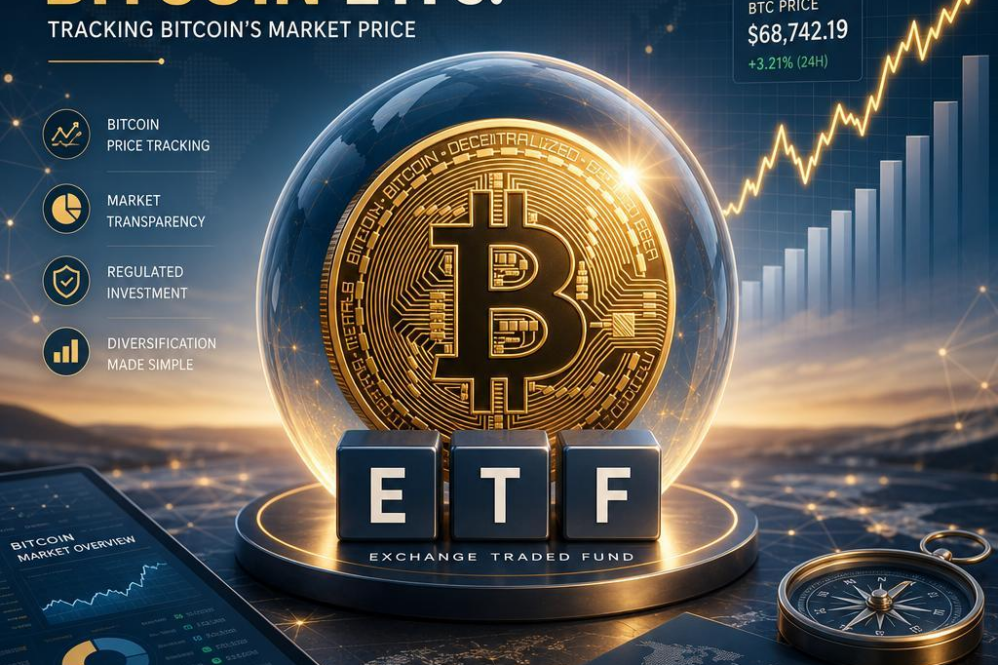
Understanding the Core Mechanism of bitcoin ETFs and Their Market Role
at the heart of bitcoin ETFs lies the intricate process of mirroring bitcoin’s price movements without requiring investors to directly own the cryptocurrency. These financial instruments function by tracking the underlying asset thru various mechanisms such as holding actual Bitcoins, futures contractsor a combination of derivatives. By doing so, they make bitcoin accessible within traditional investment portfolios, offering exposure with the regulatory safeguards and convenience of established markets. The core mechanism hinges on maintaining a price correlation that faithfully reflects bitcoin’s fluctuations, ensuring investors experience authentic market performance.
Key components of bitcoin ETF operations include:
- Asset custody: Secure storage of Bitcoins or related securities by regulated custodians.
- Price tracking: Real-time valuation techniques that keep ETF prices aligned with bitcoin’s market value across exchanges.
- Regulatory compliance: Adhering to investment fund guidelines that protect investors and maintain transparency.
The market role of bitcoin ETFs extends beyond mere price replication; they serve as critical bridges that integrate cryptocurrency into the conventional financial ecosystem. By offering a product that can be bought and sold on standard stock exchanges, these ETFs enhance liquidity and lower the barriers to entry, particularly for institutional investors.This broadened participation often stabilizes pricing dynamics and stimulates market maturity. the table below illustrates comparative benefits between direct bitcoin investment and ETF exposure, highlighting why ETFs have become a vital instrument for diversified portfolio strategies.
| Aspect | Direct bitcoin | bitcoin ETF |
|---|---|---|
| Accessibility | Requires crypto wallet and exchange account | Available via traditional brokers |
| Security | High risk of theft/hacking | Custodied by regulated entities |
| Liquidity | Varies by exchange volume | Traded on major stock exchanges |
| Regulation | Limited and evolving | Subject to financial authority oversight |
Analyzing the Correlation Between bitcoin ETFs and bitcoin Spot Price
bitcoin ETFs (Exchange-Traded Funds) serve as an accessible gateway for traditional investors to gain exposure to the cryptocurrency market without holding bitcoin directly. Tracking the price of bitcoin through ETFs involves understanding the underlying mechanisms that link ETF valuations with bitcoin’s spot price. These ETFs usually mirror the spot price of bitcoin by holding bitcoin assets or futures contracts, creating a close but not always perfect correlation. Market sentiment, liquidityand regulatory developments can, at times, create gaps between the ETF price and the actual spot price on exchanges.
Several factors influence the strength and stability of the correlation between bitcoin ETFs and the spot price, including:
- Asset management strategies: Physical-backed ETFs tend to track more closely compared to futures-backed ETFs.
- Market liquidity and demand: High investor interest typically helps tighten the price differential.
- Regulatory environment: New policies or approval announcements can temporarily disrupt price alignment.
| Factor | Impact on Correlation | Example |
|---|---|---|
| Type of ETF | Determines direct bitcoin exposure | physical vs. Futures-backed |
| Liquidity | Reduces arbitrage gaps | High trading volume |
| Regulation | May cause temporary dislocations | SEC approval delays |
Understanding these dynamics empowers investors and analysts to better interpret market signals and anticipate potential deviations. While bitcoin ETFs provide a convenient proxy for the cryptocurrency’s market price, continuous monitoring of influencing conditions is essential to grasp the fluid nature of the correlation between these financial instruments and the underlying asset.
Evaluating the Risks and Benefits of Investing in bitcoin ETFs
Investing in bitcoin ETFs offers a novel way to gain exposure to the volatile world of cryptocurrencies without directly owning the underlying asset. One of the primary advantages is ease of access-investors can buy and sell shares of a bitcoin ETF much like traditional stocks,benefiting from the convenience of established brokerage platforms.This structure also allows for diversification within a regulated environment, frequently enough appealing to institutional investors and risk-averse individuals alike.
However, alongside these benefits come inherent risks. The value of bitcoin ETFs closely correlates with bitcoin’s market price, wich is known for its dramatic price swings. This means investors are exposed to meaningful volatility. Additionally, ETFs may encounter tracking errors, where the fund’s price diverges slightly from the actual price of bitcoin due to management fees, liquidity issuesor the methods used to replicate bitcoin’s performance. Understanding these elements is crucial before committing capital.
To provide a clearer picture, consider the following summary of risks and benefits:
| Aspect | Benefit | Risk |
|---|---|---|
| Regulation | Governed by financial authorities | Regulatory changes may affect availability |
| Liquidity | Easily tradable on exchanges | Market volatility can limit liquidity |
| Volatility | Potential for high returns | Severe price fluctuations |
Strategic Recommendations for Incorporating bitcoin ETFs into Investment Portfolios
Effectively integrating bitcoin ETFs into diversified investment portfolios demands a deep understanding of their unique risk-return profile. Investors should begin by conducting a thorough analysis of their overall asset allocation, ensuring that bitcoin exposure does not exceed a prudent percentage tailored to their risk tolerance. Balancing volatility is essential, as bitcoin ETFs typically exhibit higher price fluctuations compared to traditional assets, thus necessitating a strategic approach that includes regular portfolio rebalancing and continuous performance monitoring.
Investors are advised to leverage the inherent benefits of bitcoin ETFs such as ease of transaction, regulatory oversight, and improved liquidity, which collectively enhance portfolio flexibility and accessibility. however, it remains crucial to consider the ETF’s expense ratios and tracking accuracy-two factors that impact net returns significantly. Employing a comparative evaluation of various bitcoin ETFs based on these metrics enables investors to select vehicles that effectively mirror bitcoin’s market price without excessive drag on performance.
Below is a comparative overview of key factors to consider when selecting bitcoin ETFs for portfolio inclusion, presented with WordPress-compatible table styling for clarity:
| Factor | Consideration | Impact on Portfolio |
|---|---|---|
| Expense Ratio | Lower fees preserve returns | Improves long-term growth potential |
| Tracking Accuracy | Close replication of bitcoin price | Enhances portfolio performance alignment |
| Liquidity | ease of buying and selling shares | Facilitates timely portfolio adjustments |
- Regular Review: Schedule consistent evaluations to align bitcoin ETF exposure with evolving financial goals.
- Risk Management: Employ stop-loss orders or hedging strategies where suitable to mitigate adverse market movements.
- Diversification: Combine bitcoin ETFs with other cryptocurrencies and traditional asset classes for optimized risk distribution.