This is a paid press release, which contains forward looking statements, and should be treated as advertising or promotional material. bitcoin.com does not endorse nor support this product/service. bitcoin.com is not responsible for or liable for any content, accuracy or quality within the press release.
TOKENGEN, the First Component of the Fabric Token Ecosystem, Provides a Simple and Intuitive Web Interface, Allowing Anyone to Create Smart Contracts for the Token Economy Without Any Programming Knowledge Needed.
, dubbed the ultimate smart contract generator for the token economy, has been released in live demo mode by the Fabric Token team for users to test – .
The tool will be fully released after the end of the FT crowdsale, on April 1st at exactly 10:00 A.M. UTC. After that, the team will implement TokenGen with the main Ethereum network and the tool will start to function as intended.
This way users will finally have a cost-effective way of creating the smart contract code for their tokens and crowdsales. TokenGen features a simple step-by-step process that allows the user to generate a smart contract package containing all of the code necessary to deploy a token on the Ethereum network and then run a crowdsale in order to sell it to interested parties.
TokenGen 1.0 will support several smart contract templates for both tokens and crowdsales, which will allow users to further customize their project in order to meet their specific needs. TokenGen 2.0, which is due to be released towards the end of April, will add more advanced smart contract templates, which will further improve the tool’s customization scope.
The Fabric Token ecosystem is a platform, focused on helping users and businesses generate smart contracts and decentralized applications (DApps), without the need to rely on programming experts.
The FT crowdsale has so far raised a little over 2,000 Ethereum out of the 9668.25 ETH hard cap. It will run until the hard cap is reached or until April 1st, 2018. Unsold tokens will be burned in the end.
The FT crowdsale has a minimum cap of 0.1 ETH and a maximum cap of 9 ETH on contributions. 1 ETH purchases 8,000 FT. With just about a week left until the Fabric Token ICO ends, now might be the last chance to purchase FT at its crowdsale price, a token that is the fundamental “fuel” for a platform with unlimited potential.
ABOUT THE FABRIC TOKEN ECOSYSTEM
The Fabric Token Ecosystem is a blockchain-based startup created by Niquid Tech OÜ, an Estonian company founded in 2017.
Official Project Website: https://fabrictoken.io
TokenGen website: https://tokengen.io
Telegram: https://t.me/fabric_token
Twitter: https://twitter.com/fabric_token
Contact Email Address
doni.karaivanov@gmail.com
Supporting Link
This is a paid press release. Readers should do their own due diligence before taking any actions related to the promoted company or any of its affiliates or services. bitcoin.com is not responsible, directly or indirectly, for any damage or loss caused or alleged to be caused by or in connection with the use of or reliance on any content, goods or services mentioned in the press release.
The post appeared first on .
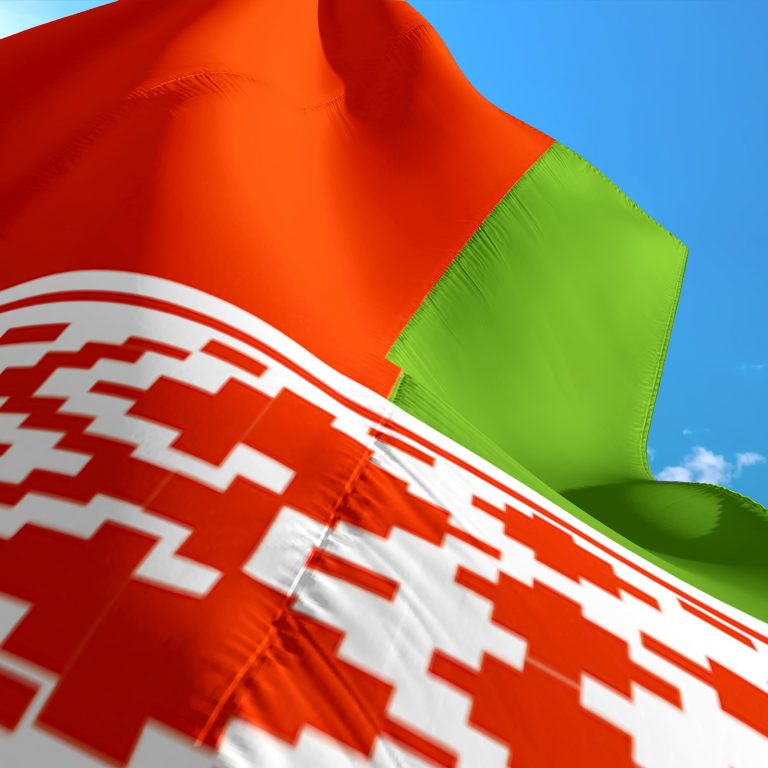
Crypto-related activities are now considered legal in Belarus. The presidential decree “On the Development of the Digital Economy” came into force on March 28. The country aims to become a global IT hub luring entrepreneurs from around the world with a business-friendly environment. Unprecedented freedoms and generous incentives are enticing crypto companies to invest in the former Soviet republic.
Also read:
Crypto Activities Are Free, Tax-Free
, a country that suffers from a bad reputation with politicians in the West, is now set to improve its image with western businessmen. On Wednesday, the close ally of Moscow, also called the last dictatorship in Europe, became a European leader as far as crypto freedoms are concerned. Comprehensive regulations, largely legalizing the crypto sector, are now officially in place.
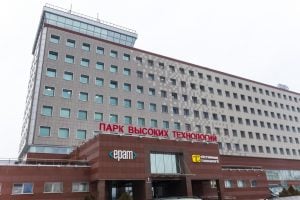 Belarus High-Tech Park
, signed by President Alexander Lukashenko in December, entered into force on to create conditions for the development of the digital economy in Belarus. It effectively legalizes crypto business activities, like exchange services, initial coin offerings, mining operations, smart contracts. The document does not restrict the issuing, storage, and trade of digital tokens. Individual entrepreneurs and corporate entities from the crypto industry are free to do business anywhere, as long as they register as residents of the Belarus High Technologies Park ().
Lukashenko’s decree introduces tax breaks and other incentives for crypto businesses until January 1, 2023. No taxes will be imposed on companies that profit from mining, issuing and placement of digital coins. The same applies to crypto-related income of private individuals from mining and trading cryptocurrencies. In the next five years, even crypto firms based abroad will not be taxed.
The new regulations include measures to simplify procedures regarding foreign trade and the hiring of foreign nationals by the residents of the Hi-Teck Park. Employees and investors in the HTP will not be required to apply for work permits. They will also benefit from a special visa waiver regime and will be granted temporary residence status in Belarus.
Comprehensive Regulations Adopted
An array of legal changes accompany the Decree “On the Development of the Digital Economy”. This week Belarus implemented a aimed at adjusting its accounting practices to address cryptocurrencies. It classifies “digital tokens” as cryptos in the new provisions, according to their acquisition and intended use. Authorities have defined the information crypto companies and entrepreneurs are required to share. The National Chart of Accounts has been amended.
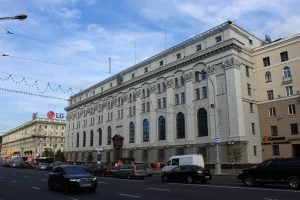 The National Bank of Belarus
The central bank of Belarus has also implemented changes. They concern the oversight of commercial banks and other financial institutions and introduce new requirements for the internal control procedures. According to the government press service, the new rules aim to prevent the legalization of illicit incomes, terrorism financing and the proliferation of weapons of mass destruction. Officials claim the regulations are intended to perfect anti-money laundering measures and improve cybersecurity.
Taking into account all challenges, Minsk has decided to create a special Council for the Development of the Digital Economy. It is tasked with coordinating the digitization and the development of the information and communication sectors. The council is chaired by Prime Minister Andrei Kobyakov. Furthermore, President Lukashenko spoke about the creation of a Ministry of the Digital Economy, and voiced his support for the idea. The new department may be set up as early as this year.
Belarus to Make the Most of It
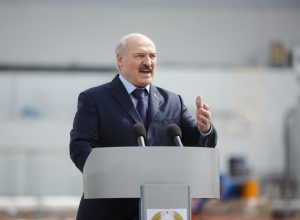 Alexander Lukashenko
Alexander Lukashenko has stated many times that his country needs to learn how to benefit from the development of the information and communication technologies. In December, the Belarusian leader said the country’s IT industry needs a new impulse. “Belarus should become attractive for talented people and successful companies,” he insisted, quoted by RIA Novosti. Belarus has what it takes to develop artificial intelligence, big data and blockchain technologies, he added.
Lukashenko said he had no intentions to slow down the progress but warned entrepreneurs they should not forget the state and its interests. “Let’s work together for this piece of land. I will guarantee you stability and non-interference,” he promised.
Belarusian authorities have registered unprecedented interest from crypto businesses since the signing of Decree №8. The government in Minsk announced that the number of new registrations with the High-Tech Park increased by about a quarter in 2018. Residents of the High-Tech Park now work in 67 markets around the world.
While the new regulations create favorable conditions for foreign investments and technological development, critics point out that Belarus may become just another offshore zone, a crypto-friendly one. The question when ordinary Belarusians will be able to receive their salaries in bitcoin and pay their bills with cryptocurrency, remains unanswered, for now at least.
Do you think other countries in Europe will follow Belarus and adopt their own comprehensive regulations for the crypto industry? Share your expectations in the comments section below.
Images courtesy of Shutterstock.
Express yourself freely at bitcoin.com’s user forums. We don’t censor on political grounds. Check.bitcoin.com.
The post appeared first on .