The legal Status of bitcoin Across Different Countries
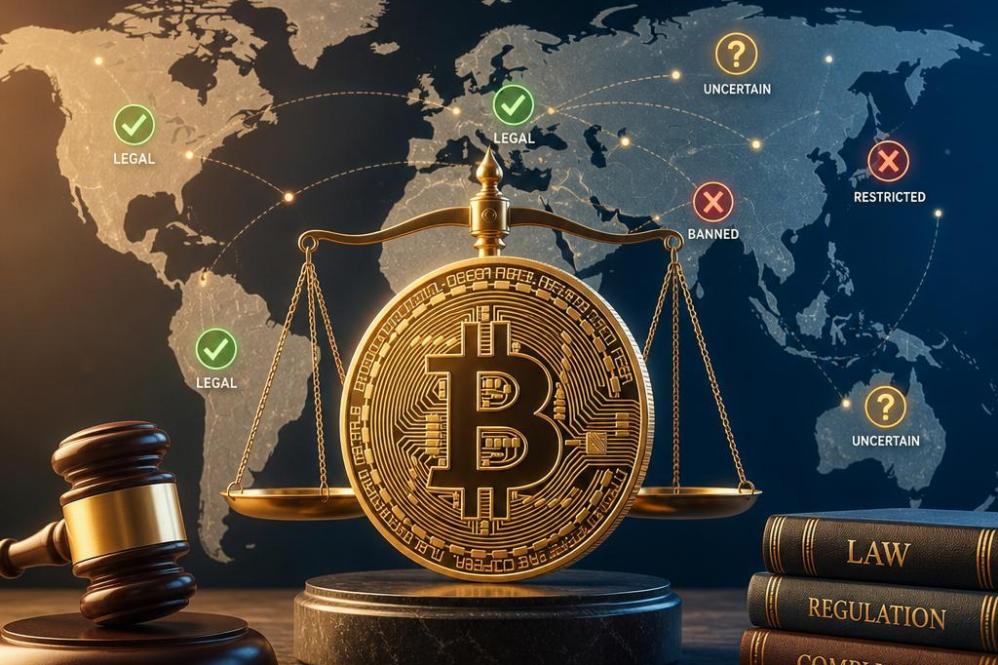
globally, bitcoin’s legal standing is a complex mosaic shaped by varying governmental attitudes towards cryptocurrency. Some nations embrace bitcoin as a legitimate form of digital currency, incorporating it into their financial systems with regulatory frameworks that encourage innovation while aiming to prevent fraud and money laundering.In contrast, other countries have imposed outright bans, deeming bitcoin a risk to economic stability or national security. These diverse stances often reflect broader approaches to digital assets,financial inclusivity,and technological adoption.
To navigate this patchwork of legality, users and businesses must remain acutely aware of local regulations. Such as, certain jurisdictions allow bitcoin trading and investment but restrict its use for payments or mandate stringent Know Your Customer (KYC) procedures. Meanwhile,a few governments classify bitcoin as a commodity rather than currency,impacting how taxes are levied and how transactions are recorded. This regulatory heterogeneity emphasizes the need for tailored compliance strategies based on geographic location.
| Country | Legal Status | Regulatory Notes |
|---|---|---|
| Japan | Recognized currency | Licensed exchanges; consumer protections |
| China | Banned | Prohibits trading & mining activities |
| Germany | Classified as private money | Taxed under capital gains rules |
| United States | Regulated asset | Subject to SEC and IRS guidelines |
- Countries with supportive frameworks: Japan, Switzerland, singapore
- Countries with strict prohibitions: China, Algeria, Bangladesh
- Countries with ambiguous or evolving policies: India, Russia, Brazil
Analyzing Regulatory Frameworks and Their Impact on bitcoin Usage
Across the globe, regulatory frameworks governing bitcoin fluctuate dramatically, directly shaping its adoption and usage. Some countries have embraced the cryptocurrency with open arms, crafting regulations that promote innovation while aiming to protect consumers and prevent illicit activities. These jurisdictions often classify bitcoin as a legal asset or commodity and integrate it into their financial systems with clear guidelines for exchanges,taxation,and Anti-Money Laundering (AML) compliance. Conversely, other governments either impose strict restrictions or outright bans, citing concerns over volatility, fraudand the challenge of monetary control.
Key regulatory approaches include:
- Permissive frameworks: Supportive regulations in places like Switzerland and Japan encourage extensive bitcoin use and institutional investment.
- Restrictive measures: Countries such as China have imposed bans on bitcoin trading and mining, severely limiting its presence.
- Unclear or evolving rules: Many nations are still navigating how to categorize bitcoin, resulting in fragmented rules that create ambiguity for users and businesses.
| Region | Legal Status | Impact on Users |
|---|---|---|
| Europe | Regulated as asset | High adoption with clear compliance |
| Asia | Varied: from acceptance to bans | Mixed usage, regional disparities |
| North America | Regulated under financial laws | Robust market and institutional growth |
| Africa | Emerging frameworks | Growing interest, regulatory uncertainty |
Challenges in Enforcing Cryptocurrency Laws and Compliance
Enforcement of cryptocurrency regulations faces notable hurdles stemming from the decentralized nature of digital assets. Unlike conventional financial systems anchored by central authorities, cryptocurrencies operate on peer-to-peer networks spanning global jurisdictions. This makes tracking illicit transactions and identifying responsible parties exceedingly complex. Regulatory bodies often struggle with limited tools and resources to monitor blockchain activity comprehensively, creating gray areas that malign actors can exploit with relative ease.
Key challenges include:
- Jurisdictional Ambiguity: Cryptocurrencies transcend borders, making enforcement inconsistent across countries with divergent legal frameworks.
- Technological Sophistication: Advanced cryptographic techniques and privacy coins shield user identities, complicating compliance verification.
- Lack of Standardization: Varied interpretations of what constitutes a security, commodityor currency hinder coherent regulatory approaches.
- Resource Constraints: Many enforcement agencies lack skilled personnel equipped to investigate complex blockchain transactions effectively.
| Challenge | Impact on Enforcement | Potential Solution |
|---|---|---|
| Jurisdictional Ambiguity | Incomplete cooperation leading to evasion | International regulatory treaties and harmonization |
| Technological Sophistication | Difficulty tracing illicit transfers | Investment in blockchain analytics tools |
| Lack of Standardization | conflicting laws causing enforcement gaps | Developing unified global standards |
Strategies for Navigating bitcoin Legality in Global Markets
Successfully navigating bitcoin legality requires a solid understanding of local regulations and continuous monitoring of legislative changes. Different jurisdictions vary widely – while some nations embrace cryptocurrency with clear legal frameworks, others impose restrictions or outright bans. To manage these complexities, it’s essential for individuals and businesses to:
- Consult authoritative legal sources regularly to stay informed about updated policies.
- Engage experts or legal counsel specializing in cryptocurrency compliance.
- Implement risk assessment protocols when entering new markets to avoid inadvertent violations.
Additionally, distinguishing between legal use cases – such as personal investment versus commercial transactions - can influence compliance strategy. Some countries legally permit bitcoin trading but restrict its use as a payment method. Below is a simplified comparative overview of how selected countries regulate bitcoin:
| Country | Legal Status | Primary Restrictions |
|---|---|---|
| United States | Legal | tax reporting required, state-level licensing |
| Japan | Legal | Registered exchanges, consumer protection laws |
| China | Banned | Prohibition on trading and mining |
| Germany | Legal | Classified as private money, regulated trading |
To remain compliant globally, businesses should adopt a proactive approach: enhance due diligence, employ geofencing technologies to limit access in restricted areasand design adaptive policies reflecting each market’s evolving legal landscape. Continuous education on digital asset regulations empowers stakeholders to harness bitcoin’s potential while minimizing legal risks.