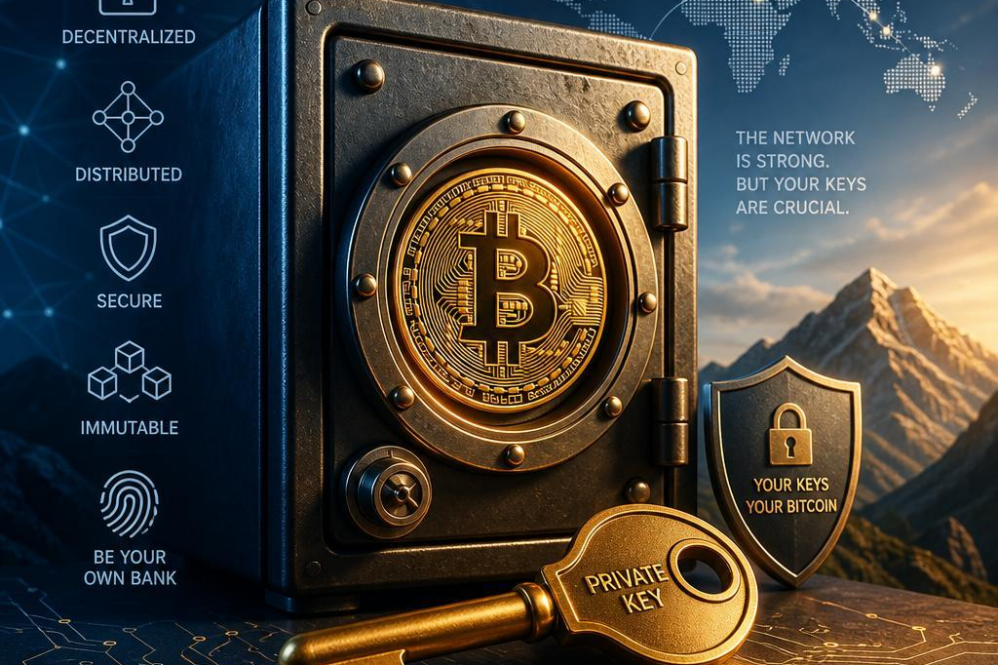
– Understanding the Core Security Features of bitcoin’s blockchain Technology
At the heart of bitcoin’s resilience lies its blockchain,a distributed ledger secured by cryptographic principles that make altering transaction history virtually impossible. Each block is cryptographically linked to the previous one through a process called hashing, creating an immutable chain resistant to tampering.Miners validate transactions by solving complex mathematical puzzles,ensuring that onyl legitimate entries can be added,which upholds the network’s integrity without relying on central authorities.
Core security elements include:
- Decentralization, minimizing single points of failure.
- Consensus mechanisms, which verify and agree upon transaction validity.
- Cryptographic hashing, securing transaction data against alteration.
- Public-private key pairs, enabling secure and verifiable ownership of bitcoins.
| Security Feature | Function | Impact on bitcoin |
|---|---|---|
| Decentralization | Distributes control across many nodes | Increases resistance to censorship and attacks |
| Proof-of-Work | Requires computational effort to validate blocks | Prevents fraudulent transactions and double-spending |
| Cryptography | Secures data and verifies ownership | Protects against fraud and unauthorized access |
– Examining Common Vulnerabilities and Threats to bitcoin Wallets
bitcoin wallets are prime targets for cybercriminals due to the direct access they grant to digital assets. One of the most prevalent vulnerabilities is phishing attacks, were attackers impersonate trusted entities to trick users into revealing thier private keys or seed phrases. These deceptive tactics can range from fraudulent emails to counterfeit wallet apps, making vigilance an essential line of defence for anyone handling bitcoin.
Another significant threat lies in the exploitation of software weaknesses within wallet applications themselves. Vulnerabilities such as insecure key storage, outdated encryption protocolsor flawed random number generators pose serious risks. Attackers who identify these issues can possibly extract private keys or manipulate transactions, rendering the security of the entire wallet ecosystem dependent on constant updates and rigorous code audits.
Physical security is frequently enough underestimated in the digital currency world but remains critical. Hardware wallets, while offering enhanced protection, are susceptible to tampering and hardware-based attacks. Equally, poor handling of backup seeds-like storing them in easily accessible locations or online-can lead to irreversible loss of funds. The table below summarizes typical vulnerabilities and potential impacts to highlight critical areas requiring attention:
| Vulnerability | Attack Vector | Potential Impact |
|---|---|---|
| Phishing | Fake websites, emails, apps | Loss of private keys and funds |
| Software flaws | Weak encryption, bugs | Unauthorized transactions, theft |
| Physical tampering | Hardware wallet manipulation | Compromised key security |
| Poor backup practices | Insecure storage of seed phrases | Permanent loss of access |
– The critical Role of Private Keys in maintaining bitcoin Security
At the heart of bitcoin’s security architecture lies the private key-an alphanumeric code that grants sole ownership and control over a user’s digital assets. Without this key, access to the associated bitcoins is impossible, making it the linchpin of both identity and security within the blockchain ecosystem. The private key is mathematically linked to a public key, but the two are not interchangeable. While the public key can be shared freely to receive transactions, the private key must remain confidential to prevent unauthorized access.
Protecting private keys involves more than just simple password management; it requires a comprehensive approach to cybersecurity practices. Users must employ secure storage options such as hardware wallets, encrypted offline devicesor cold storage solutions to shield their keys from hacking attempts, malwareand phishing attacks. Moreover, users should understand the dangers of key exposure-losing a private key equates to irrevocably losing access to funds, as there is no centralized authority capable of recovery. This immutable nature emphasizes the importance of disciplined key management.
Below is a summary of critical security measures necessary for safeguarding private keys:
- hardware Wallets: Devices purpose-built to isolate private keys from internet exposure.
- Multi-signature Wallets: Requiring multiple private keys to authorize a transaction, adding layers of protection.
- Offline Backup: Secure physical copies stored away from digital vulnerabilities.
- Regular Key Rotation: Changing keys periodically to mitigate potential breaches.
| Security Measure | Purpose | Benefit |
|---|---|---|
| Hardware Wallet | Isolate keys from online threats | Prevents hacks and malware access |
| Multi-signature | Require multiple approvals | Reduces risk of theft from a single point |
| Offline Backup | Physical, air-gapped storage | Safeguards against digital loss |
– Best Practices for Safeguarding Private Keys Against Theft and loss
Maintaining the security of your private keys is paramount to ensuring your bitcoin holdings remain secure. One of the foundational best practices is to store private keys offline,ofen referred to as cold storage. Hardware wallets, paper wallets, and even physically secure safes provide an environment resistant to hacking attempts. Avoiding digital exposure significantly reduces the risk of unauthorized access from malware or phishing attacks. Additionally, creating multiple backups and distributing them in geographically diverse locations strengthens the resilience of your key security strategy against physical loss or natural disasters.
Implementing strong access control measures is another crucial step. Use complex, unique passwords and enable multi-factor authentication wherever possible to guard access points linked to your private keys. It is also advisable to use encrypted containers or vault software to add an extra security layer when transmitting or storing keys digitally. Limiting knowledge of the keys to trusted individuals and regularly updating authorization protocols can prevent insider threats and reduce vulnerability to social engineering.
| Security Practice | Benefits | Recommended Tools |
|---|---|---|
| Cold Storage | Minimizes online exposure,protects from hacks | Hardware wallets,Paper wallets |
| Encrypted Backups | Ensures key availability,thwarts data theft | VeraCrypt,BitLocker |
| Multi-factor Authentication | Strengthens access controls | Google Authenticator,Authy |
| Geographical distribution | Protects against physical damage or theft | Safe deposit boxes,Secure home safes |

