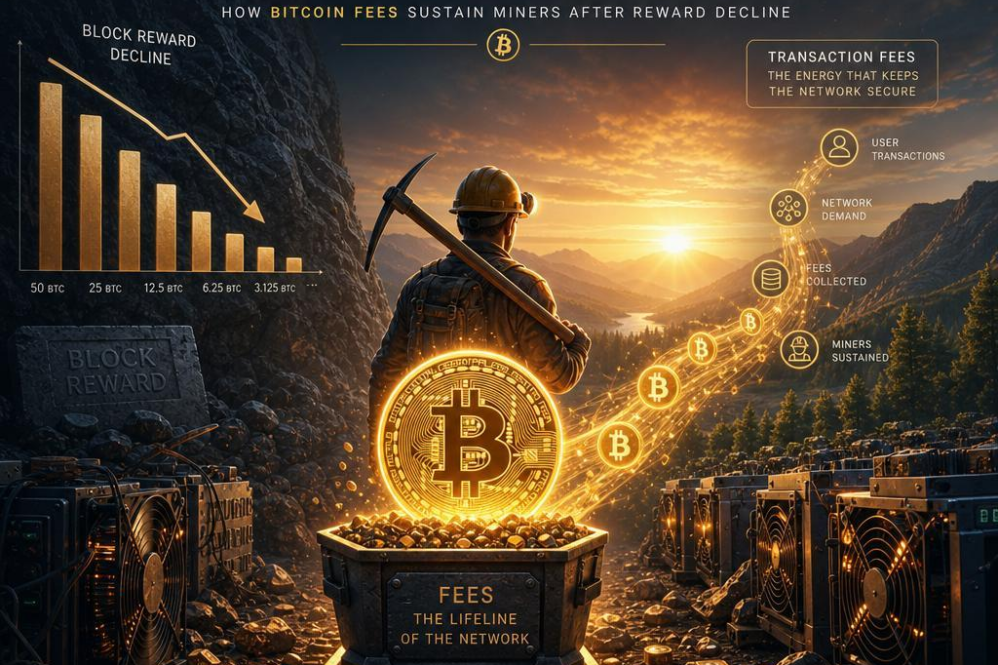
The evolution of bitcoin Mining rewards and Fee Dynamics
As the bitcoin protocol halves the mining rewards approximately every four years-a process known as the halving event-the direct income miners derive from newly minted coins diminishes steadily. Initially, block rewards constituted the lion’s share of miners’ revenue, incentivizing network security and transaction validation. Though,with each successive halving,this reward shrinks,compelling miners to increasingly rely on transaction fees to sustain their operations and uphold the blockchain’s integrity.
The dynamics of transaction fees have evolved into a complex balancing act influenced by network demand, block size limitationsand user urgency.Miners prioritize transactions offering higher fees, effectively creating a market where fees fluctuate based on congestion and usage patterns. Fee volatility has become an essential element for the ecosystem’s sustainability, necessitating efficient fee structures that encourage prompt transaction confirmations while still providing a steady revenue stream for miners despite the declining block rewards.
| Aspect | Reward Phase | Fee Importance | Miner Incentive |
|---|---|---|---|
| Genesis & Early Years | High block rewards | Low | Primarily block rewards |
| Post 3rd Halving | Moderate block rewards | Increasing | Mixed reward & fees |
| Future Outlook | Minimal block rewards | crucial | Primarily transaction fees |
Ultimately, the increasing reliance on fees reshapes how miners strategize their operations. To remain profitable,they must optimize for fee revenue by maintaining robust infrastructure to win the competition of transaction inclusion.This shift underscores fees as the cornerstone of long-term bitcoin network security, ensuring miners remain incentivized to protect the blockchain even when new coin issuance approaches zero.
Understanding bitcoin Transaction Fees as a Revenue Source for Miners
bitcoin miners originally relied heavily on block rewards – newly minted bitcoins awarded for validating transactions and securing the network. However, as the mining reward halves approximately every four years, the proportion of income derived from thes subsidies diminishes. This certain decline positions transaction fees as the primary incentive for miners to continue expending computational power and energy.Fees, paid by users to prioritize their transactions, become a dynamic revenue stream that adapts to network demand and congestion.
The fee market operates on a competitive bidding system where users attach fees to outpace others in the transaction queue. Miners prioritize transactions with higher fees as these yield greater returns per block mined. This creates an efficient mechanism ensuring that limited block space is allocated to transactions valuing prompt confirmation the most. The interplay between fee size and network activity also helps regulate the pace and security of the blockchain by incentivizing miners to stay active, even when block rewards shrink.
| Fee Component | Description | Impact on Miner Revenue |
|---|---|---|
| Base Fee | Minimum fee required per byte of data to enter the mempool | Ensures consistent baseline income across all blocks |
| Priority Fee (Tip) | Additional fee paid to expedite transaction processing | Can significantly increase miner earnings during congestion |
| Dynamic Adjustment | Fee levels fluctuate based on network usage and demand | Aligns miner incentives with user willingness to pay |
- Fee revenue structure encourages miners to maintain network security even as rewards halve.
- Users influence fee amounts to determine transaction speed and priority.
- Market-driven fees optimize the distribution of limited block space efficiently.
Impact of Reward Halving on Miner Incentives and Network Security
The gradual decrease in block rewards through halving events fundamentally shifts the economic calculus for bitcoin miners. As the fixed subsidy shrinks, mining revenue becomes increasingly dependent on transaction fees. This transition necessitates miners to prioritize blocks with higher fee yields, creating a competitive environment where fee strategies directly influence their profitability and operational viability.
Miner incentives are intricately linked to network security, as their motivation to validate transactions ensures the robustness of the blockchain. When block rewards diminish, the reliance on transaction fees to maintain sufficient income can possibly lead to higher fee volatility. However,this dynamic also encourages miners to optimize their equipment and operational efficiency to sustain profitability,thereby reinforcing the overall health of the network.
| Mining Revenue Source | Before Halving | After Halving |
|---|---|---|
| Block Reward | 6.25 BTC | 3.125 BTC |
| Average Transaction Fees | 0.3 BTC | Varies (0.4 – 0.6 BTC) |
| Operational Efficiency | Moderate | High |
This evolution in miner incentives underscores the pivotal role of fees not only in maintaining miner participation but also in safeguarding the decentralized security model of bitcoin. It highlights how economic forces adapt within the protocol to uphold network integrity despite periodic reward reductions.
Analyzing the Relationship Between Fee Market Activity and Mining Sustainability
With the gradual decline of the block reward in bitcoin’s protocol, transaction fees have progressively taken center stage as a vital incentive for miners. This shift has sparked a dynamic interplay between fee market activity and miners’ economic sustainability. as fees compensate for the diminishing subsidy, their volatility and overall volume become critical metrics to watch. When network traffic surges, an elevated fee market ensures miners continue to operate profitably, sustaining the security and functionality of the blockchain at scale.
fee market dynamics reflect more than just user willingness to pay; they serve as a real-time indicator of network congestion and miner revenue potential. As blocks become scarcer in terms of rewards, miners prioritize transactions with higher fees, creating a natural competition that optimizes resource allocation. This competitive behavior aligns economic incentives, encouraging miners to invest in efficient hardware and maintain consistent hashing power to secure the network.
| Fee Market factor | Impact on Mining |
|---|---|
| Transaction Volume | Higher fees due to demand surplus |
| Block Size Utilization | Fee pressure increases with limited space |
| Hashrate Stability | Encourages sustainable mining operations |
ultimately,the mining sustainability in a post-reward era hinges on maintaining a healthy fee market that can adapt to changing network conditions. This balance reinforces the security model of bitcoin, incentivizing miners to stay engaged and innovate. Without a robust fee economy, miners could face economic pressures that threaten overall decentralization and network resilience.
Strategies for Miners to Optimize Fee Income in a Post-Reward Environment
As the block subsidy continues to halve approximately every four years, miners will increasingly depend on transaction fees to sustain their operations. To optimize income in this evolving landscape, miners need to prioritize fee-rich transactions by implementing advanced fee estimation models and dynamic fee bidding strategies. Leveraging machine learning algorithms to predict transaction fee trends enables miners to select blocks filled with higher-fee transactions, maximizing profitability even when block rewards diminish.
Another effective approach is enhancing block space utilization by optimizing which transactions are included. Miners must balance between the total fees collected and the block size limits imposed by the network. Employing child-pays-for-parent (CPFP) and replace-by-fee (RBF) strategies allows miners to prioritize transactions generating higher effective fees. Additionally, mining pools can align incentives and share strategies, ensuring collective optimization that benefits all participants.
| Strategy | Key Benefit |
|---|---|
| Fee Estimation Algorithms | Maximize fee income by targeting higher-fee transactions |
| dynamic Fee Bidding | adapt to network congestion for better fee capture |
| Transaction Prioritization | Optimize block space and total fees earned |
| Mining Pool Coordination | Collective strategy increases overall revenue |
Miners should also embrace technological innovations such as segregated witness (SegWit) and second-layer solutions like the Lightning Network to reduce the size and cost of transactions. By fostering an environment where more transactions occur off-chain while still providing incentives for on-chain fee payments, miners can sustain and even enhance fee income streams. The future demands an agile, data-driven approach to ensure long-term mining viability as block rewards shrink.
Recommendations for Enhancing Fee Structures to Support Long-Term Miner Viability
To sustain miner operations as block rewards diminish, it is crucial to rethink fee structures to create a more balanced and predictable revenue stream. One approach involves implementing dynamic fee adjustments based on network congestion and transaction urgency. Miners can prioritize transactions with higher fees, but a baseline minimum fee ensures consistent earnings even during low-activity periods. Such adaptability prevents sudden drops in miner income while encouraging users to engage with the network responsibly.
Enhancements can also be made by introducing tiered fee models that better reflect the value provided by miners:
- Priority Fee Tier: Fast confirmation for time-sensitive transactions at premium fees.
- Standard Fee Tier: Regular transaction processing with moderate fees, ideal for everyday use.
- Low-Cost Tier: Delayed confirmation options allowing minimal fees, suited for non-urgent transfers.
Additionally, transparent fee distribution mechanisms could be optimized through collaborative protocols where fees are pooled and equitably divided, ensuring smaller miners remain viable. The following table illustrates a simple projection of miner earnings under varying fee strategies over a fixed period:
| Fee Strategy | Average Fee per Tx (BTC) | Miner Revenue Stability |
|---|---|---|
| Static Fee | 0.0001 | Low |
| Dynamic Fee Adjustment | 0.00015 | Moderate |
| Tiered Fee Model | 0.0002 | High |