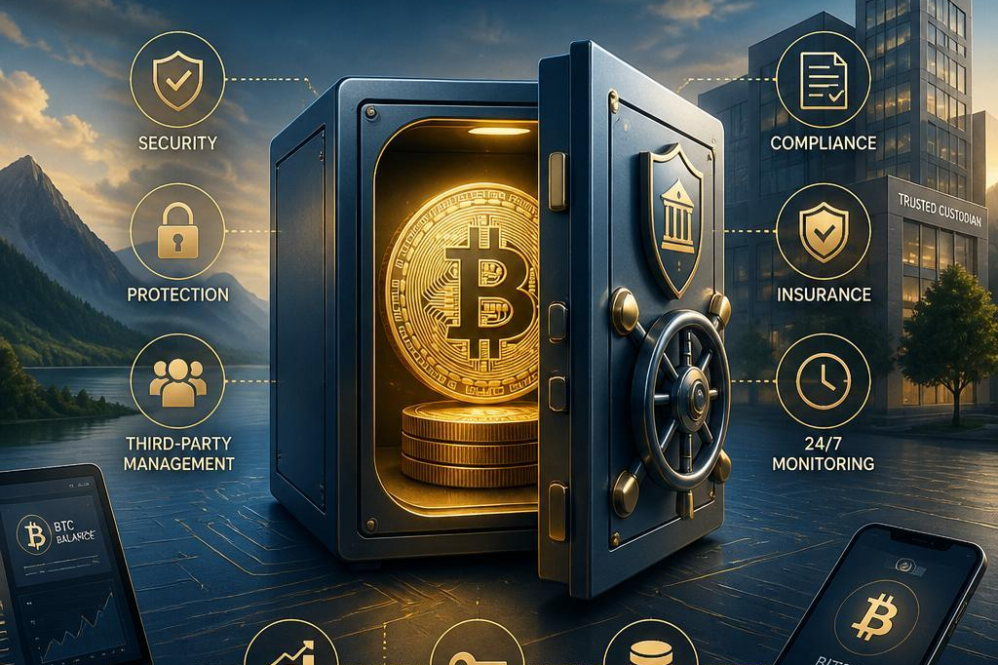
Understanding Custodial Wallets and Their Role in bitcoin Storage
Custodial wallets serve as intermediary platforms that manage private keys on behalf of users. Unlike non-custodial wallets, where individuals have full control over their keys, custodial solutions entrust third-party providers to safeguard and maintain access to the bitcoin funds. This delegation often appeals to newcomers or those prioritizing convenience, as it removes the complexities of key management, backupsand secure storage from the user’s responsibilities.
security in custodial wallets hinges entirely on the trustworthiness and protocols of the service provider.These providers typically implement advanced security measures including multi-signature authorization, cold storage techniquesand continuous monitoring to protect against theft or loss. However,this centralization also introduces vulnerabilities that non-custodial wallets avoid,such as exposure to hacking,regulatory intervention,or insolvency risks. users should carefully evaluate the reputation and transparency of custodial services before committing meaningful bitcoin holdings.
| Aspect | Custodial Wallet | Non-Custodial Wallet |
|---|---|---|
| Key Ownership | Third-party provider | User |
| User Duty | Minimal (password management) | High (key backup and security) |
| Access Recovery | Provider-managed | User-dependent |
| Security Risk | Provider-targeted attacks | User error/loss |
Security Mechanisms Employed by third-Party Custodial Wallet Providers
Robust encryption protocols serve as the cornerstone for protecting users’ digital assets within third-party custodial wallets. These wallets rely on advanced cryptographic methods such as AES-256 and TLS to safeguard private keys during storage and transmission. additionally, many providers implement multi-layer encryption schemes that protect keys both ”at rest” and ”in transit,” ensuring that sensitive details remains inaccessible to unauthorized entities even in the event of a breach.
Beyond encryption,multi-factor authentication (MFA) plays a critical role in securing wallet access. Custodial services typically require users to verify their identity through multiple self-reliant factors-such as passwords, hardware tokens, biometric dataor one-time codes generated by dedicated authenticator apps. This approach substantially mitigates the risk of unauthorized entry, adding an essential barrier against hackers who might obtain login credentials through phishing or other attacks.
| Security Mechanism | Description | Benefits |
|---|---|---|
| Cold Storage | Offline wallets stored on air-gapped devices. | Reduces online attack exposure, enhances long-term key safety. |
| Regular Audits | Independent assessments of security controls. | Ensures compliance, identifies vulnerabilities early. |
| Insurance Coverage | Protection against theft or loss. | Provides financial reimbursement and user confidence. |
Complementing technical defenses, many custodial wallets maintain cold storage solutions, isolating the bulk of funds on hardware disconnected from the internet. This limits exposure to hacking attempts,as keys stored offline are immune to remote intrusions. additionally, periodic security audits and penetration tests help identify weaknesses before they can be exploited. to further enhance user trust, some providers offer insurance policies safeguarding against exceptional loss scenarios, thus establishing a comprehensive security framework that addresses both technological and operational risks.
Comparing Custodial Wallets to Non-Custodial Alternatives
When considering where to store bitcoin,one of the fundamental decisions pivots between relying on third-party custodial wallets and opting for non-custodial alternatives.Custodial wallets entrust the control of private keys to an intermediary, often simplifying user experience but introducing a layer of dependency on the service provider. In contrast, non-custodial wallets empower users to hold their own private keys, placing full control-and responsibility-directly in their hands.
The trade-offs between these two approaches can be distilled into several core differences, which highlight security, convenienceand autonomy considerations:
- Security: While custodial wallets protect keys within their infrastructure, users remain vulnerable to centralized hacks or mismanagement. Non-custodial wallets eliminate this single point of failure, but require users to maintain rigorous personal security practices.
- Usability: Custodial services often provide intuitive interfaces, recovery options, and customer support, suiting newcomers and casual holders. Conversely, non-custodial wallets demand more technical knowledge but offer unparalleled control and privacy.
- Control & Privacy: custodial providers can impose withdrawal limits, freeze assetsor collect personal data. Non-custodial wallets remove these restrictions, aligning with bitcoin’s ethos of censorship resistance and financial sovereignty.
| Feature | Custodial Wallet | Non-Custodial Wallet |
|---|---|---|
| Private Key Ownership | Held by Provider | Held by User |
| Recovery Options | Available via Support | user-Dependent |
| Risk of Centralized Hack | Higher | Minimal |
| Ease of Use | High | Moderate to Advanced |
| Privacy | Low to Moderate | High |
Evaluating the Risks and Benefits of entrusting bitcoin to Custodial Services
Entrusting your bitcoin to a custodial service brings undeniable convenience, but it also introduces a complex risk profile that must be carefully navigated. On the benefits side, custodial wallets simplify access by managing private keys on your behalf, eliminating the technical hurdles tied to self-custody. This arrangement enables faster transactions, seamless integration with exchangesand often, enhanced customer support. Users gain peace of mind knowing that expert teams are safeguarding assets with professional-grade security measures.
Though, this convenience does not come without trade-offs. Relying on a third party means surrendering full control over your bitcoin, creating potential vulnerabilities such as hacking incidents, insolvency risksor regulatory intervention. Additionally, the custodial entity may impose withdrawal limits, feesor even suspend access during periods of high market volatility. The absence of direct ownership contradicts bitcoin’s core ideology of decentralization and trust-minimized transactions.
| Aspect | Benefits | Risks |
|---|---|---|
| Control | Managed by experts | Loss of direct ownership |
| Security | Enterprise-grade protection | Single point of failure |
| Accessibility | Quick and user-amiable | Access restrictions possible |
| Compliance | Regulatory adherence | Potential freezes or seizures |
Ultimately, weighing these factors involves assessing one’s risk tolerance and priorities. For those valuing ease of use and professional management,custodial services offer a compelling solution. Conversely,users deeply committed to maintaining sovereign control and minimizing counterparty risk may prefer non-custodial options despite the technical demands.Understanding these trade-offs empowers holders to make informed decisions aligned with both their financial goals and philosophical stance on bitcoin ownership.
Regulatory Considerations and Compliance Standards for Custodial Wallets
Ensuring compliance with financial regulations is paramount for custodial wallet providers due to their role as intermediaries in holding users’ bitcoin securely. They must adhere to anti-money laundering (AML) and know your customer (KYC) requirements, which mandate thorough user identity verification and transaction monitoring. These protocols are essential not only to prevent illicit activities but also to foster trust among users seeking secure third-party storage solutions.
Beyond AML and KYC, custodial wallet services frequently align with broader financial industry standards such as the Payment Card Industry Data Security Standard (PCI DSS) and data privacy regulations including GDPR in Europe. Compliance with these standards ensures that sensitive customer data and private keys are protected through rigorous security measures, including encryption, multi-factor authenticationand regular audits. Non-compliance can lead to severe penalties or loss of operating licenses, underscoring the critical nature of regulatory adherence.
| Regulatory Aspect | Key Requirement | Impact on Custodial Wallets |
|---|---|---|
| AML & KYC | Identity verification & transaction monitoring | prevents illicit use and builds platform credibility |
| PCI DSS | Secure handling of payment data | Protects user payment information and wallet security |
| GDPR | Data privacy & user consent | Ensures lawful data usage and user trust |
Compliance also demands transparent reporting and cooperation with regulatory bodies, which can sometimes conflict with the privacy-centric ethos of cryptocurrency.However, successful custodial wallets strike a balance, implementing privacy-respecting solutions while meeting local and international regulatory standards. this dual focus helps them maintain legitimacy in a fast-evolving regulatory landscape and safeguard both users and service operators alike.
Best Practices for Selecting and Using a Custodial Wallet Safely
Prioritize Reputation and Security Features
Choosing a custodial wallet requires thorough research into the provider’s reputation and security protocols. look for platforms that offer robust security measures such as two-factor authentication (2FA), cold storage options, encryption standards, and regular security audits. A wallet with a transparent track record of safeguarding assets can significantly reduce risks associated with hacking or mismanagement. Always verify if the service provider has insurance or compensation policies in case of unforeseen breaches.
Understand Access and recovery Mechanisms
Since you do not hold the private keys directly in a custodial wallet, knowing how to regain access in emergencies is crucial. Confirm the availability and reliability of account recovery options, such as identity verification processes or backup codes. Pay special attention to the terms of service regarding fund access,withdrawal limits,and dispute resolution. This awareness prevents lockouts and ensures you can retrieve your assets swiftly if needed.
Maintain Good Practice for Daily use
Even with a secure custodial service,your personal practices have a strong impact on safety. Avoid using public Wi-Fi when accessing your wallet, regularly update your passwordsand never share sensitive account information. Consider diversifying your holdings by not placing all bitcoin assets into a single custodial wallet. The combination of a reliable provider and vigilant user behavior creates a safer surroundings for storing digital currency.