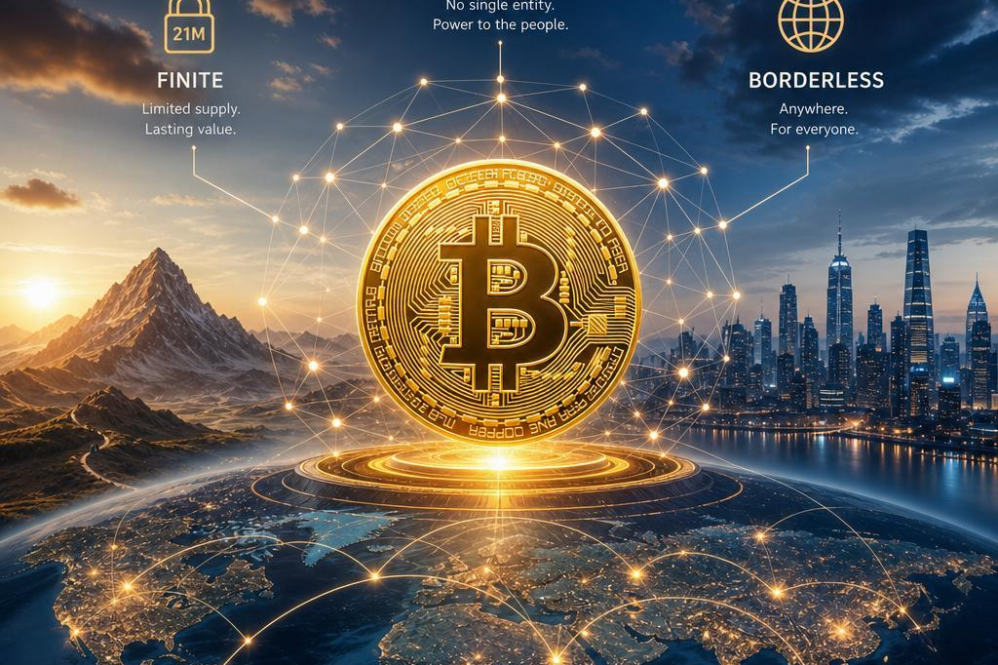
Understanding bitcoin’s Decentralized Network: eliminating Intermediaries and Enhancing Security
bitcoin operates on a global, peer-to-peer network where transactions are recorded on a blockchain, a public ledger maintained collectively by a distributed network of nodes. This structure eradicates the need for banks or payment processors, which traditionally serve as intermediaries in financial transactions. by removing these middle layers,bitcoin not only reduces transaction fees but also accelerates the transfer process,especially across international borders where conventional methods often face delays and heavy regulatory scrutiny.
The decentralized nature of bitcoin bolsters security in several ways. Since no single entity controls the network, it is extremely resistant to censorship, fraudor failure. Each transaction is verified cryptographically by miners who compete to add blocks to the chain,making the network tamper-proof and highly transparent. This design ensures that users retain full control of their funds and are protected against hacks frequently enough associated with centralized repositories.
| feature | Conventional Money | bitcoin |
|---|---|---|
| Intermediaries | Banks, Payment processors | Network Nodes (Decentralized) |
| security Measure | Centralized Controls, Firewalls | Cryptographic Proof, Consensus |
| Money Supply | Inflationary, unlimited | Finite, Capped at 21 Million |
The Finite Supply of bitcoin: Implications for Inflation and long-Term Value Preservation
bitcoin’s capped supply of 21 million coins introduces a revolutionary mechanism against inflation, distinguishing it sharply from traditional fiat currencies. Unlike currencies that governments can print at will, potentially devaluing purchasing power, bitcoin’s scarcity is algorithmically guaranteed. This scarcity molds bitcoin into a digital store of value, often compared to gold, where increased demand amid limited supply tends to preserveor even enhance, its purchasing power over time.
Key economic implications of bitcoin’s finite nature include:
- Inflation Resistance: with no additional Bitcoins minted beyond the fixed supply,it circumvents inflationary erosion common to fiat money.
- Predictable monetary Policy: bitcoin’s issuance rate is transparent and pre-determined,eliminating uncertainty surrounding future supply changes.
- Long-Term Value Preservation: As scarcity intensifies, holders may increasingly view bitcoin as a hedge against traditional financial system fluctuations.
| Feature | bitcoin | Traditional fiat |
|---|---|---|
| Supply | Fixed at 21 million | Unlimited & variable |
| Inflation Control | Algorithmically enforced | Monetary policy dependent |
| Openness | Fully public ledger | opaque central decisions |
Borderless Transactions: How bitcoin Enables Global Peer-to-Peer Payments Without Restrictions
bitcoin revolutionizes the concept of money by eliminating the traditional intermediaries that enforce borders and restrictions. Unlike fiat currencies, which are frequently enough tethered to national regulations and banking systems, bitcoin operates on a decentralized blockchain network.This decentralized nature eradicates the need for central authorities, allowing anyone with internet access to send or receive payments regardless of their geographic location or local policies. The borderless quality of bitcoin empowers individuals and businesses to engage in transactions anytime,anywhere,without fear of censorship or delays commonly imposed by cross-border financial channels.
Key features enabling global peer-to-peer payments include:
- Permissionless access, requiring no bank account or approval.
- Immutable transaction records ensuring transparency and security.
- Instant settlement times compared to traditional international transfers.
- Low fees irrespective of national boundaries or currency conversion costs.
| Aspect | Traditional Finance | bitcoin Network |
|---|---|---|
| Regulatory Borders | Strict, varies by country | Non-existent, global by design |
| Transaction Speed | Days for international transfers | Minutes or seconds |
| fees | High, includes intermediaries | Typically lower and consistent |
maximizing bitcoin’s Potential: Strategic Recommendations for Adoption and Responsible Usage
bitcoin’s uniqueness lies in its decentralized nature, which redefines traditional financial sovereignty. Unlike conventional currencies controlled by central banks or governments, bitcoin operates on a peer-to-peer network governed by cryptographic consensus. This eliminates intermediaries, reduces transaction costsand enhances transparency, thereby empowering users to retain full control over their assets worldwide.
The finite supply of bitcoin stands in stark contrast to the infinite printing of fiat currencies, introducing scarcity akin to precious metals like gold. This capped maximum of 21 million bitcoins ensures that inflationary pressures are minimized over time, positioning bitcoin as a potential store of value in a world where monetary inflation is prevalent. Investors and users alike can leverage this deflationary design to preserve wealth through carefully planned adoption strategies.
bitcoin’s borderless accessibility removes geographical barriers inherent to traditional banking systems, enabling anyone with internet access to participate in the global economy. This inclusivity fosters financial democratization and provides a lifeline to unbanked populations. To fully harness this potential, strategic adoption should focus on:
- Implementing robust educational programs to improve user understanding and security awareness.
- developing regulatory frameworks that balance innovation with consumer protection.
- Encouraging merchant acceptance while integrating seamless payment solutions for everyday usability.
| Feature | Traditional Currency | bitcoin |
|---|---|---|
| Control | Central Authorities | Decentralized Network |
| Supply | Unlimited | 21 Million Cap |
| Geography | Restricted Borders | Global Access |