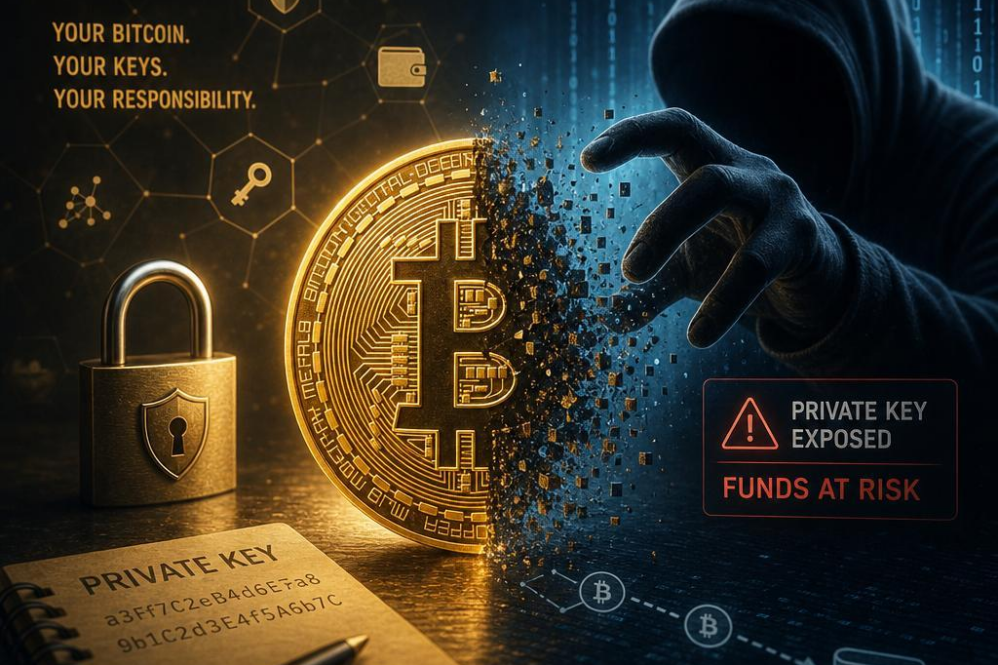
The importance of Private Keys in bitcoin Security
At the core of bitcoin’s security lies a cryptographic foundation that hinges entirely on the private key. This key functions as a secret password giving exclusive control over the associated bitcoin wallet. If this private key is compromised, an attacker gains unrestricted access to the digital assets stored within. Unlike customary financial accounts, there is no central authority to intervene or reverse transactions once a private key has been exposed and funds are moved.
The risks tied to private key exposure are profound and multifaceted. Common vulnerabilities include phishing attacks, malware infectionsand careless storage practices such as saving keys in plain text files or unencrypted devices. consider the following critical consequences:
- Permanent loss of funds: Transactions authorized via a stolen key are irreversible.
- Identity theft: Access to your bitcoin wallet can also expose personal information linked to transactions.
- Targeted phishing: Once a private key leakage is suspected, attackers may increase efforts to extract additional credentials.
| Private Key Security Measure | Benefit | Recommended Use Case |
|---|---|---|
| Hardware Wallet | Isolates keys offline | Long-term storage |
| Encrypted Digital Vault | Requires password + encryption | Frequent transactions |
| Paper Backup | Immune to digital hacking | Emergency recovery |
Common Vulnerabilities Leading to Private Key Exposure
One of the most frequent causes of private key exposure is phishing attacks, where attackers masquerade as trustworthy entities to trick users into revealing sensitive information. These schemes often come in the form of fraudulent emails or fake websites mimicking legitimate bitcoin services. Once a user submits their private key or recovery phrase, the attacker gains immediate access to their funds. Another key vulnerability arises from malware infections, including keyloggers and clipboard hijackers, designed to silently capture keystrokes or alter copied wallet addresses, leading to irreversible theft.
Improper storage methods also play a notable role in private key leakage. Many bitcoin holders make the mistake of storing keys on unsecured digital devices such as smartphones, emailsor cloud services lacking encryption. These platforms are prime targets for hackers exploiting software vulnerabilities or brute-force attacks.Additionally, loss or theft of hardware wallets without adequate PIN protection can result in catastrophic exposure, especially if the attacker possesses knowledge or tools to bypass device security layers.
| Common Vulnerability | Description | Typical Impact |
|---|---|---|
| Phishing Scams | Deceptive sites/emails | Immediate key theft |
| Malware | Keyloggers & clipboard hijackers | Silent private key capture |
| Unsecured Storage | Plain text or cloud without encryption | Unauthorized access to keys |
| Hardware Wallet Theft | Physical loss without PIN | Full wallet compromise |
Understanding these risks is crucial to adopting robust security practices. Combining multi-factor authentication with hardware wallets, keeping software up-to-date, and educating oneself against social engineering tactics dramatically reduces chances of exposure.vigilance and proactive defenses remain the cornerstone of protecting your bitcoin assets in a constantly evolving threat landscape.
Consequences of Private Key theft on bitcoin Holdings
When a private key is compromised, the repercussions for a bitcoin holder are immediate and frequently enough irreversible. Unlike traditional bank accounts, where institutions can intervene, bitcoin transactions are final and operate on a decentralized ledger. This means that anyone with access to your private key can control your funds and transfer them without any possibility of recall or dispute. The stolen assets can quickly be moved through multiple wallets, making recovery efforts practically unachievable.
Key consequences include:
- Loss of funds: Unauthorized access leads directly to theft of bitcoin holdings.
- Loss of privacy: Exposure of the private key may reveal transactional history and wallet balances.
- Permanent damage to trust: Victims suffer long-term credibility and confidence issues.
| Impact Category | Description | example |
|---|---|---|
| Financial | Total or partial loss of bitcoin holdings | $10,000 stolen due to phishing attack |
| Security | Compromise of wallet integrity | Multiple unauthorized transactions detected |
| Reputational | Loss of trust in digital asset management | Investor confidence drops after breach |
Best Practices for Safeguarding Private Keys Against Theft
Protecting private keys starts with the principle of minimizing exposure. Store keys offline using cold wallets or hardware security modules (HSMs) that isolate keys from internet-connected devices. This considerably reduces vulnerabilities from phishing, malwareor network breaches. Additionally, never share your private keys with third parties or store them in email drafts, cloud services, or messaging apps, as these platforms can be hacked or compromised.
Implementing rigorous access controls is essential to prevent unauthorized key retrieval. Use multi-factor authentication (MFA) on wallets and related servicesand ensure physical access to hardware wallets or paper backups is tightly controlled.Consider splitting private keys using secret sharing schemes or multisignature wallets, which enhance security by requiring multiple approvals before transactions can be signed, thus reducing the risk of single-point failure.
| Best Practice | Benefit |
|---|---|
| Cold Storage (Hardware Wallets) | Isolates keys from online threats |
| Multi-Factor Authentication | prevents unauthorized access |
| Multisignature Wallets | Requires multiple approvals for transactions |
| Seed Phrase Backup in Secure Location | Recovery without exposure to digital theft |
| Regular Security Audits | Detects vulnerabilities early |