bitcoin’s Issuance Rate and Its Impact on Cryptocurrency Supply
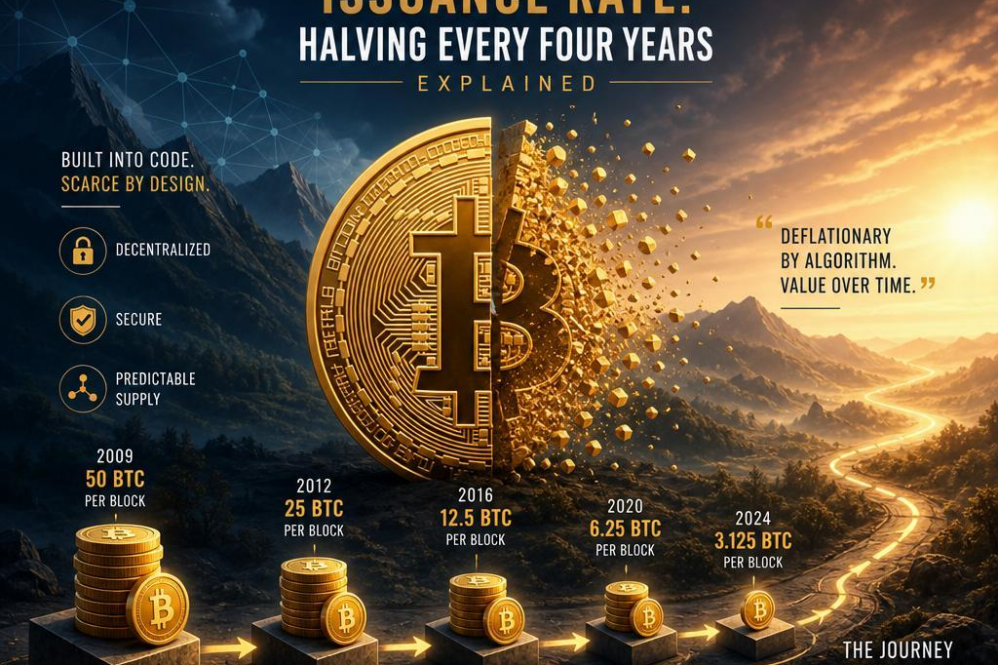
bitcoin’s unique issuance mechanism is basic to understanding its scarcity and long-term value proposition. Every four years, the reward that miners receive for adding new blocks to the blockchain is cut in half, a process known as the “halving.” This purposeful reduction in issuance rate ensures that the total supply of bitcoin is capped at 21 million units, making it inherently deflationary. Unlike conventional fiat currencies, where central authorities can increase supply at will, bitcoin’s programmed supply schedule enforces a predictable and decreasing inflation rate over time.
The impact of this halving on supply dynamics can be summarized by these key points:
- Mining rewards shrink, reducing the influx of new bitcoins into circulation.
- Scarcity increases,as fewer bitcoins become available over equal time periods.
- The incentive for miners shifts, affecting network security and participation economics.
| Halving Year | Mining Reward (BTC/block) | Total Supply Mined (Approx.) |
|---|---|---|
| 2009 (genesis) | 50 | 0 |
| 2012 | 25 | 10.5 million |
| 2016 | 12.5 | 15.75 million |
| 2020 | 6.25 | 18.375 million |
Each halving event reinforces bitcoin’s deflationary blueprint, influencing investor behavior and network economics.As issuance halves,the reduced supply typically creates upward pressure on price,assuming demand remains steady or grows. This dynamic has contributed to bitcoin’s reputation as “digital gold,” a peer-to-peer asset with a limited supply that cannot be manipulated by centralized entities. Understanding this cyclical supply reduction is paramount for anyone looking to grasp the nuances of cryptocurrency markets and the incentives behind mining operations.
the Mechanics Behind bitcoin Halving Events and Their Historical Outcomes
bitcoin’s issuance model is engineered to reduce the creation of new coins over time-a deliberate mechanism known as halving. Approximately every four years, the reward miners receive for validating transactions is slashed by 50%. This mechanic not only controls inflation but ensures a finite supply capped at 21 million bitcoins, introducing scarcity that mimics precious metals like gold. The halving events are embedded into bitcoin’s protocol as a pre-set rule, making the issuance predictable and transparent without any central control.
The impact of each halving event resonates strongly through the market and network security. Miners, whose revenue directly depends on block rewards, often feel immediate pressure to improve efficiency or reduce costs, which can marginally affect network hash rate and transaction fees. Historically, these reductions have been followed by significant gratitude in bitcoin’s price, driven largely by the growing imbalance between supply and increasing demand. this dynamic creates a cyclical rhythm in bitcoin’s ecosystem, influencing investor sentiment and the broader crypto economy.
| Halving Event | Year | Block Reward Before | Block Reward After | Approx. Price Change After 1 Year |
|---|---|---|---|---|
| 1st | 2012 | 50 BTC | 25 BTC | +8,000% |
| 2nd | 2016 | 25 BTC | 12.5 BTC | +2,900% |
| 3rd | 2020 | 12.5 BTC | 6.25 BTC | +400% |
By design, this programmed scarcity aligns with economic principles of supply and demand, drawing parallels to natural resource extraction. Each halving causes a tangible shift in miner incentives and market psychology, ultimately shaping bitcoin’s valuation trajectory and adoption landscape. Understanding these mechanisms is crucial for anyone engaging seriously with bitcoin, whether as an investor, developeror enthusiast.
Economic Implications of bitcoin Halving on Market Demand and Price Stability
The scheduled reduction in bitcoin’s issuance rate resulting from halving events fundamentally alters the economic landscape in which bitcoin operates. By cutting the rewards miners receive by 50% roughly every four years, this mechanism effectively slows the creation of new bitcoins, injecting a layer of scarcity that influences market behavior.Investors and market participants often anticipate these events in advance, leading to shifts in demand even before the halving occurs, which can create heightened volatility during the pre- and post-halving periods.
Market demand dynamics in response to halving are multifaceted:
- Increased scarcity perception: The reduced supply flow fosters an expectation of future price appreciation, drawing increased investor interest.
- Speculative investment: Traders often ramp up purchases to capitalize on potential price surges, which can amplify short-term demand.
- Mining economics adjustment: As block rewards halve, mining profitability compresses, sometimes resulting in miner capitulation or technology upgrades, indirectly influencing market supply and stability.
The impact on price stability, however, is a subject of ongoing debate supported by data. The following table summarizes observed trends post-halving, encapsulating typical price and volatility patterns:
| Period After Halving | average Price Change | Volatility Trend |
|---|---|---|
| 0 - 3 Months | Moderate Increase | Elevated |
| 3 – 12 Months | Significant Increase | Decreasing |
| 12+ Months | market Stabilization | Normalized |
These cyclical trends underline how halving events are crucial economic catalysts that influence bitcoin’s price trajectory and market equilibrium. Understanding this interplay is essential for stakeholders aiming to navigate the complexities of bitcoin’s evolving financial ecosystem.
Strategic Considerations for Investors in the Context of bitcoin’s Four-Year Halving Cycle
Understanding the rhythm of bitcoin’s issuance cycle is paramount for investors seeking to optimize their entry and exit points. approximately every four years, the reward given to miners for validating new blocks is halved, effectively reducing the rate at which new bitcoins enter circulation. This deliberate mechanism not only enforces scarcity but also influences market dynamics, often precipitating phases of heightened volatility followed by extended periods of price stabilization. Savvy investors recognize these patterns and tailor their strategies accordingly to benefit from the cyclical nature of supply changes.
Key strategic factors to consider include:
- Supply Squeeze: Halving events cut the new supply,which can intensify demand pressure if adoption continues to grow,potentially driving prices upward.
- Market Sentiment: Anticipation of halvings often sparks speculative activity months in advance, necessitating vigilance to avoid getting caught in inflated price cycles.
- Long-Term Hold vs. Short-Term Trading: Investors must evaluate whether to hold through the volatility induced by halvings or capitalize on short-term price swings.
| Halving Year | Block Reward (BTC) | Approx. BTC Mined |
|---|---|---|
| 2012 | 50 → 25 | 10.5 million |
| 2016 | 25 → 12.5 | 5.25 million |
| 2020 | 12.5 → 6.25 | 2.625 million |
| Expected 2024 | 6.25 → 3.125 | 1.3125 million |
By internalizing these issuance milestones, investors can better anticipate market shifts and incorporate the halving cycle into robust risk management frameworks. This nuanced comprehension transforms the four-year halving cycle from a simple event into a strategic cornerstone for navigating the complex ecosystem of bitcoin investment.