July 19, 2026

Capitalizations Index – B ∞/21M

FSA to Cryptocurrency Exchanges: Improve Your Cold Wallet Security Protocols

Fsa to cryptocurrency exchanges: improve your cold wallet security protocols

FSA to Cryptocurrency Exchanges: Improve Your Cold Wallet Security Protocols

Fsa to cryptocurrency exchanges: improve your cold wallet security protocols

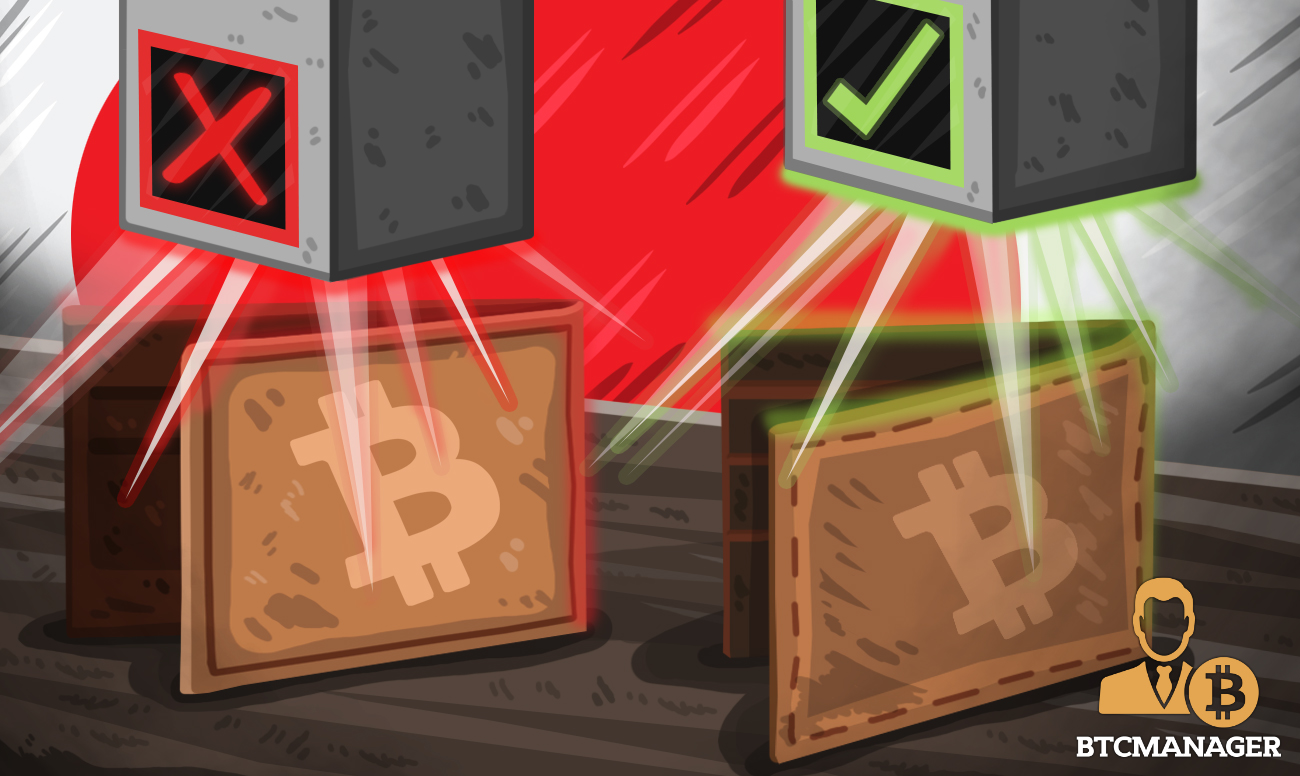
The Financial Services Agency (FSA) of Japan is mandating cryptocurrency exchanges in the country to enhance security features on their cold wallet storage, Reuters reports, April 16, 2019. This directive comes as security experts warn that internally-orchestrated exchange hacks are becoming a clear and present danger.

FSA Urges Greater Security for Cold Wallet Storage

According to Reuters, an anonymous source close to Japan’s Financial Services Agency (FSA) stated that the regulatory body wants exchanges to beef up their internal security. The FSA also identified security protocols for cold wallets as a likely weak-point for many platforms.

For the FSA, many platforms in the country are not optimizing the security of their cold wallet storage. The anonymous source also highlighted an example where employees put in charge of administering the cold wallets weren’t rotated periodically.

The focus on cold wallet storage follows the restrictions placed by the FSA on the use of hot wallets by exchange platforms. This restriction emerged following numerous cyber attacks against Japan-based platforms leading to the theft of hundreds of millions of dollars in cryptocurrencies.

At the start of 2018, Coincheck, one of the country’s exchange platforms suffered a $530 million hack. This incident caused the FSA to adopt even stricter regulations as the Agency tried to lead the charge for more robust security and other operational protocols for cryptocurrency exchanges.

These stringent laws, however, forced platforms like Binance and OKEx to shutter their operations in the country in favor of friendlier climes like Malta. Many exchanges had initially moved to Japan after China outlawed trading and initial coin offerings (ICOs) in September 2017.

Cryptocurrency Exchange Hacks: Rising Threat of Inside Jobs

Part of the Q4 2018 report released by CipherTrace, a blockchain security firm, stated that the threat of internally planned attacks on virtual currency was rising.

In March 2019, reports emerged of another Bithumb hack less than a year after hackers stole $30 million from the same platform. While announcing the hack, the South Korea-based cryptocurrency exchange alluded to the attack being the work of “internal actors.”

This singular admission alone brings up a new dilemma in the quest to create safe storage of cryptocurrencies on exchanges. Bithumb is one of the largest virtual currency exchanges in South Korea along with Coinone, Upbit, and Korbit – all four collectively known as the “big four.”

Like BTCMANAGER? Send us a tip!
Our bitcoin Address: 3AbQrAyRsdM5NX5BQh8qWYePEpGjCYLCy4

Published at Wed, 17 Apr 2019 18:00:11 +0000

Previous Article

South Korean Firm Adopts 5G Blockchain Technology to Fight IoT Hacks

Next Article

WAVES Price Drops to Almost Zero Sats on Binance for One Minute

You might be interested in …

Bitcoin is Still Illegal in These 6 Countries

As the bitcoin revolution continues to spread throughout the world, there are still some places where buying or using bitcoin is illegal and can get you in trouble.


bitcoin Still Illegal in Some Countries

As bitcoin’s popularity continues to grow throughout the world, some governments are beginning to realize its benefits and potential and are integrating bitcoin and cryptocurrencies in their economy, rather than trying to punish those that use it with restrictive policies and exaggerated taxes.

Japan, for example, has recently passed a law that makes bitcoin a legal form of online payment, removing taxes and setting up a regulatory framework for bitcoin-based businesses. Australia has also taken a stance in favor of cryptocurrencies and removed the double-tax that was penalizing average bitcoin users.

However, not all countries are as forward thinking especially when it comes to cryptocurrencies. Believe it or not, bitcoin is still illegal in some countries, which says a lot about bitcoin as a disruptive technology.

To be clear though, the world’s first decentralized cryptocurrency is not illegal because it poses any risk to the citizens of the countries we will list. Rather, it provides an alternative, open, P2P monetary system — and an exit for some  — which is seen as a threat to their centrally-controlled, legacy monetary system.

All of the countries listed below banned bitcoin in 2014, following the Mt. Gox disaster. As bitcoin begins to gain traction throughout the world, it’s possible that these countries may eventually change their stance on bitcoin and digital currencies.

Vietnam

Although bitcoin can be freely used by citizens, the State Bank of Vietnam issued a statement in February 2014 warning against the use of bitcoin and prohibiting credit institutions to deal with the cryptocurrency.

The statement reads:

All bitcoin exchanges that allow users to trade anonymously, therefore, can be used to launder dirty money, sell drugs, hide from paying taxes, exchange and pay for illegal activities.

In December 2016, the government of Vietnam stated that it will consolidate cryptocurrency regulations as its current provisions “fall short.”

Iceland

bitcoin’s legality in Iceland is not very clear. According to a statement issued in March 2014 by the Central Bank of Iceland, dealing with bitcoin may violate the Icelandic Foreign Exchange Act, which specifies that Icelandic currency cannot leave the country and that foreign currency cannot be used in the country.

iceland

bitcoin mining is legal in the country and so is transacting with bitcoin, but apparently if those Bitcoins cannot be purchased from a foreign exchange or have to be mined in Iceland. This leaves a lot of room for questions. The statement reads:

There is no authorization to purchase foreign currency from financial institutions in Iceland or to transfer foreign currency across borders on the basis of transactions with virtual currency. For this reason alone, transactions with virtual currency are subject to restrictions in Iceland.

Bolivia

In May 2014, the country’s central bank, El Banco Central de Bolivia, officially banned any and all currencies not issued and/or regulated by the government, specifying bitcoin, a few other altcoins and any other currencies that do not belong to a state or economic zone.

The statement reads:

It is illegal to use any kind of currency that is not issued and controlled by a government or an authorized entity.

Ecuador

Ecuador not only banned bitcoin and all other cryptocurrencies, but it did so while establishing guidelines for the creation of their own virtual currency.

The National Assembly of Ecuador passed a bill that amends the country’s monetary laws in July 2014, banning cryptocurrencies and allowing the government to issue and transact in its asset-backed “electronic money.”

Kyrgyzstan

In Kyrgyzstan, using bitcoin as a form of payment is illegal, although no law prohibits users from buying, selling and using. In August 2014, the National Bank of the Kyrgyz Republic, issued a statement in which it noted that the use of bitcoin and other cryptos as a form of payment is illegal given that the only legal tender in the country is the country’s Kyrgystani Som (KGS).

The statement reads:

Under the legislation of the Kyrgyz Republic, the sole legal tender on the territory of our country is the national currency of Kyrgyzstan som. The use of ‘virtual currency’, bitcoins, in particular, as a means of payment in the Kyrgyz Republic, will be a violation of the law of our state.

Bangladesh

bitcoin is not legal in Bangladesh. Transacting with any type of decentralized cryptocurrency can get you up to 12 years in jail and it has been so for almost three years.

In September 2014, the Bangladesh Bank issued a statement regarding the use of bitcoin and warning that it is punishable by law. Bank officials said that anyone found guilty of dealing with bitcoin or any other cryptocurrency could be jailed for up to 12 years under current anti-money laundering laws. The central bank went as far as to request citizens not to “spread information about it.”

The statement reads:

bitcoin is not a legal tender of any country. Any transaction through bitcoin or any other cryptocurrency is a punishable offense.

Do you believe these countries will change their stance on bitcoin and build a regulatory framework around it? Let us know in the comments.


Images courtesy of Shutterstock

The post Bitcoin is Still Illegal in These 6 Countries appeared first on Bitcoinist.com.