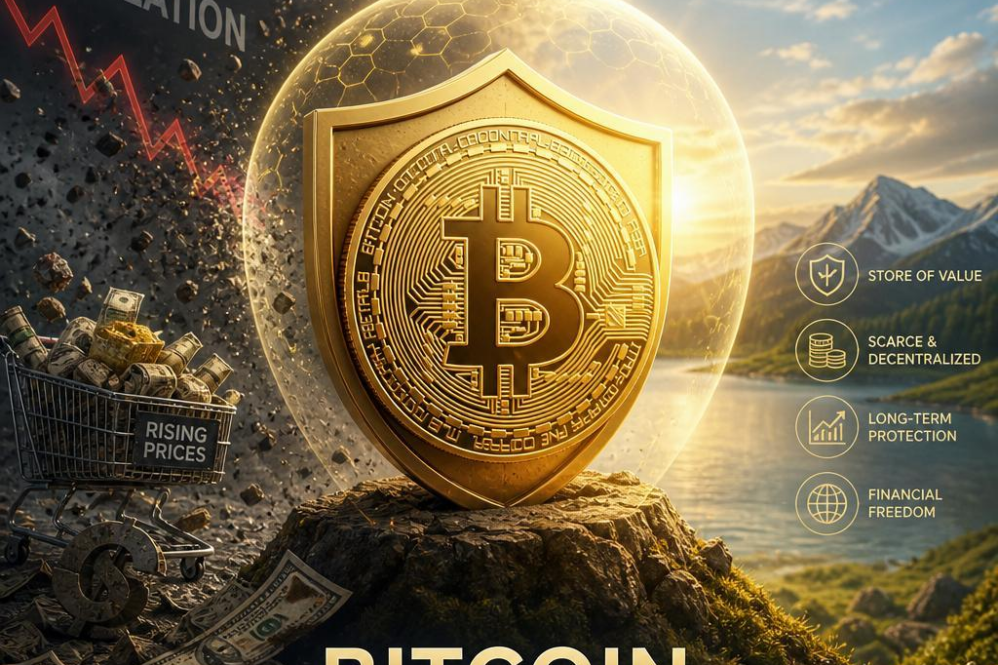
People often ask whether bitcoin can be used as a hedge against inflation. The short answer is: possibly, but not in the same predictable way as an inflation-linked bond or other customary hedge. bitcoin’s appeal comes from its fixed supply and independence from central-bank policy. Its weakness is that the price can move sharply for reasons that have little to do with inflation.
For investors who see currency debasement as a long-term concern, bitcoin can be part of the conversation. It should not,though,be mistaken for a guaranteed way to preserve purchasing power from one month to the next.
Why bitcoin’s Supply Matters
bitcoin has a built-in limit: under the network’s rules, no more than 21 million bitcoin can be created. New bitcoin is issued to miners that help validate transactions, but those rewards are reduced at scheduled intervals known as halvings. The result is a supply schedule that is public, predictableand increasingly tight over time.
That is the heart of the inflation-hedge argument.Governments and central banks can expand the supply of conventional money in response to economic conditions. bitcoin’s protocol does not issue more coins as demand rises, prices climbor policymakers want more liquidity. Supporters see that constraint as a form of protection against monetary dilution.
Still, scarcity alone does not make an asset stable. A limited supply may support bitcoin’s long-term case, but it does not prevent large swings in market value. The idea is less that bitcoin will automatically rise whenever consumer prices doand more that some people value holding an asset with rules that cannot easily be changed by a monetary authority.
What History Actually shows
bitcoin’s record during inflationary periods is mixed. Inflation is only one influence on its priceand often not the most immediate one. Interest-rate expectations, financial-market liquidity, regulation, investor confidenceand broader appetite for risk can all have a major effect.
The 2021-2022 period made that clear. Inflation rose in many countries, but bitcoin also fell sharply as central banks tightened policy and investors pulled back from riskier assets. That does not disprove the long-term scarcity thesis, but it does show that bitcoin is not a reliable short-term mirror of inflation.
Time frame matters, too. Inflation typically develops over months or years, while bitcoin can gain or lose a large amount in a matter of days. A short stretch may show falling bitcoin prices alongside high inflation; a longer holding period may tell a different story. Judging it against a single monthly inflation report is usually too simplistic.
A more realistic view is that bitcoin may be a speculative long-term hedge for people who can tolerate significant volatility. its fixed supply gives the argument a logical foundation, but market behavior has been uneven and sometimes moves in the opposite direction from what an inflation hedge would suggest.
How It Compares With Other Hedges
Gold is the obvious comparison. Like bitcoin, it is valued in part because it is scarce and does not rely on a central bank’s promise. But gold has centuries of history as a store of value and generally experiences less dramatic price movement. bitcoin is easier to transfer and divide, but it remains much more volatile and has not yet been tested across the same range of long inflationary cycles.
Treasury Inflation-Protected Securitiesor TIPS, serve a different purpose altogether. Their principal is adjusted using an official inflation measure, making them a more direct response to rising consumer prices. bitcoin offers no yield, no contractual inflation adjustmentand no assurance that it will hold its value in the near term. Its appeal is instead tied to ownership of a scarce asset outside the traditional monetary system.
Real estate and commodities can also help during some inflationary periods, though both bring their own complications. Property may generate income, but it is expensive, location-dependentand difficult to sell quickly. Commodities can respond to supply shocks, but prices may drop when economic demand weakens. bitcoin avoids some of those practical limits, yet replaces them with custody challenges and considerable market risk.
It is usually more useful to think of bitcoin as one possible addition to an inflation-conscious portfolio than as a substitute for gold, TIPS, real estateor productive investments.
The Short-Term Problem: Volatility
bitcoin’s biggest challenge as an inflation hedge is volatility. Its fixed supply may matter over a long horizon, but short-term price moves are often dominated by market sentiment. A regulatory declaration, a broad sell-off in financial marketsor a sudden shift in expectations around interest rates can move the price sharply even when the inflation outlook has barely changed.
Liquidity deserves attention as well. bitcoin trades around the clock on many platforms, but trading conditions vary. During periods of stress, bid-ask spreads can widen and large orders may have more effect on price than investors expect.Being able to sell an asset is not quite the same as being able to sell it immediately at a price close to the one on the screen.
That mismatch is important. Inflation tends to be gradual. bitcoin can react instantly and unpredictably. Someone who needs money for a near-term expense may find those swings hard to absorb, even if they remain convinced by the long-term argument.
Using bitcoin Without Letting It Take Over
If bitcoin has a place in a portfolio, it is usually best treated as a defined allocation rather than a replacement for a financial plan. its price can rise or fall quickly, so the position should be small enough that a major decline would not derail long-term goals or force a sale at the wrong time.
Core financial needs should come first: an emergency reserve, manageable high-interest debt, suitable insuranceand a diversified base of investments that matches the investor’s time horizon. From there, an investor can decide whether a modest bitcoin position fits their own risk tolerance, tax situationand ability to stay invested during periods of sharp volatility.
A simple rule can help: set a maximum allocation before buying and revisit it through rebalancing rather than emotion. If bitcoin rises far above the intended share of the portfolio, trimming the position may restore balance. If it falls, adding more only makes sense if the original reasons for owning it still apply.
regular purchases may also reduce the urge to chase sudden rallies or panic during declines. The point is not to predict bitcoin’s next move.It is to keep a speculative position from becoming larger than planned.
Custody, Securityand Rules Still Matter
bitcoin may operate without a central bank, but holding it comes with real responsibilities. Investors generally choose between self-custody, a third-party custodianor leaving assets on an exchange. Each option involves trade-offs.
Self-custody gives the owner direct control of the private keys, but it also means taking full obligation for backups.If a recovery phrase is lost, access to the bitcoin may be lost permanently. Third-party custody can make key management easier, but introduces counterparty risk. Before relying on an exchange or custodian, it is indeed worth understanding its withdrawal policies, security practices, insurance termsand the legal treatment of customer assets if the business fails.
Security is not a one-time task. Hardware wallets can reduce exposure to internet-connected devices, and secure backups can protect against device loss. Many losses come from ordinary scams: phishing emails, fake wallet applications, compromised accountsor someone posing as customer support.No legitimate exchange, wallet provideror support agent needs your recovery phrase.
regulation and taxes also affect the practical value of any bitcoin investment. In many places, buying, selling, exchangingor spending bitcoin can create reporting or tax obligations. Rules for exchanges, custodiansand transaction reporting can change. Keeping records of purchases, sales, transfersand wallet activity can make tax reporting far easier later on. Local tax or legal advice may be worthwhile when the amount involved is significant.
Bottom Line
bitcoin’s fixed supply gives it a credible long-term case as an asset for people worried about currency dilution. But a fixed supply is not the same thing as dependable inflation protection. bitcoin has not consistently behaved like a stable hedge against rising living costs, especially over short periods.
For investors who understand the risks, it may serve as a small, speculative complement to a broader portfolio. The strongest approach is a disciplined one: keep the allocation manageable, protect access to the asset, maintain good records, and avoid assuming that inflation alone will determine bitcoin’s price.