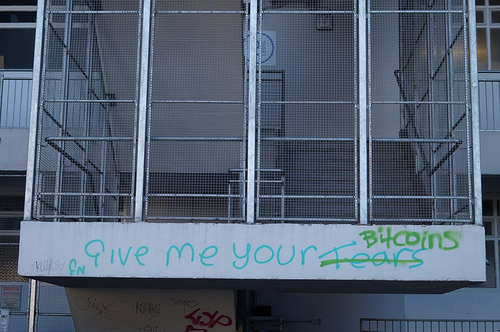
A number of tech companies and especially social media giants are cracking the whip on cryptocurrency advertisements more specifically after increasing reports of advertisement frauds emerging out. As per the latest reports by , following Facebook and Google, Twitter will start banning all the advertisements linked with different kind of cryptocurrency projects or products.
The policy will go into effect tentatively within next two weeks and would block all sort of advertisements for token sales, initial coin offerings, cryptocurrency wallets and cryptocurrency exchanges. However, this news still remains unconfirmed at the moment as Sky News has not mentioned the source who has revealed this piece of information.
Well, the news of Twitter introducing a ban comes just in a week of Google’s similar . Search giant Google clearly mentioned in its updated policy that the company is considering a ban on crypto ads starting this June 2018 due to increasing reports of fraudulent advertisements hiding behind Google’s AdWords banner. Google said that it is necessary for them to take this step in order to protect the interest of its consumers in the long run.
Earlier this year, the social media mogul ‘Facebook’ took a similar stand after company’s Product Management Director Rob Leathern explained this move in his saying that they’ve “created a that prohibits ads that promote financial products and services that are frequently associated with misleading or deceptive promotional practices, such as binary options, initial coin offerings and cryptocurrency.”
Soon after the announcement by Google last week, the crypto markets witnessed a heavy correction and nearly $60 billion were wiped off from it market cap taking to a low of around $300 billion. In the last week, bitcoin slipped below the $8000 levels, Ethereum below $500 level, Litecoin below $150 and other altcoins showing similar trends.
Although the ban of cryptocurrency advertisements by major media giants like Facebook and Google brings a huge negative sentiment to the market, it is actually expected to be a good and bullish sign for the market in the long run. in one of its recent articles mentions that in the long run major cryptocurrencies like bitcoin, Ethereum and Ripple and other that are backed by strong fundamentals and expected to easily survive the tides.
Forbes says that the ban will weed out all the scam coins from the crypto markets thereby making it a better marketplace and in turn would instill more confidence within the investors for legitimate coins. Craig Cole of CryptoMaps.info says “While this isn’t the best news, it could be a good thing for the cryptocurrency. The ban will help solidify the market and weed out scam coins and illegitimate actors looking to get rich quick, providing stability. This ban doesn’t mean that cryptocurrency is going away. I believe it will ultimately strengthen it.”
As the interest towards scam coins starts to diminish, investors will thus shift their investments towards the legitimate ones taking the crypto markets up. However, it would be too early to claim anything like that right now especially in the highly correcting crypto market, and hence investors should invest cautiously.
The post appeared first on .
While 2018 G20 Buenos Aires summit meetings are getting closer, the global community is discussing the issues of its agenda. It is already clear that being one of the most widely discussed issues cryptocurrencies can’t be omitted from the list of the main topics for the upcoming event. The cryptocurrency market was holding its breath in waiting for the verdict according the necessity of imposing strict regulations.
Nevertheless, after an official Financial Stability Board’s that was published on March 18, the crypto community can heave a sigh of relief. According to the chairman of the Financial Stability Board (FSB) Mark Carney, who is also the governor of the Bank of England, cryptocurrencies don’t pose a threat to global financial stability.
The FSB is an international group of central bank regulators and government ministers that is a coordinator of financial regulation for the G20. Its main task is to monitor and develop recommendations for the global financial system that’s why its opinion has significant weight for the future of crypto world. Nevertheless, there is no any serious premises to worry at the moment. Carney : “The FSB’s initial assessment is that crypto-assets do not pose risks to global financial stability at this time. This is in part because they are small relative to the financial system.”
As it is explained, at the recent peak of cryptocurrencies their combined global market value was less than 1% of total global GDP. “Their small size, and the fact that they are not substitutes for currency and with very limited use for real economy and financial transactions, has meant the linkages to the rest of the financial system are limited,” – said Carney in the official letter.
Carney prefers a balanced approach to cryptocurrencies. Today there are a lot of talks about investor protection and usage of crypto assets in criminal activities such as money laundering. Nevertheless, he believes that the technology underlying crypto currencies could be potentially applied for enhancing the efficiency and inclusiveness of the financial system and the economy in general.
Concerning the control of cryptocurrencies, Carney underlined the necessity of international coordination as it deals with a global sphere. In the letter it is said that the crypto market continues to develop, and the FSB may change its initial point of view if it is needed. At the moment, Carney said that the FSB would carry out regular monitoring that would ensure timely identification of any emerging risks or gaps.
As noted in Carney’s letter, a range of major countries, including France, Germany, Japan and the U.S., had called for a unified response to speculation around cryptocurrencies. Earlier, it has become known that France and Germany are working on a joint proposal for crypto regulation that will be presented at the G20 summit.
Nevertheless, the further fate of cryptocurrencies and their regulation will become clear after the meetings of the world leaders at the G20 summit on Monday and Tuesday this week.
The post appeared first on .

The Financial Stability Board, G20’s global watchdog, does not consider cryptocurrencies a risk to financial stability. In a letter to the Group of 20 central bankers and finance ministers, its Chair Mark Carney said FSB was pivoting away from designing new policies and focusing on reviewing existing rules. His comments suggest there is no G20 consensus on common crypto regulations, despite calls from member-states for adopting global guidelines.
Also read:
No Consensus for Global Crypto Regulations
 The Financial Stability Board (FSB), the body that coordinates financial regulation for the countries, has effectively dismissed calls from member-states to adopt global cryptocurrency rules. “The FSB’s initial assessment is that crypto-assets do not pose risks to global financial stability at this time,” its Chair Mark Carney said in a letter to central bankers and finance ministers, Reuters reported.
Representatives from G20 countries are meeting today in Argentina. Statements in several member-states suggested that crypto regulations would be on the agenda of the summit. In February, high-ranking French and German officials issued a letter their colleagues to discuss the implications of cryptocurrencies, like bitcoin, within the G20 format. According to recent from Tokyo, Japanese representatives intended to push for global rules on cryptocurrencies.
Carney’s comments suggest, however, that there is not enough consensus for a common approach to cryptocurrency regulation. The Financial Stability Board insists on more international coordination in monitoring the rapidly evolving crypto sector. “As its work to fix the fault lines that caused the financial crisis draws to a close, the FSB is increasingly pivoting away from design of new policy initiatives towards dynamic implementation and rigorous evaluation of the effects of the agreed G20 reforms,” its Chair said.
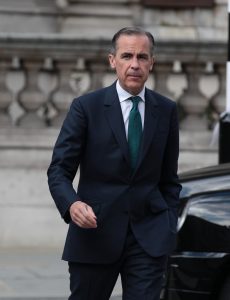 Mark Carney
Mark Carney, the serving governor of the Bank of England, recently called for greater regulation of cryptocurrencies. “The time has come to hold the crypto-asset ecosystem to the same standards as the rest of the financial system,” he stated in a speech earlier this month. Carney described the volatility associated with crypto markets as “speculative mania”. Commenting on the possibility of adopting global crypto rules, he admitted the regulation would likely be on a country-by-country basis.
“I would have a greater expectation for a series of national steps rather than some big coordinated approach,” the central banker said. He also voiced support for the idea to regulate some elements of the crypto-asset ecosystem to “protect the safety and soundness of the financial system”.
Carney will stand down as FSB’s Chair next year, when his term as Governor of the Bank of England ends. The G20 summit will take place in the Argentine capital Buenos Aires on March 19-20.
Do you think it’s possible to adopt global cryptocurrency regulations? Share your thoughts in the comments section below.
Images courtesy of Shutterstock.
Express yourself freely at bitcoin.com’s user forums. We don’t censor on political grounds. Check.bitcoin.com.
The post appeared first on .