June 11, 2026

Capitalizations Index – B ∞/21M

“Experts” Fear China Losing 90% Control Over Bitcoin Market, Forgetting Gov’t Ban

“experts” fear china losing 90% control over bitcoin market, forgetting gov’t ban

“Experts” Fear China Losing 90% Control Over Bitcoin Market, Forgetting Gov’t Ban


China bitcoin centralized cryptocurrency trading
Advertisement

According to Express, the government of China has confirmed that the country’s control over the global bitcoin exchange market has fallen from 90 percent to 1 percent.

The UK publication also noted that “experts in China fear losing control” over the cryptocurrency exchange market.

Never Was 90%, Obvious Drop to 1%

The absurdity of local experts expecting a different outcome than China’s cryptocurrency trading activity dropping by a significant margin has to be highlighted, because the government of China banned cryptocurrency trading as a whole in 2017.

In early 2018, the Chinese government tightened its ban on cryptocurrency trading by requesting local banks to prevent dealing with crypto exchanges and trading platforms.

Given that it is illegal to trade cryptocurrencies in China and crypto exchanges are not permitted to operate within the region, it is illogical to expect the trading activity of the Chinese crypto exchange market to not record a major drop.

The majority of investors in China that still continued to trade cryptocurrencies like bitcoin and ether subsequent to the ban imposed by the People’s Bank of China (PBoC) moved to the cryptocurrency market of Hong Kong.

The sudden move of millions of investors into what was once a minor crypto exchange market fueled crypto trading platforms in Hong Kong, leading major platforms to demonstrate a premium on the price of major digital assets.

Another false claim that the so-called local experts have made over the past week is that China had control over 90 percent of the bitcoin exchange market. Many reports in 2017 have revealed that the daily trading volumes of Chinese exchanges in early 2017 were inflated by bot trading due to no-fee trading policies that were in place.

After local exchanges were requested to implement a no-fee policy, the trading volume of bitcoin exchanges in China dropped by 80 percent, implying that China, even at its peak, really only had about 10 to 20 percent of the bitcoin exchange market.

Isn’t Chinese Government Optimistic About Crypto?

The Chinese government has openly funded blockchain projects in China, which were born and created in China. Its policy regarding cryptocurrencies and blockchain projects is nearly identical to its policy pertaining to Western social media platforms, search engines, and content sharing sites.

China banned Google, Facebook, and YouTube to allow Baidu, WeChat, and Youku to dominate the local market. Similar to that policy, China has expressed its support towards platforms like VeChain, Qtum, and up-and-coming blockchain projects that were created in China and are based within the country.

Analysts have speculated that the Chinese government had banned crypto trading to enforce strict capital controls, primarily to prevent the Chinese yuan from leaving the country. While the ban could be reversed if enough demand is created by local investors, it is unlikely that China will unban crypto trading in the near future, as its ban was never really about crypto but its strict capital controls.

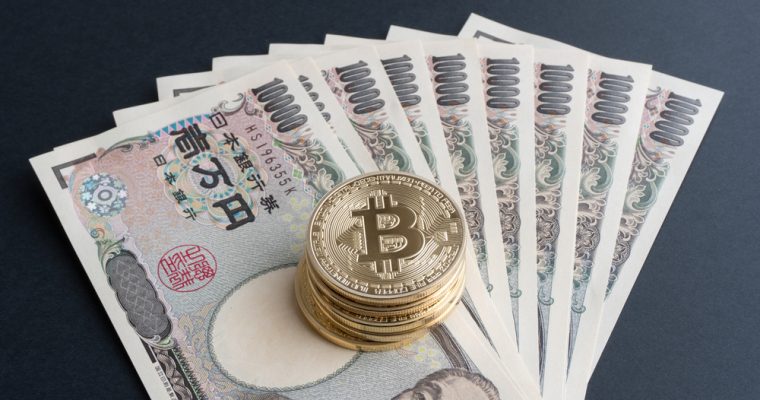
Featured image from Shutterstock.

Follow us on Telegram or subscribe to our newsletter here.
Join CCN’s crypto community for $9.99 per month, click here.
Want exclusive analysis and crypto insights from Hacked.com? Click here.
Open Positions at CCN: Full Time and Part Time Journalists Wanted.

Advertisement


Published at Tue, 10 Jul 2018 21:25:43 +0000

bitcoin Analysis

Previous Article

“Experts” Fear China Losing 90% Control Over Bitcoin Market, Forgetting Gov’t Ban

Next Article

iXledger MVP 1 O

You might be interested in …

CryptoKitties Creates Massive Backlog on the Ethereum Network

The new decentralized game CryptoKitties launched last week, with the purpose of the game to collect, bred, and trade electronic cats. Due to the game’s unbelievable popularity, the Ethereum network has been seeing record rates of transaction backlog.


Cat-Based Trading Game

CryptoKitties launched at the end of last month as one of the first games based on a decentralized blockchain. A kooky combination of Pokemon meets Beanie Babies on the blockchain, the goal of the game is to buy virtual cats and collect them. Each cat has is unique and has its own “DNA” that is recorded on the blockchain. Once you start acquiring a decent number of cats, you can start breeding them to create new, rarer cats. These cats have a value on the open marketplace, with the first cat created dubbed the “Genesis Cat” fetching upwards of $110,000 in ether.

Image result for crypto kitties

These cats are traded via Ethereum transactions, and it is quickly taking over the network. At the beginning of the weekend, CryptoKitties trades amounted to roughly 4% of the network’s transaction volume. Today they account for almost 15% of the transaction volume. It has gotten to the point where the team behind the game has announced that they are doubling the fees needed to birth a new cat to make sure the transaction can get processed in a timely manner.

We’re beginning to see cracks in the second biggest blockchain in the world, adding an urgency to scaling solutions that blockchain technology desperately needs. bitcoin has been experiencing full or near full blocks for over a year now. With Ethereum soon to be hitting its capacity, research into new options to help decentralized technology scale are needed soon.

Fixing the Problems at Hand

Some people are requesting that miners increase what is known as the gas limit, which is like blocksize in bitcoin. Gas is a measure of computational effort, and each operation has a set amount of gas attached to it. Operations can be things like adding numbers together, calculating a hash, or sending a transaction. The limit is the maximum amount of gas that can be included in a block. With this limit in place, it can cap the block size and the speed of propagation around the network. These two things are essential to maintain the decentralized nature of blockchain technology.

Unfortunately, miners are unlikely to change this parameter as it has its own adverse effects as well. A statement made on Reddit by the operator of EtherChain, a large Ethereum mining pool, has stated

The network uncle rate has already reached levels (~30%) comparable to the Network DoS attacks during October 2016. This means that currently every 3rd Block get orphaned. Increasing the gas limit will likely make the current situation even worse. Without substantial improvements on how those large blocks are processed by the current implementations and distributed through the network I don’t think increasing the gas limit further is feasible right now. While high end systems are still able to validate heavy blocks within several 100 ms, low end systems already take up to a few seconds to validate and distribute a block.Bottom of Form

A solution is needed for the current levels of congestion, as some transaction fees are hitting close to a dollar, a level that the Ethereum Network was never supposed to hit.

What do you think about this new game? Do you own any crypto kitties? Let us know in the comments below!


Images courtesy of CryptoKitties.co, BitInfoCharts

The post CryptoKitties Creates Massive Backlog on the Ethereum Network appeared first on Bitcoinist.com.