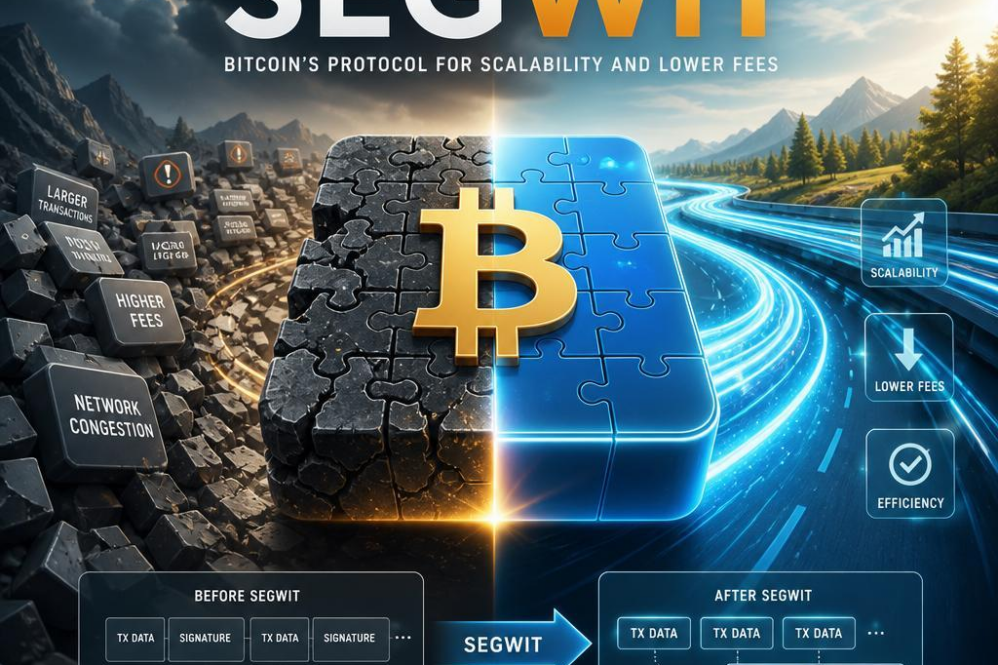
The Technological Foundations and Mechanisms of SegWit in bitcoin
Segregated Witness, commonly known as SegWit, revolutionizes bitcoin’s transaction structure by altering how data is stored within blocks. Instead of embedding the entire transaction data, SegWit separates the signature data – the “witness” – from the transaction itself. This partitioning allows more transactions to fit within a single block by effectively increasing the block size limit without changing the actual block size parameter. This method enhances scalability while maintaining backward compatibility, avoiding the need for a hard fork in the blockchain.
The core mechanism relies on rewriting the way bitcoin nodes validate transactions. By removing signature data from the original transaction data, SegWit eliminates transaction malleability-a problem where transaction IDs can be altered before confirmation. This not only secures the integrity of transaction IDs but also enables the implementation of second-layer solutions, such as the Lightning Network, fostering faster and cheaper payments across the network.
| Aspect | Legacy bitcoin | SegWit bitcoin |
|---|---|---|
| Block Size Limit | 1 MB | ~4 MB (block weight) |
| Transaction Malleability | Vulnerable | Resolved |
| Signature Data Storage | Inside the transaction | Separated in witness structure |
| Compatibility | Full | Backward compatible |
- Transaction Weight: SegWit measures block size in “weight units,” balancing witness and non-witness data.
- Soft Fork Upgrade: Changes are introduced without disrupting older nodes, preserving network cohesion.
- Witness Commitment: Each block includes a commitment to witness data in its coinbase transaction, securing signature segregation.
How segwit Enhances Transaction Efficiency and Reduces Fees
SegWit’s implementation is a game changer for bitcoin transactions by fundamentally altering the way data is stored within each block. Traditionally,transaction signatures-known as “witness data”-occupied important space,reducing the number of transactions that fit into a block. SegWit separates this witness data from the main transaction data, effectively increasing the block’s capacity to hold more transactions without altering its actual 1MB size limit. This enhancement means more transactions per block, leading to swifter confirmations and improved throughput, which are critical for handling bitcoin’s growing demand.
One of the most immediate benefits of this efficiency boost is the reduction in transaction fees. Sence miners prioritize transactions based on the space thay occupy rather than their monetary value, SegWit’s compact transaction structure lowers the data footprint, which translates directly to lower fees for users. Additionally, SegWit’s design allows for more flexible fee models, such as batch transactions and multi-signature transactions, offering further cost savings for frequent senders and businesses. The ability to do more with less data ensures every byte counts, fostering a more economical use of network resources.
- Increased Block Capacity: More transactions fit into a block without increasing block size.
- Improved Mempool Efficiency: Segregation of witness data reduces congestion in the transaction queue.
- Lower Transaction Fees: Smaller transaction size correlates with less fee expenditure.
- Enhanced Security Against transaction Malleability: This allows for advanced second-layer solutions like the Lightning Network.
| Before SegWit | After SegWit | Impact |
|---|---|---|
| 1 MB block size | 1 MB block size + witness data separated | ~60% more effective capacity |
| Higher average fees | Lower average fees | Up to 40% reduction in fees |
| Transaction malleability issues | Resolved transaction malleability | Enables Lightning Network |
SegWit’s Role in Addressing bitcoin Scalability Challenges
Segregated Witness (SegWit) revolutionizes bitcoin transactions by redefining how data is stored on the blockchain. By separating the witness data (signatures) from the transaction data, SegWit effectively increases the block size limit without altering the 1MB block cap. This adjustment allows more transactions to fit into each block, which directly enhances bitcoin’s throughput and network efficiency. Consequently, segwit reduces transaction congestion, enabling faster confirmations and a smoother user experience during peak demand periods.
One of the critical scalability benefits stems from SegWit’s impact on transaction malleability. Before SegWit, transaction IDs could be altered by modifying the signature data, disrupting second-layer solutions such as the Lightning network. With SegWit’s structure, the witness data is excluded from the transaction ID calculation. This advancement not only fortifies transaction integrity but also facilitates advanced scaling technologies designed to process transactions off-chain, thereby minimizing mainnet load and driving down fees for users.
To summarize SegWit’s contributions towards scalability, consider the following key points:
- increased Block Capacity: Enables up to 4MB effective block size with weight units, enhancing transaction volume per block.
- Reduced Fees: SegWit transactions consume less block space, leading to lower fee requirements.
- Improved Compatibility: supports second-layer solutions and smart contracts without compromising security.
| Feature | Effect on bitcoin Scalability |
|---|---|
| Transaction Malleability Fix | Enables robust layer-2 networks |
| SegWit Transaction Weight | Allows more transactions per block |
| Lower Average Fees | More cost-efficient for users |
Strategic Recommendations for Implementing SegWit in bitcoin Transactions
The adoption of SegWit demands a carefully structured strategic approach to ensure seamless transition and maximum benefits. Frist and foremost, stakeholders such as miners, wallet developersand exchanges must prioritize collaborative upgrades to their systems. This includes comprehensive testing and phased rollouts that allow real-time monitoring of network response and user experience. Early adoption incentives can play a critical role in encouraging quicker uptake, while clear communication strategies must be employed to educate users about the advantages and technical changes involved.
Another crucial aspect is the enhancement of infrastructure to support SegWit’s new transaction format. Wallet providers and service nodes should implement compatibility layers that allow for both legacy and SegWit transactions to coexist harmoniously during the transition phase, thereby avoiding fragmentation. Emphasizing backward compatibility ensures users do not face disruptions, while adopting the SegWit address format (bech32) can optimize fee savings and transaction speed in the long term.
To quantify the positive impacts and areas for enhancement, deploying monitoring and analytics tools is essential. The following table illustrates key performance indicators to track during the SegWit implementation period:
| Metric | Desired Outcome | Measurement Tool |
|---|---|---|
| Transaction Throughput | Increase by 30% | Block explorers & Network analytics |
| Average Transaction Fee | Reduction by 40% | Fee estimation APIs |
| SegWit Adoption rate | 75% of total transactions | Node statistics & wallet reports |
Continuous feedback loops between developers and end-users are vital to swiftly address emerging challenges and optimize the protocol’s real-world performance. Through these strategic focus areas, SegWit can be effectively integrated, leading to a more scalable, cost-efficientand resilient bitcoin network.