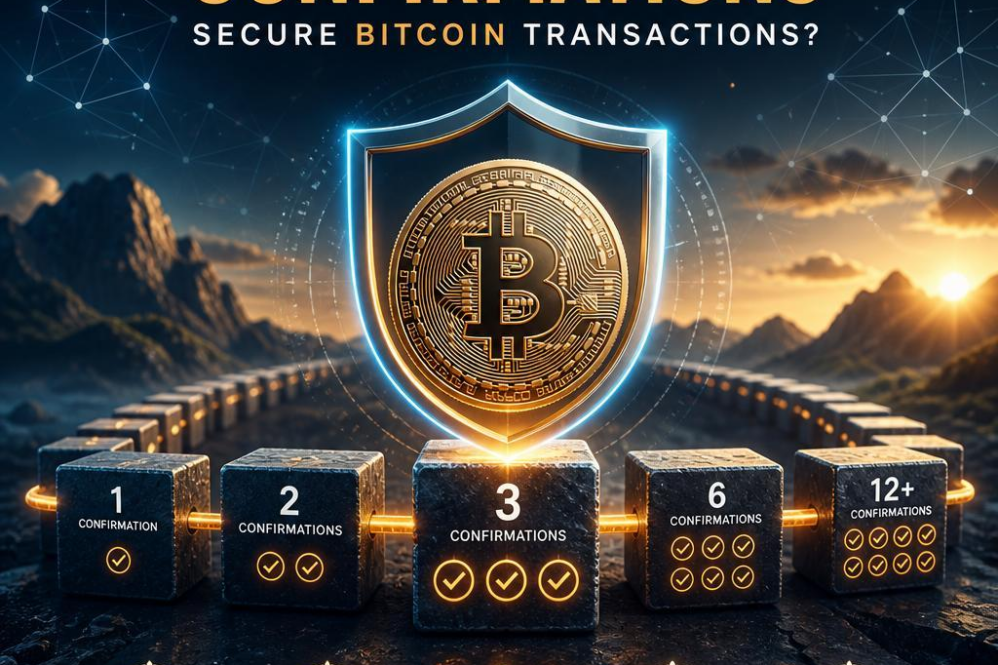
How Blockchain Confirmations Strengthen Transaction security
Each confirmation in the blockchain represents the addition of a new block that includes the transaction in question. As blocks are added sequentially, every additional confirmation further cements the transaction’s place in the blockchain, making it increasingly tough to reverse or tamper with. This layered validation mechanism ensures that onc a transaction reaches a certain number of confirmations, it is indeed effectively immutable and secure from double-spending or rollback attacks.
Key advantages of multiple confirmations include:
- irreversibility: The more confirmations a transaction has, the less likely it can be undone by an attacker.
- Increased trust: Merchants and users rely on a set number of confirmations to confidently accept bitcoin payments.
- Consensus validation: Each confirmation signifies network agreement, reflecting global consensus on the transaction’s validity.
| Confirmations | Security Level | Use Case |
|---|---|---|
| 0 (Unconfirmed) | Very low | Pending transactions |
| 1-3 | Moderate | Small-value transfers |
| 6+ | High | High-value payments, exchanges |
Factors influencing the Required Number of Confirmations
Understanding how many confirmations are necessary hinges on several key variables affecting bitcoin’s security assurances. One of the most meaningful factors is the transaction value. Larger transactions typically demand more confirmations,because the stakes are higher and the incentives for double-spending attacks increase dramatically. For example, a microtransaction might be considered secure after just one confirmation, while transfers involving thousands of dollars often require six or more confirmations for robust security.
Another element influencing confirmation requirements is the network conditions. During periods of high congestion or when block times deviate from the average of 10 minutes,delays in confirmation can occur,and some merchants or users may adjust their required number of confirmations accordingly to balance security with timely processing. The level of trust between the transacting parties also plays a critical role. A transaction between two known counterparts might need fewer confirmations compared to an anonymous transaction on a public exchange.
| Factor | Impact on Confirmations | Typical requirement |
|---|---|---|
| Transaction Value | higher value increases confirmation count | 1 to 6+ |
| Network Congestion | High congestion may delay confirmations | Variable |
| Trust Level | Trusted parties require fewer confirmations | 0 to 3 |
Analyzing Risks Associated with Different Confirmation Thresholds
Evaluating the risks tied to varying confirmation thresholds necessitates a balance between security and transaction speed. A single confirmation may frequently enough suffice for low-value or non-critical transactions, but it leaves the door open to the potential of double-spending attacks or network reorganizations. As the number of confirmations increases, the blockchain’s resistance to tampering solidifies, drastically lowering the likelihood of transaction reversal or fraud. However, this added security comes at the cost of delay, which can impact user experiance, especially in fast-paced commercial environments.
Different environments and transaction sizes demand tailored confirmation strategies. For small payments, merchants might tolerate the risk associated with fewer confirmations due to the low financial impact. Conversely, high-value transfers often necessitate a robust confirmation count-commonly, six or more-ensuring that the transaction is deeply embedded in the blockchain ledger. Setting these thresholds wisely can help mitigate risks such as:
- 51% Attacks: Where a malicious actor controls the majority of mining power and can rewrite transaction history.
- Double-Spending: The risk of spending the same bitcoin more than once by exploiting blockchain reorganization.
- Network Latency: Variability in transaction propagation times, potentially delaying confirmation visibility.
| Confirmations | Risk Level | Typical Use Case | Approximate Time |
|---|---|---|---|
| 1 | Moderate | Small payments, low risk | ~10 minutes |
| 3 | Low | Medium-value transactions | ~30 minutes |
| 6+ | Minimal | High-value, critical transfers | ~60 minutes or more |
Best Practices for Ensuring Maximum Security in bitcoin Transactions
Understanding the Confirmation Process in bitcoin transactions is essential to safeguard your digital assets against double-spending and fraud. Each confirmation represents the addition of a new block to the blockchain containing your transaction, progressively increasing the difficulty of reversing it. experts commonly recommend waiting for at least six confirmations for high-value transfers, as this threshold offers a robust balance between security and transaction speed. Though, lower-value transactions may require fewer confirmations based on the risk tolerance of the recipient.
Beyond waiting for confirmations, there are several critical practices to maximize transaction security. Always use wallets that support SegWit and implement Replace-by-Fee (RBF) protocols responsibly to manage transaction fees without compromising security. Ensure your wallet is protected with strong encryption and two-factor authentication. Additionally, transacting through reputable exchanges or services that adhere to rigorous security standards can significantly decrease the risk of compromise.
Consider these key security elements when planning bitcoin transfers:
- Use cold storage for long-term holdings to protect funds from online threats.
- Verify recipient addresses carefully to avoid phishing and man-in-the-middle attacks.
- Monitor blockchain confirmations through trusted explorers to validate transaction status.
| Number of Confirmations | security Level | Recommended Use |
|---|---|---|
| 1 | Low - transaction still reversible | Small, low-risk payments |
| 3 | Medium – enhances transaction finality | Moderate-value transfers |
| 6+ | High – secure and irreversible | Large-value or critical transactions |