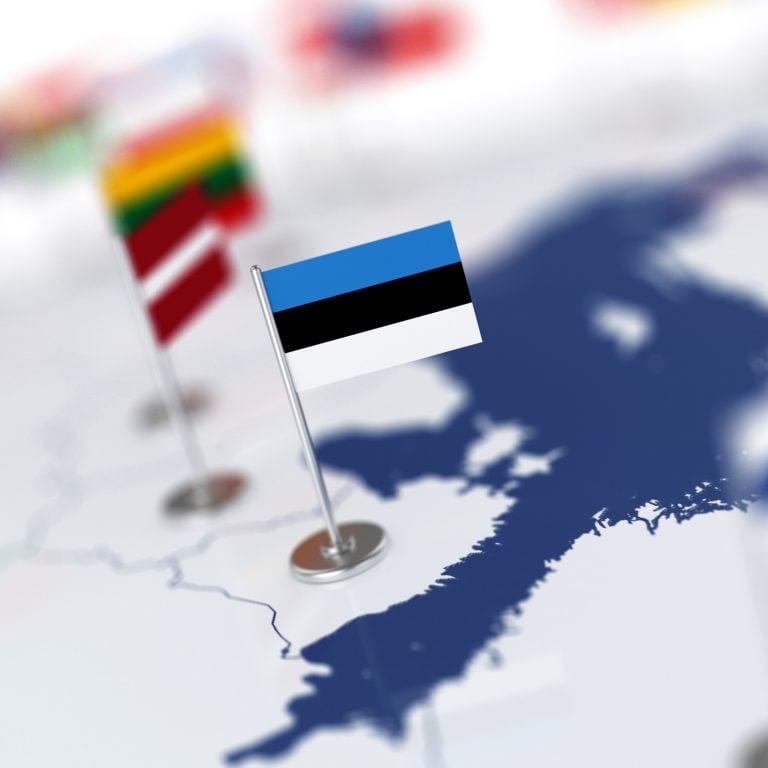
In less than a year since Estonia introduced licensing for companies operating in the cryptocurrency industry, the number of licenses issued has surpassed 900. Authorities in the Baltic country have adopted a rather progressive approach to regulating the crypto space but startups have complained that local banks are still reluctant to offer them regular services.
Also read:
Approval Takes About Two Weeks
 Estonia, which is among the first jurisdictions in the European Union to legalize crypto-related activities, grants two types of license. So far, around 500 licenses have been issued to entities operating digital asset exchange platforms. Over 400 cryptocurrency wallet providers have been licensed as well, Russian news outlet Bitnovosti reported, quoting Nikolay Demchuk from the law firm Njord which works in the sector.
Njord has recently published an overview of the situation around Estonian cryptocurrency licenses, quoting data from the country’s Register of Economic Activities. According to the report, obtaining a license is a relatively straightforward and simple process.
The Estonian Financial Intelligence Unit (FIU), the regulator issuing the licenses, has 30 days to review each application but in most cases an approval is granted within only one or two weeks. However, a license can be revoked if the company has not started operations within six months of receiving it.
The main requirements businesses have to meet stem from various know-your-customer and anti-money laundering regulations. Crypto entities registered in Estonia are legally operating in the EU, of which the country is a member state, and licensees are obliged to comply with relevant local and European laws.
Opening a Bank Account Still a Problem
Much like other countries where authorities have been trying to create a crypto-friendly environment, for example, traditional financial institutions in Estonia have been slow to catch up with regulators and hesitant to respond to the needs of the nascent industry. Restricted access to regular remains a major hurdle for Estonian fintech businesses, many of which are now working with foreign banks and payment providers. Nikolay Demchuk commented:
Opening a bank account is the biggest problem facing crypto companies. Estonian banks are not yet ready to serve clients operating with cryptocurrency.
Nevertheless, many investors have been attracted by the generally favorable conditions offered by Estonia. The country has already issued licenses to a number of crypto startups. In early June, regulators granted licenses for wallet and exchange services to trading platform . Later that month, a company that develops trading software and white label solutions, , obtained a license to operate from Estonia. In September and this week FIU approved the applications filed by two new cryptocurrency exchanges – and .
Taking the Lead in Europe
 The new Estonian Money Laundering and Terrorist Financing Prevention Act came into force almost a year ago. According to Demchuk, the legislation has allowed Estonia to become the first country in the European Union to regulate the circulation of cryptocurrencies and implement the licensing regime for companies operating in the sector.
At some point, the tiny European nation even planned to issue its own cryptocurrency, Estcoin. However, Tallinn was forced to abandon the idea under pressure from EU institutions. The strongest came from the European Central Bank. In September of last year, its President Mario Draghi stated that “No member state can introduce its own currency” in the Eurozone.
This past summer, it was reported that the government intends to proceed with a limited-scale project to issue an Estonian digital token. The crypto may be used for transactions between participants in the country’s program. Tens of thousands of foreign nationals have already been issued the special digital ID cards that allow them to take advantage of many benefits offered by Estonia, from simplified procedures for establishing a company to preferential taxation.
What do you think about Estonian policies regarding the cryptocurrency industry? Let us know in the comments section below.
Images courtesy of Shutterstock, Bitsane, Covesting, Swissone.
At bitcoin.com there’s a bunch of free helpful services. For instance, have you seen our page? You can even lookup the exchange rate for a transaction in the past. Or calculate the value of your current holdings. Or create a paper wallet. And much more.
The post appeared first on .


