July 3, 2026

Capitalizations Index – B ∞/21M

Blockchain Strategy and Business Training

Blockchain Strategy and Business Training
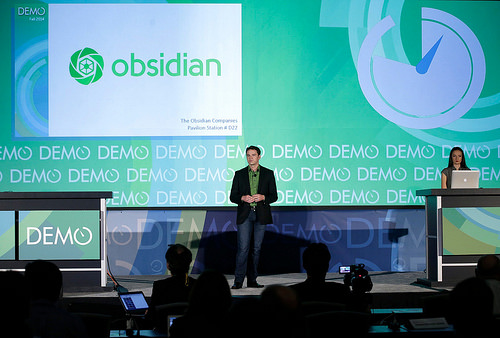
The Blockchain Hub, York University Canada and Indonesia Blockchain Innovation Center bring well known Blockchain business and strategy training to Jakarta.This program will guide the candidates through the concepts of Blockchain technology. By completing the program, participants will be able to understand the theoretical underpinnings of varying Blockchain technologies coupled with current perspectives into industry regulation and standards.This program consists of three days intensive training course and one week of group work on a capstone project that consist of a white paper. You will receive a certificate upon completion of the course.Key takeaway• Examine blockchain technology through an economic lens• Discover the possibilities and limitations of blockchain technology, and evaluate its long-term implications for your business• Develop a sound understanding of two key costs significantly lowered by blockchain technology: the cost of verification and the cost of networking• Propose a blockchain-based solution to address a business problem within your own contextAgenda• Day 1From Nick Szabo’s “bit gold” in 1998 to Ethereum’s Metropolis release in 2017, participants will learn a historical timeline of what we call today “Blockchain technology”. After attaining historical context for Blockchain, participants will then dive into a technical and business perspective of the technology fundamentals concepts and key features. In Day 1 participants will also start the journey of identifying the problem they are trying to solve, the technology fit and the business model• Day 2Participants will dive into the different Blockchain platforms, their differences and when each platform can be used. The participants will be then going through Blockchain decision frameworks and get into the weeds of what make a strong Blockchain business case and deriving insights to help them through the process of finalizing the vision for their next Blockchain solution. A strong focus on user design will be acknowledged to assure that participants are creating viable Blockchain business plans that solve current/future use cases.• Day 3Participants will be able to expand on their understanding of Blockchain business models through a critical review of curated white papers of existing projects to derive forces to implement in their project and pitfalls to avoid. This will allow participants to immerse into a Blockchain professional mindset. In addition, participants will review laws and regulations by deep diving into the details of different jurisdictions and going through Blockchain legal frameworks. This will then lead the participants to begin working on their Blockchain business plan for the Capstone Project.• Module 2-Capstone Project (White Paper) Submission (7 days)Your capstone project is a white paper designed for a use case of your choice. It is due one week after finishing the classPrice : USD 1.700 per personRegistration:Email: training@blockchaincenter.idWhatapps : 6282144681804
starting on 2018-11-29 09:00:00

Address:
Hotel Mulia
Jalan Asia Afrika, Senayan
Jakarta
Indonesia

Previous Article

Robinhood Cryptocurrency Review: How To Buy Bitcoin On Robinhood!

Next Article

Where Will BITCOIN Go Next? I May Have The Answer.

You might be interested in …

This week in cryptocurrency: february 15, 2019

This Week in Cryptocurrency: February 15, 2019

This Week in Cryptocurrency: February 15, 2019 We’ve Hit Cruising Altitude After the impressive rally we had to end the previous week, this week has been rather boring. The cryptocurrency market cap bounced between $120B […]

Counterparty Has Reached Its Millionth Transaction

Counterparty Has Reached Its Millionth Transaction

On Thursday, the smart contract protocol Counterparty reached its millionth transaction. bitcoin Magazine received an update on the status of the project from Shawn Leary, the newly elected Counterparty community director.

Counterparty was launched in January 2014 with the creation of its native currency, XCP. Unlike typical ICOs (initial coin offerings) today that transfer funds to the founders, XCP was created by “burning” bitcoins, whereby bitcoins were sent to a special address (one for which no one owned the private key) that rendered them unspendable. Those who destroyed their bitcoins in this manner in return received an amount of XCP in proportion to their bitcoins lost.

This “proof of burn” process put all bitcoin users, including the founders, on an equal footing in terms of obtaining the native XCP token. According to Leary, the Counterparty team hopes that its unique founding sets the tone to attract new projects that won’t take advantage of users’ funds.

“We want to continue this legacy and hope it wards off scams and attracts genuine projects that use our protocol for what it was intended: decentralized markets,” said Leary.

Counterparty doesn’t have its own blockchain; rather, it exists entirely via the bitcoin blockchain. All actions taken on Counterparty are made through ordinary bitcoin transactions using XCP as the “fuel” that is spent. This means that Counterparty transactions are protected by the hashing power of bitcoin, so a double spend would require a 51 percent attack on the bitcoin blockchain itself.

Counterparty Project: More Than Games

Leary described an indie-game network that is “growing leaps and bounds around Counterparty.” This market is arguably where Counterparty has had its greatest impact. The first of these games to rise to prominence was Spells of Genesis, with its token launch in 2015.

Since then, many gaming projects have flourished on Counterparty. The Rare Pepe project currently has over 1,000 digital collectible trading cards registered via Counterparty for use in games such as SaruTobi Island and Rare Pepe Party. The augmented reality game Augmentors has also successfully raised over $1,000,000 in bitcoins in a token sale on Counterparty of the in-game asset Databits, and even won investor Vinny Lingham’s support during an episode of Shark Tank. Augmentors is currently in beta and is planning for a launch in 2018.

But there is more to Counterparty than just games. Generally, Counterparty is helping anyone create digital assets with smart contract properties that are protected by the hashing power of the bitcoin blockchain.

For instance, Counterparty’s FoldingCoin is aimed at rewarding those who provide computing power to Stanford’s Folding@home project to aid in the study of diseases such as Alzheimer’s, Huntington’s, Parkinson’s and many cancers.

In collaboration with Storj, Counterparty developed Pico payments, which will be implemented to reduce the cost of microtransactions.

Probably their most widely used token, LTBCOIN, has been used by the LTB Network for a few years now. In fact, over 17 percent of all Counterparty transactions have been with LTBCOIN.

“Every protocol has its deficiencies and quirks,” Adam B. Levine, Editor-in-Chief of the Let’s Talk bitcoin! Show, said to bitcoin Magazine. “Counterparty is no different.  What I like about it is that we’ve been building with it long enough that I understand those risks and challenges. We’ve already solved most of them, like accepting dollar payments for tokens and giving token buyers the feeling of instant fulfillment when they’d otherwise be waiting for blockchain confirmations.”

The Scaling Debate: Preparing for What’s Next

The Counterparty team has not taken a definitive position on the various scaling proposals, but continues to run bitcoin Core. Leary told bitcoin Magazine that there are two routes Counterparty could take to account for a network fork. If Counterparty supports a hard fork in advance, they will “release a new version of Counterparty utilizing the new bitcoin client, and users must switch to this new bitcoin client as well as the updated Counterparty version before the specific bitcoin fork occurs.”

Alternatively, if a fork occurs that they did not account for ahead of time, they have the option to “freeze” Counterparty balances at a specific block height on the old chain and transition to a new chain at an indicated block height. In this case, “there would be some downtime, but the process would be announced well in advance with clear instructions provided for everyone.”

The team also emphasized that since Counterparty exists entirely through the bitcoin blockchain, there can be no such thing as a fork in Counterparty itself. Counterparty nodes do not need to coordinate with one another, since all nodes simply need to monitor the canonical bitcoin blockchain, whatever the Counterparty protocol defines that to be.

Continuing Improvements

Counterparty is still continually improved with development led by core maintainers Ruben de Vries and Devon Weller. There are currently two Counterparty Improvement Proposals (CIPs) outstanding, CIP 9 and CIP 10. Both are aimed at reducing costs for transactions over the network. The team is also raising funds to upgrade counterwallet.io.

Editor’s Note: The LTB Network is a property of BTC Media.

The post Counterparty Has Reached Its Millionth Transaction appeared first on Bitcoin Magazine.