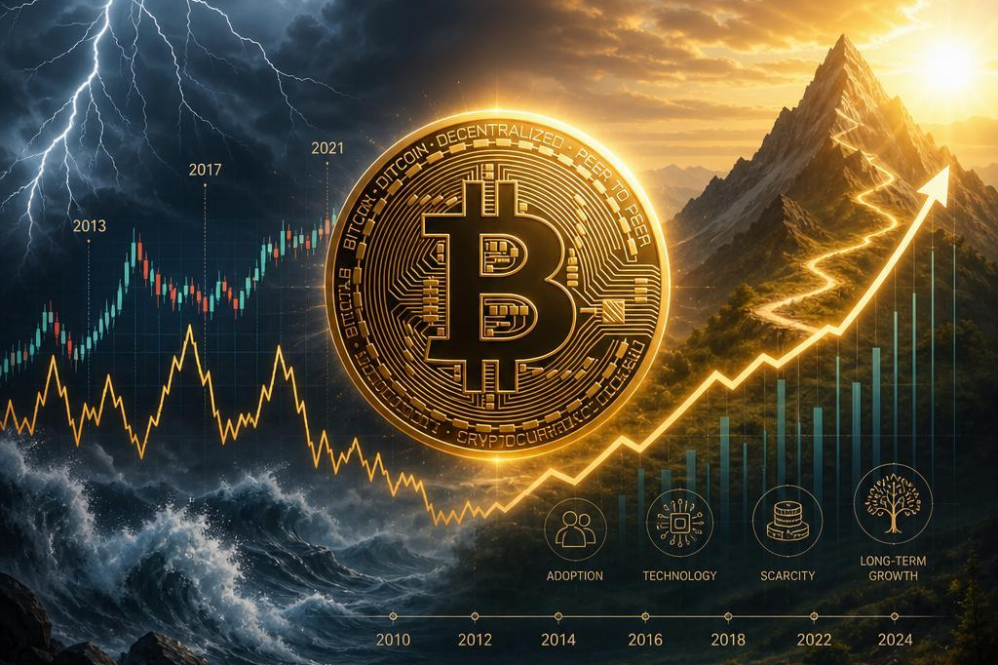
bitcoin Market Volatility Through the Decades
bitcoin’s journey has been characterized by intense fluctuations that have both challenged and captivated investors worldwide. In it’s earliest years, the digital currency experienced unparalleled volatility – with rapid surges followed by sudden crashes. This period was defined by speculative enthusiasm and uncertainty surrounding regulatory frameworks, which caused wild price swings and a high-risk surroundings for traders and adopters alike.
as bitcoin matured, several factors contributed to evolving volatility patterns. Increased adoption by institutions, advances in blockchain technology, and growing integration into mainstream finance began to stabilize prices to some degree. Though, notable events such as regulatory announcements, technological upgrades like the SegWit implementationand macroeconomic shifts continue to trigger notable price reactions. Understanding these drivers is essential for comprehending how the market adapts and grows over time.
| Decade | Volatility Level | Key Influences |
|---|---|---|
| 2010s | Extreme | Speculation, early adoption, regulatory uncertainty |
| 2020s | Moderate to High | Institutional interest, technological upgrades, macroeconomics |
Despite its ups and downs, bitcoin’s long-term trajectory exhibits significant growth. Investors and analysts frequently enough point to key trends that highlight its increasing maturity:
- Rising market capitalization surpassing traditional asset classes
- Expanding global acceptance from retail to corporate sectors
- Development of robust trading infrastructure and derivatives markets
These elements collectively underscore a dynamic asset that, while volatile, continues to establish itself as a cornerstone of the digital financial landscape.
Factors Driving bitcoin Price Fluctuations
bitcoin’s value is influenced by a complex interplay of factors, which collectively contribute to its notorious volatility. Among the most impactful is market sentiment, driven largely by news cycles, regulatory announcementsand influential endorsements or criticisms. Positive developments, such as institutional interest or regulatory clarity, can trigger rapid price surges, while negative headlines, such as government crackdowns or security breaches, often cause swift downturns. this emotional market response is amplified by the relatively immature state of cryptocurrency markets compared to traditional financial systems.
Another pivotal aspect is liquidity and trading volume. bitcoin’s trading activity fluctuates across global exchangesand low liquidity periods, especially in smaller exchanges, can lead to exaggerated price swings. Large buy or sell orders from whales-individuals or entities controlling significant bitcoin quantities-can distort prices temporarily. Moreover, geopolitical events and macroeconomic trends, including inflation rates and currency devaluations, indirectly influence demand as bitcoin is often perceived as a hedge or option asset in uncertain economic climates.
| Driver | Impact on Price | Typical duration |
|---|---|---|
| Regulatory Changes | High volatility,sudden jumps or drops | Short to medium term |
| Institutional Adoption | Gradual price appreciation | Medium to long term |
| Market Sentiment | Rapid fluctuations based on news | Short term |
| Macro Economic Events | Increased demand as safe haven | Medium to long term |
In essence,bitcoin’s price gyrations reflect the evolving perceptions and strategic maneuvers of an increasingly diverse group of stakeholders. Understanding these driving forces is crucial for anyone navigating its volatile landscape, helping to contextualize short-term turbulence within broader trends that have historically supported long-term growth.
Analyzing bitcoin’s long-Term Growth Patterns
bitcoin’s journey through the financial markets reflects a remarkable blend of extreme fluctuations and steady upward momentum. From its inception as a niche digital experiment to becoming a recognized investment asset, bitcoin has demonstrated distinct phases of volatility that often coincide with wider economic sentiments and technological advancements. Understanding these patterns reveals insights into how investor psychology, regulatory changesand macroeconomic factors drive cyclical peaks and corrections.
The long-term growth of bitcoin can be dissected through several key dimensions:
- Volatility spikes: Major events such as regulatory announcements, security breachesand macroeconomic crises evoke sharp price vacillations.
- Adoption ramps: Periods when increased acceptance by institutions and retail investors foster sustained upward trends.
- Market maturation: Gradual improvements in infrastructure,trading platforms,and custody solutions lend stability and confidence.
| Period | approximate Growth Rate | Volatility Description |
|---|---|---|
| 2010-2013 | ~5000% | Extreme early-stage volatility |
| 2014-2017 | ~2000% | Bubble and crash cycles |
| 2018-2023 | ~700% | More regulated and mature market |
These growth trajectories,punctuated by bouts of volatility,emphasize the importance of a long-term viewpoint when evaluating bitcoin as an asset. Rather than reacting to short-term price swings, investors and analysts benefit from examining the underlying trends that indicate broader acceptance and technological resilience. This approach provides a more nuanced understanding of bitcoin’s complex market behavior over time.
Impact of Regulatory Developments on bitcoin Stability
The bitcoin market has consistently shown sensitivity to regulatory announcements worldwide, leading to significant short-term price swings. When governments introduce new policies, whether tightening oversight or embracing cryptocurrency adoption, bitcoin often reflects these moves with volatile shifts. regulatory clarity tends to bolster investor confidence, reducing uncertainty and smoothing out erratic price behaviors. Conversely, ambiguity or stringent crackdowns can trigger rapid sell-offs and heightened volatility as stakeholders respond to perceived risks.
The influence of regulatory changes extends beyond volatility, impacting bitcoin’s overall market stability through several mechanisms:
- market Liquidity: Clear regulations encourage institutional participation, deepening liquidity pools and reducing price manipulation.
- Investor Base Diversity: Progressive frameworks attract a broader range of investors, including retail, institutionsand corporates, which helps stabilize demand and supply dynamics.
- technological Innovation: Regulatory acceptance often spurs advancements in compliance tools, security featuresand transparent transactional infrastructure.
| Regulatory Event | Market Reaction | Stability Outcome |
|---|---|---|
| 2017 ICO Ban in China | Sharp decline & high volatility | Short-term market destabilization |
| 2020 US ETF Approvals Discussions | Positive price rally with moderate volatility | Increased institutional interest |
| 2023 EU AMLD Reforms | Initial volatility, followed by stabilization | Enhanced transparency and trust |
investor Strategies for Navigating bitcoin Volatility
Investing in bitcoin requires a nuanced approach given its distinctive market behavior. Unlike traditional assets, bitcoin’s price swings can be extreme and swift, driven by factors ranging from regulatory news to macroeconomic shifts. Savvy investors often adopt a diversified strategy that balances bitcoin exposure with less volatile assets to mitigate risk effectively. This might involve setting clear entry and exit points based on technical analysis and using dollar-cost averaging to smooth out purchase prices over time.
Key investor tactics include:
- Risk Management: Establishing stop-loss levels to limit downside exposure during sudden price drops.
- Long-Term Holding: Riding out volatility by maintaining positions through market cycles to capitalize on bitcoin’s past upward trajectory.
- Portfolio Diversification: Complementing bitcoin holdings with other asset classes such as equities,bonds,or stablecoins.
| strategy | Purpose | Example |
|---|---|---|
| Dollar-Cost Averaging | Reduce entry price risk | Buying a fixed amount weekly |
| Stop-Loss Orders | Limit potential losses | Exit if price falls 15% |
| Rebalancing | Maintain target allocation | Adjusting portfolio every quarter |
By combining these strategies, investors position themselves to navigate bitcoin’s volatility with greater confidence and resilience.Understanding bitcoin’s historical patterns alongside disciplined investment frameworks allows for smarter decision-making that aligns with individual risk tolerance and long-term financial goals.
Future Outlook and Recommendations for bitcoin Investment
As the cryptocurrency landscape evolves, it becomes increasingly clear that bitcoin remains a pivotal asset with the potential for significant long-term growth. Investors should consider diversification strategies that balance bitcoin’s high volatility against more stable asset classes. Embracing a disciplined investment approach-such as dollar-cost averaging-can help mitigate risk associated with sudden price fluctuations, allowing investors to accumulate bitcoin over time without succumbing to market timing pressures.
Policy developments and technological advancements will continue to define bitcoin’s trajectory. Anticipating regulatory frameworks is essential for positioning investments advantageously. Governments around the world are progressing towards clearer cryptocurrency policies, which could either enhance market stability or introduce fresh volatility. Investors must stay informed and agile, leveraging trusted sources and expert insights to navigate these complexities prudently.
| Factor | Potential Impact | Investment Strategy |
|---|---|---|
| Regulatory Clarity | Decreased uncertainty | Long-term accumulation |
| Technological Upgrades | Improved scalability | Optimized entry points |
| Market Sentiment | High volatility spikes | Risk management with stop-loss |
Ultimately, the combination of thorough research, risk control mechanismsand a forward-thinking mindset will amplify the benefits of bitcoin investment. Understanding bitcoin’s historical volatility paired with its proven capacity for long-term growth empowers investors to position themselves for success in a dynamic financial ecosystem.