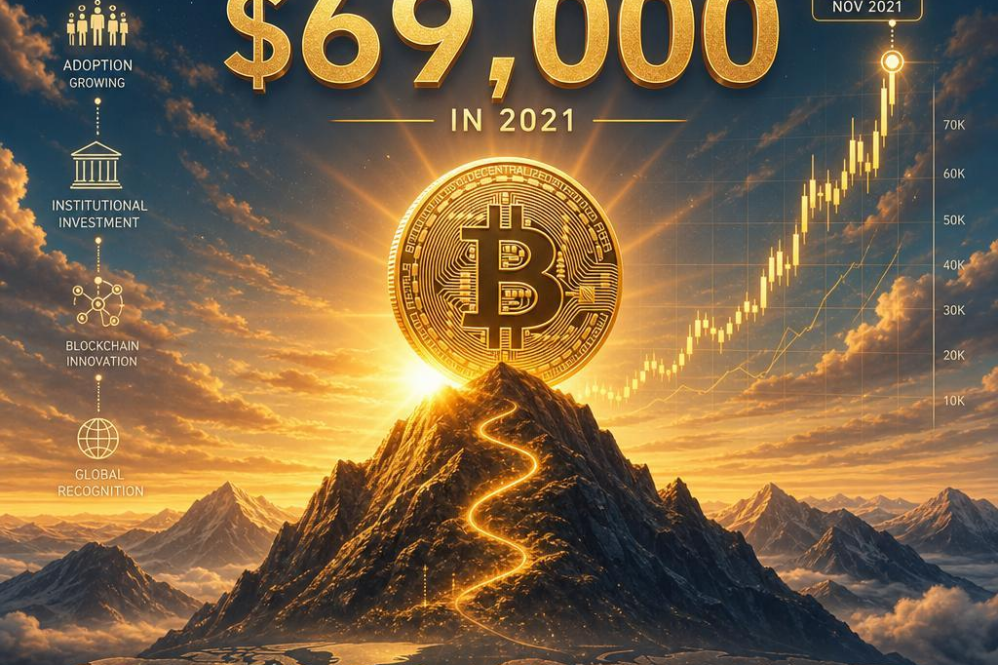
bitcoin’s Market Dynamics Leading to the 2021 Peak
2021 witnessed an unprecedented surge in bitcoin’s price, peaking near $69,000, driven by a convergence of several key market factors. Institutional adoption played a pivotal role, with major corporations and financial institutions openly investing in bitcoin as a hedge against inflation and currency devaluation. High-profile endorsements and growing acceptance of cryptocurrencies in mainstream finance created a robust catalyst for increased demand and market confidence.
The dynamics of supply and demand where further intensified by the limited availability of bitcoin. With its fixed supply capped at 21 million coins and regular halving events, scarcity contributed significantly to price appreciation. Additionally, the rise of decentralized finance (DeFi) platforms and the increasing use of bitcoin in digital payments expanded its utility, stirring further market momentum.
Market sentiment and speculative activity created a feedback loop, amplifying price volatility. Key drivers included:
- Surge in retail investor participation fueled by social media and trading apps
- FOMO (Fear of Missing out) prompting rapid buying waves
- Institutional announcements spurring market rallies
- Macroeconomic concerns such as rising inflation rates globally
| Factor | Impact on Market | Result |
|---|---|---|
| institutional Investment | Increased legitimacy and demand | Price surge to new highs |
| Limited Supply | Created scarcity effect | Strengthened upward pressure |
| Retail FOMO | High trading volumes and speculation | Exacerbated price volatility |
| Macroeconomic trends | Inflation fears boosted bitcoin as a store of value | Expanded investor base |
Key Economic and technological Factors Driving the Surge
The unprecedented rise of bitcoin to its 2021 peak was deeply influenced by a confluence of economic and technological dynamics. On the economic front, the global habitat was shaped by persistent inflation fears and expansive monetary policies. Traditional assets, such as bonds and fiat currencies, were increasingly viewed as vulnerable, propelling investors to seek option stores of value. bitcoin, with its capped supply and decentralized nature, uniquely positioned itself as a hedge against inflationary pressures, garnering attention from institutional and retail investors alike.
Technological advancements also played a pivotal role in propelling bitcoin’s surge. Innovations in blockchain scalability and security enhanced confidence among users and developers. The maturation of infrastructure surrounding bitcoin, such as user-pleasant wallets, custodial services, and regulated exchanges, drastically lowered entry barriers. Moreover, the growing integration of bitcoin into mainstream financial products and services facilitated liquidity and accessibility, fueling widespread adoption.
Key catalysts included:
- Expanded institutional adoption by corporations and hedge funds
- Greater regulatory clarity providing investor confidence
- Technological improvements in network speed and security
- Macro-economic uncertainty and unprecedented fiscal stimulus
| Factor | Impact on bitcoin | Resulting Effect |
|---|---|---|
| Inflation concerns | Increased demand as a hedge asset | Surge in institutional investments |
| Blockchain scalability upgrades | Enhanced transaction throughput | Boost in user confidence and adoption |
| Regulatory clarity | Reduced perceived risks | Entry of mainstream investors |
| Improved custody solutions | Safer storage options | higher retention by long-term holders |
analyzing Investor Behavior and Institutional adoption
Investor behavior during the surge to bitcoin’s all-time high revealed a distinct shift in market psychology, where fear of missing out (FOMO) converged with aggressive speculative buying. Retail investors, fueled by media hype and social platforms, entered en masse, seeking rapid gains. Meanwhile, seasoned investors displayed cautious optimism, strategically accumulating during dips and holding long-term. This dynamic interplay created a volatile but upward momentum that propelled the price toward its historic peak.
Institutional adoption played a transformative role in legitimizing bitcoin as an asset class and driving sustained demand. Major hedge funds,publicly traded companies,and top-tier financial institutions began allocating capital to bitcoin,not just as a speculative bet,but as part of diversified portfolios and treasury management. Their participation brought enhanced liquidity, market depthand credibility, which attracted further investment by lowering perceived risks and regulatory concerns.
| Institutional Entity | Type of Adoption | Impact |
|---|---|---|
| MicroStrategy | Treasury Reserve | Increased confidence |
| Grayscale | Investment Trust | Expanded investor access |
| Square | Corporate Holdings | Boosted market legitimacy |
| Fidelity | Custodial Services | Improved infrastructure |
- Retail investor enthusiasm escalated volatility but also magnified upward price movements.
- Institutional capital inflows created a stable foundation that encouraged broader market participation.
- Regulatory clarity during 2021 helped ease institutional fears and opened doors to further adoption.
Strategic Recommendations for Navigating Future bitcoin Volatility
Volatility in bitcoin markets demands a disciplined approach for investors aiming to preserve capital and capitalize on price swings. One core strategy is maintaining a diversified portfolio that includes more stable assets, which can offset bitcoin’s dramatic price shifts. By avoiding overconcentration in any single asset, investors can reduce the impact of sudden downturns while remaining exposed to bitcoin’s long-term potential.
Adopting a systematic investment approach such as dollar-cost averaging (DCA) can mitigate the risks posed by timing the market. Rather of attempting to buy at the lowest point, DCA spreads purchases over regular intervals nonetheless of price, smoothing out entry costs. This approach helps decrease the psychological strain of market corrections and creates a more consistent investment growth path.
Consideration of key market signals and macroeconomic factors provides an edge when navigating bitcoin’s future volatility. Traders and investors should regularly monitor metrics like network activity, regulatory developments, and broader economic indicators to adjust their risk posture.Below is a simple framework for strategic decision-making under volatile conditions:
| Indicator | Action | Objective |
|---|---|---|
| Increased Regulatory Pressure | Temporarily reduce exposure | Limit downside risk |
| Strong network Growth | Increase position strategically | Capture potential upward momentum |
| High Market Volatility | Implement stop-loss orders | Protect capital from sharp drops |


