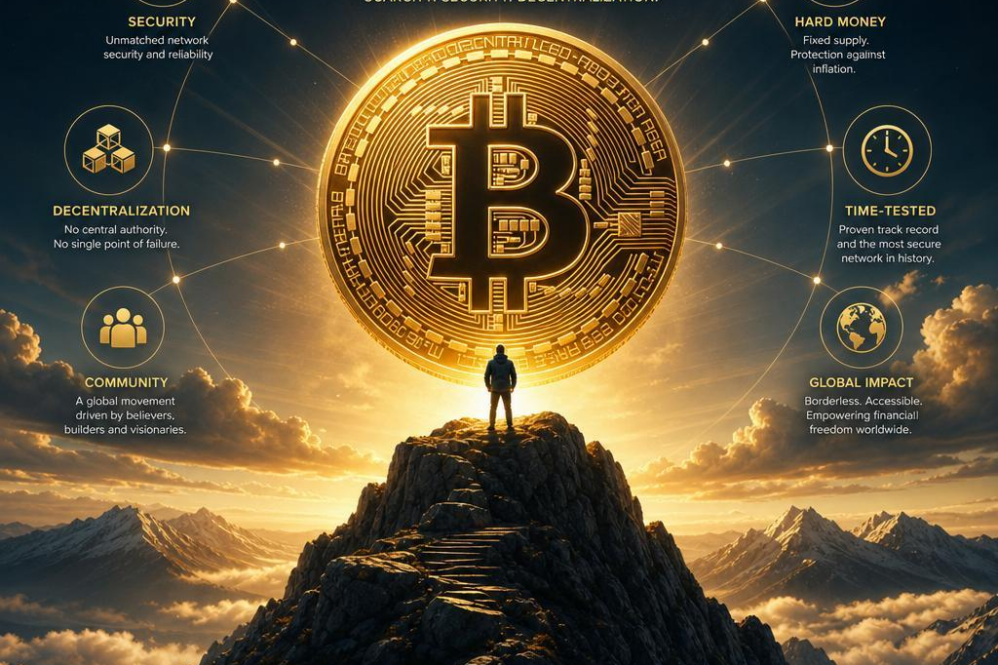
The Philosophical Foundations of bitcoin Maximalism
At the core of bitcoin maximalism lies a distinctive philosophical belief in digital scarcity and monetary sovereignty. Maximalists view bitcoin not just as an asset, but as a revolutionary social contract that transcends governments and traditional financial institutions. The idea is that true value is derived from trustless, decentralized consensus mechanisms rather than centralized control, making bitcoin the ultimate form of money in the digital age. This belief sets it apart from countless alternative digital assets that fail to meet these stringent criteria.
The ethical dimension of bitcoin maximalism also emphasizes sound money principles grounded in transparency, immutabilityand predictability. Maximalists argue that the fixed supply cap of bitcoin establishes a monetary system resistant to inflationary pressures and political interference. The beauty of this design is it’s alignment with principles historically cherished in classical economics, such as limited supply and durability, which many other cryptocurrencies cannot guarantee. This philosophical conviction creates a moral imperative for users to prioritize bitcoin above all other tokens.
bitcoin maximalism’s practical outlook is further supported by an ever-expanding ecosystem and network effects, illustrated in the table below:
| Aspect | bitcoin | Other Assets |
|---|---|---|
| Decentralization | High | Ofen Centralized |
| Security | Proven & Robust | varies Widely |
| Adoption | Global & Growing | Fragmented |
| Supply | fixed (21 million) | Inflationary or Variable |
This matrix exemplifies why bitcoin maximalists regard their favored digital asset as unparalleled in trustworthiness and long-term viability. The convergence of philosophy, ethicsand practical utility forms the cornerstone of maximalism’s unwavering confidence in bitcoin’s role as the premier digital asset.
Evaluating bitcoin’s Technological Superiority Over Alternatives
At the core of bitcoin’s perceived technological edge is its pioneering blockchain architecture, which laid the foundation for decentralized digital currencies. Unlike many newer projects, bitcoin emphasizes security and stability over flashy features or rapid changes. Its proof-of-work consensus mechanism,while resource-intensive,is renowned for robust resistance against attacks,making it the bedrock for trust in the ecosystem. This commitment ensures the network’s integrity and immutability, qualities that maximalists argue other cryptocurrencies often compromise in pursuit of scalability or speed.
when comparing technological frameworks, bitcoin’s simplicity is often lauded as a strategic strength. Its relatively minimalistic scripting language intentionally avoids complexity to reduce vulnerabilities. Moreover,bitcoin’s development ethos promotes cautious,incremental improvements,a stark contrast to some alternatives that frequently implement expansive upgrades without thorough vetting. This conservative approach has helped bitcoin maintain unparalleled uptime and broad node distribution, fostering unparalleled decentralization.
| Feature | bitcoin | Common Alternatives |
|---|---|---|
| Consensus Algorithm | Proof-of-Work | proof-of-Stake,Delegated PoS |
| Script Complexity | Minimal & Secure | Advanced,Riskier |
| Network Decentralization | Highly Distributed | Varies Widely |
| Upgrade Philosophy | Cautious & Thorough | rapid & Aggressive |
bitcoin maximalists underscore these elements as proof of technological superiority,arguing that enduring security and decentralization surpass experimental innovations that often expose networks to unforeseen vulnerabilities.This discipline fosters a resilient infrastructure that has stood the test of more than a decade - a feat that maximalists argue no alternative has yet matched in both scale and longevity.
Security and Decentralization as Pillars of Trust
Unrivaled Security is the cornerstone of how bitcoin ensures user trust and network resilience. Its robust consensus mechanism, powered by Proof of Work, creates a formidable defense against attacks and manipulation. The immense computational effort required to alter blockchain data not only deters malicious actors but also guarantees the sanctity of transactional history. This immutability reassures holders and participants alike, making bitcoin a fortress in the realm of digital finance.
True Decentralization sets bitcoin apart from other digital assets, enabling a network free from centralized control or influence. Thousands of independent nodes distributed globally maintain the blockchain, validating transactions and enforcing consensus rules collectively. This vast decentralization eliminates single points of failure and resists censorship, ensuring that no entity or government can unilaterally alter or shut down the network. Such distributed governance reinforces transparency and democratized control over monetary value.
The synergy of security with decentralization produces a digital asset framework that is both resilient and trustworthy. Below is a simplified comparison illustrating how bitcoin’s architecture excels versus centralized alternatives:
| Aspect | bitcoin | Centralized Systems |
|---|---|---|
| Control | Distributed among thousands of nodes | Concentrated in single authority |
| security | Secured by Proof of Work and cryptography | Dependent on organizational defenses |
| Censorship Resistance | High; virtually no gatekeepers | Low; vulnerable to pressure or shutdown |
| Transparency | Open ledger visible to all | Opaque, reliant on trust |
Economic Implications of Embracing bitcoin Exclusively
The decision to adopt bitcoin exclusively introduces profound economic shifts, challenging traditional financial systems worldwide. bitcoin’s decentralized architecture promotes financial sovereignty by removing intermediaries,which can potentially lower transaction costs and lead to increased economic efficiency. However, embracing bitcoin singularly also requires economies to adjust to its deflationary tendencies, as the fixed supply limits inflationary pressures common in fiat currencies. This deflationary nature can encourage saving over spending, impacting consumption dynamics and growth patterns.
Businesses and governments integrating bitcoin face an evolving fiscal landscape. Taxation frameworks must adapt to on-chain transactions, demanding complex tracking and reporting mechanisms. Moreover, the volatility inherent in bitcoin’s market value introduces risks for pricing goods and services, complicating long-term financial planning. Despite these challenges, proponents argue that the clear, immutable ledger can reduce fraud, increase accountability, and simplify audits, fostering a more robust economic environment overall.
Key Economic Implications of exclusive bitcoin Use:
- Reduced reliance on traditional banking infrastructure,potentially lowering operational costs.
- Deflationary pressure affecting consumer behavior and economic growth models.
- Increased fiscal complexity requiring updated taxation and regulatory approaches.
- enhanced transparency and security through blockchain technology.
| Aspect | Traditional Currency | Exclusive bitcoin Use |
|---|---|---|
| Inflation Control | Managed by central banks | Fixed supply, deflationary |
| Transaction Cost | Intermediary fees | Minimal, peer-to-peer |
| Economic Growth | Stimulated by monetary policy | Potentially restrained by saving incentives |
| Regulation Complexity | Established frameworks | Evolving, technology-dependent |
Addressing Criticisms and Misconceptions About bitcoin Maximalism
Critics often label bitcoin maximalists as narrow-minded or blindly loyal, but this perspective overlooks the foundational principles behind their conviction. Maximalists argue that bitcoin’s unparalleled security, decentralizationand finite supply create a digital asset infrastructure unmatched by any altcoin. They contend that alternative cryptocurrencies tend to replicate features without offering the same robust proof-of-work security or network effects, leading to increased risk and diminished trust.
Misconceptions about bitcoin maximalism also stem from misunderstandings of its strategic vision. far from dismissing innovation, maximalists emphasize layered solutions and interoperability, such as the Lightning Network, to extend bitcoin’s functionality without compromising its core strengths. This means supporting development around bitcoin’s ecosystem rather than dispersing resources across multiple competing tokens.
To clarify notable distinctions, consider this comparative table illustrating key attributes valued by bitcoin maximalists versus common critiques of altcoins:
| Attribute | bitcoin maximalist View | Common Altcoin Critique |
|---|---|---|
| Security | Most secure blockchain proven by hash power |
Often less secure, smaller networks |
| Decentralization | Strong decentralization and censorship resistance |
Centralized development and governance concerns |
| scarcity | Fixed supply of 21 million coins ensures value |
Variable supply models can cause inflation |
Strategic Recommendations for Investors Embracing bitcoin Maximalism
Investors who adopt a bitcoin maximalist mindset prioritize long-term value preservation through scarcity, securityand network dominance. Diversification beyond bitcoin often takes a backseat, as maximalists argue that competing digital assets dilute focus and introduce unnecessary risks. To align with this approach, investors should consider allocating the bulk of their digital asset portfolio to bitcoin, while maintaining a minimal exposure to experimental projects, if any. Understanding bitcoin’s robust protocol and its unparalleled resistance to censorship is key to making informed strategic choices.
Building resilience against market volatility involves rigorous risk management tailored to bitcoin’s unique characteristics. Maximalists typically favor cold storage solutions and multi-signature wallets to safeguard their holdings from hacks and theft, emphasizing self-custody over third-party intermediaries. Additionally,regular portfolio reassessments aligned with bitcoin’s evolving technological roadmap enable investors to time entries and exits more prudently,especially during heightened market cycles.
| Strategic focus | Recommended Action | Rationale |
|---|---|---|
| Network Security | Invest in bitcoin mining stocks or hardware | Supports network decentralization and reinforces protocol trust |
| Portfolio Concentration | Hold ≥ 80% bitcoin | Maximizes exposure to the most durable digital asset |
| Storage Practices | Adopt cold wallets and multi-sig setups | Mitigates risks of hacking and loss |
| Market Monitoring | Track bitcoin protocol upgrades | Informs strategic entry and exit points |
- Stick to core principles: Prioritize bitcoin’s proven security and scarcity over speculative tokens.
- Embrace patience: A long-term mindset is crucial, as short-term volatility is expected.
- Stay informed: Continuous learning about bitcoin’s technical framework and community sentiment is essential.