bitcoin Legal Status Across Regions and Its Implications
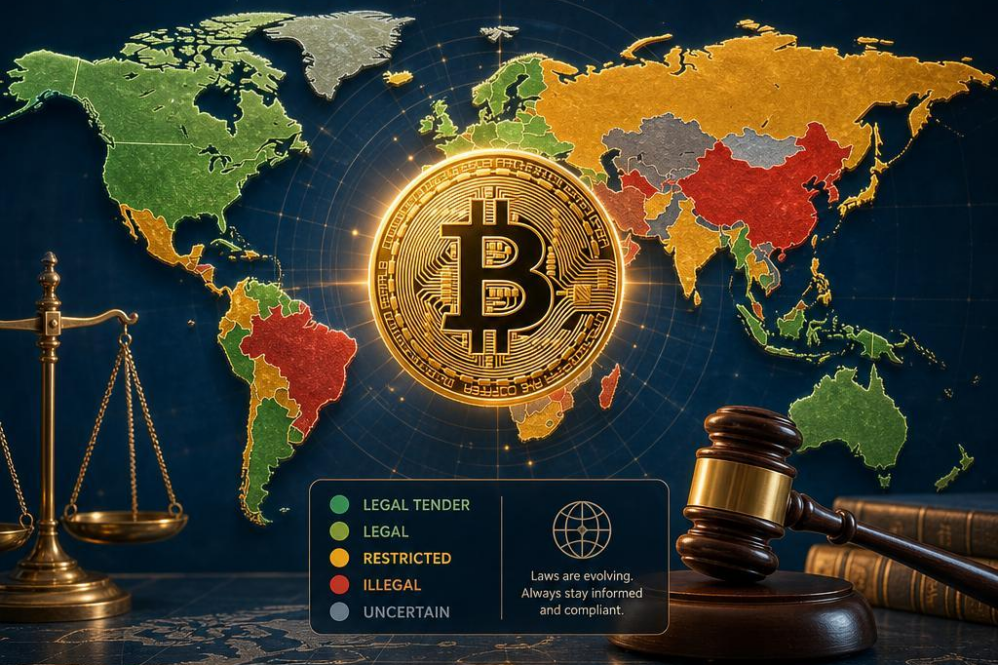
bitcoin’s acceptance varies dramatically across the globe, creating a patchwork of legal statuses that considerably impact its utility and adoption. In many Western countries, such as the United States and much of Europe, bitcoin enjoys a legal framework that recognizes it as a digital asset or property, subject to taxation and regulatory oversight. This regulated environment has fostered innovation and institutional involvement, encouraging businesses and individuals to engage confidently with cryptocurrency. However, stringent compliance measures around anti-money laundering (AML) and know-your-customer (KYC) policies often dictate the speed and ease of transactions.
Conversely, regions like parts of Asia and Africa show diverse approaches, ranging from outright bans to cautious acceptance. As a notable example, countries such as China have imposed strict prohibitions on cryptocurrency trading and mining, driven largely by concerns about financial stability and fraud. Meanwhile, countries like Nigeria and India exhibit ambivalence, where regulatory uncertainty persists despite a growing number of users. This uncertainty can stifle market growth and leaves users vulnerable to legal risks and inconsistent enforcement.
| Region | Legal Status | Implication for Users |
|---|---|---|
| North America | Regulated; regarded as property or commodity | Clear taxation, increased institutional adoption |
| Europe | Legal with strict compliance rules | Strong consumer protection, regulated exchanges |
| Asia | Mixed; from bans to regulation | High risk, limited mainstream access |
| Africa | Emerging regulation, mostly informal | Opportunities amid uncertainty |
Understanding these regional contrasts is essential for users, investorsand businesses alike.Key factors influencing bitcoin’s legal treatment include:
- National economic policies and concerns about capital flight
- Financial crime prevention and regulatory frameworks
- Technological infrastructure and government attitudes toward innovation
These elements not only dictate the present legal landscape but also forecast how bitcoin will shape and be shaped by global financial ecosystems in the near future.
Key Regulatory Frameworks Governing bitcoin Transactions
Across different jurisdictions, bitcoin transactions are governed by a mosaic of regulations designed to balance innovation with consumer protection. Many countries have adopted comprehensive anti-money laundering (AML) and know-your-customer (KYC) policies that mandate cryptocurrency exchanges and wallet providers to verify user identities and report suspicious activities.These measures aim to reduce illicit activities such as fraud,tax evasion,and terrorist financing while fostering transparency in digital asset movements.
Tax authorities in various regions have issued distinct guidelines defining whether bitcoin should be treated as property, currencyor commodity for taxation purposes. This classification impacts how transactions are reported and taxed,with some countries requiring detailed capital gains reporting,while others categorize bitcoin gains under general income tax laws. Additionally, some governments have created specialized licensing regimes or regulatory sandboxes to encourage fintech innovation while maintaining oversight over bitcoin service providers.
| Regulatory Focus | Typical Requirements | Notable Jurisdictions |
|---|---|---|
| AML/KYC | User verification & monitoring | EU, USA, Japan |
| Tax Compliance | Capital gains & income tax reporting | Canada, Australia, germany |
| Licensing | Service provider registration | Singapore, UK, South Korea |
As bitcoin continues to permeate mainstream finance, regulatory approaches remain fluid and reactive. Authorities consistently update frameworks to address emerging risks such as stablecoin integration, cross-border remittances, and DeFi activities.Stakeholders must therefore stay informed on evolving legal standards to ensure compliance and harness bitcoin’s benefits within established legal boundaries.
Impact of Legal Variations on bitcoin Adoption and Innovation
Global disparities in bitcoin’s legal status have a profound influence on its adoption rates and the pace of technological innovation within the cryptocurrency ecosystem. Countries with progressive regulatory frameworks frequently enough experience a surge in bitcoin usage, fostering ecosystems where startups can experiment boldly and investors feel secure. Conversely,restrictive or ambiguous regulations can hinder market growth,pushing users and developers to either operate underground or relocate to more welcoming jurisdictions. This patchwork of legality creates a highly uneven landscape, impacting both trust and the scalability of solutions built atop the bitcoin protocol.
Key factors shaping bitcoin’s integration include:
- Regulatory clarity: Clear guidelines reduce uncertainty for businesses and consumers alike.
- Tax treatment: Whether bitcoin is taxed as currency, propertyor something else directly affects user engagement.
- Legal recognition for contracts and transactions: Recognition under civil and commercial law encourages mainstream use.
| Region | Legal Status | innovation Level |
|---|---|---|
| North America | Regulated but innovative | High |
| Europe | Varied but progressive | Moderate to High |
| Asia | Mixed regulations, some bans | Moderate |
| Africa | Emerging frameworks | Growing |
This dynamic regulatory environment compels businesses and developers to continually adapt, crafting innovative compliance solutions or pivoting their operational models.For example, smart contracts and layer-two protocols gain traction in jurisdictions where legal nuances provide room for technological experimentation without immediate draconian penalties. Ultimately, the interplay of law and innovation not only shapes the accessibility of bitcoin but also determines the future trajectory of the crypto industry as a whole.
challenges Faced by Governments in Regulating Cryptocurrencies
Governments across the globe encounter multifaceted obstacles when attempting to regulate cryptocurrencies.The decentralized nature of digital currencies like bitcoin inherently clashes with traditional centralized financial oversight. Without a central authority controlling these transactions, enforcing compliance and tracking illicit activities such as money laundering or tax evasion becomes a important challenge. Moreover, the rapid innovation in blockchain technology often outpaces legislative processes, leaving regulators struggling to craft adequate laws that neither stifle innovation nor compromise security.
Another critical difficulty arises from the diverse economic and political landscapes worldwide.Countries vary greatly in their approach to financial regulation, technological adoption, and public policy priorities.This results in a patchwork of legal frameworks-from outright bans to open acceptance and integration of cryptocurrencies into financial systems. Such disparity complicates international cooperation and enforcement, as regulators must navigate conflicting laws and varying interpretations of cryptocurrency use and ownership.
| Regulatory Challenge | Impact |
|---|---|
| Decentralization | Limits control and oversight |
| Technological Innovation | Outpaces regulatory frameworks |
| Global Legal Diversity | Complicates enforcement and cooperation |
Lastly, public perception and understanding of cryptocurrencies influence regulatory approaches. Governments must balance fostering innovation and protecting consumers without inducing market panic or misinformation. Educational gaps and volatility in cryptocurrency markets create additional risks that lawmakers must consider when designing legislation. This interplay between technology, lawand societal impact continues to define the complex landscape of cryptocurrency regulation worldwide.
Best Practices for Complying with bitcoin Regulations Globally
Successfully aligning with global bitcoin regulations requires a proactive approach grounded in thorough research and adaptability.Businesses and individuals should start by mapping out the specific legal frameworks that apply in each jurisdiction where they operate. This includes understanding licensing requirements, reporting obligationsand restrictions around the use of bitcoin.Staying updated with regulatory changes is crucial, as governments frequently revise their stance to address technological evolution and economic impact.
Next, implementing robust compliance mechanisms is paramount. This involves establishing comprehensive know Your Customer (KYC) and Anti-Money Laundering (AML) procedures tailored to the diverse standards across countries. Clarity in internal policies ensures that every transaction is monitored and documented in accordance with local laws.Cultivating partnerships with regulatory experts or legal advisors specializing in cryptocurrency can minimize risks and streamline adherence to evolving standards.
organizations should also embrace transparency and security as core principles.Clearly communicating your compliance efforts to stakeholders builds trust and fortifies reputation in an frequently enough scrutinized industry. Below is a concise comparison of crucial regulatory aspects to consider globally:
| Region | Regulatory Focus | Compliance Tip |
|---|---|---|
| North America | AML/KYC Enforcement | Implement stringent identity verification |
| Europe | MiCA Regulations & Taxation | Ensure clear reporting and tax documentation |
| Asia-Pacific | Varied; often restrictive licensing | Consult local legal experts continuously |
| Latin America | growing acceptance with tax policies | Stay updated on evolving tax requirements |
Future Trends in bitcoin Legislation and Policy Recommendations
As bitcoin continues to integrate deeper into global finance, regulatory frameworks are expected to evolve toward greater clarity and uniformity. Governments are increasingly acknowledging the importance of balancing innovation with consumer protection. This shift is highly likely to foster comprehensive legislation that encourages responsible use of cryptocurrencies while combatting illicit activities.Key trends include enhanced KYC/AML regulations and clearer tax guidelines, ensuring users and businesses can operate with predictable legal requirements.
Policymakers are also exploring frameworks that accommodate the decentralized nature of bitcoin. Emerging proposals suggest regulatory sandboxes and tailored compliance mechanisms that enable innovation without stifling decentralization fundamentals. Countries leading in crypto adoption often leverage such experimental approaches to stimulate economic growth while managing risks effectively. This movement signals a shift from outright bans or laissez-faire attitudes to strategic governance models.
| Policy Trend | Focus Area | Expected Impact |
|---|---|---|
| Unified Tax Policies | Transparency & Compliance | Increased adoption, tax clarity |
| Sandbox Regulations | Innovation & Experimentation | Encourages startups, mitigates risk |
| Enhanced AML/KYC | Security & Anti-Money Laundering | Stronger fraud prevention |
- Cross-border regulatory cooperation to streamline global crypto transactions
- Public-private partnerships for technology and policy advancement
- Continuous updates to adapt to emerging blockchain innovations