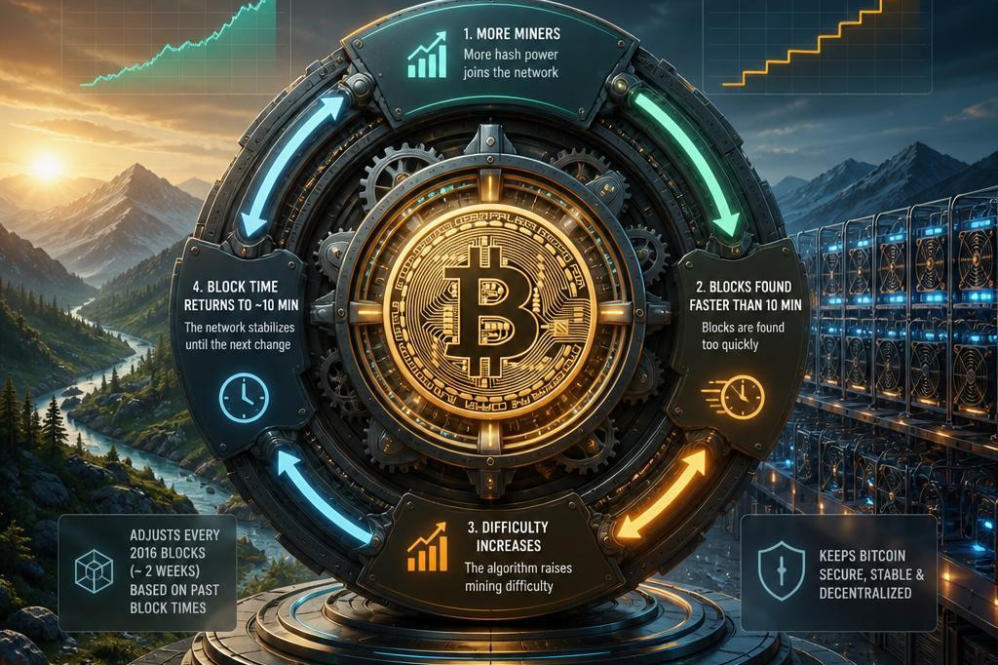
Strategic Insights into How Miner Behavior Influences Self-regulation
Miners in the bitcoin network don’t operate blindly; rather, they strategically choose where and how to deploy their computational power based on incentives and market conditions. This behavior is a key component of how bitcoin self-regulates its mining difficulty. A miner looking to maximize profit will assess various factors such as current block reward rates, electricity costsand hardware efficiency before deciding weather to invest in new equipment or stick with existing setups.
when the price of bitcoin rises sharply, there’s an uptick in miner activity as more people are enticed by higher profits. conversely, if the value drops significantly, some miners will exit the market due to reduced profitability. This natural ebb and flow affects the network’s overall hash rate, which indirectly impacts mining difficulty adjustments every 2016 blocks (approximately two weeks). The miner behavior-driven fluctuations in block-solving capacity are essential for maintaining the decentralized nature of bitcoin.
Understanding how miners react to these changes helps illuminate why the self-regulating mechanism functions efficiently. As a notable example, when a sudden surge pushes the network’s hash rate higher than expected, it prompts an automatic difficulty increase after 2016 blocks to restore equilibrium. This adjustment ensures that new bitcoins are distributed at a steady pace, aligning with bitcoin’s programmed emission schedule. Thus, miner behavior isn’t just about individual profit seeking but plays a critical role in maintaining the integrity and stability of the entire network.
Optimizing Pool Strategies in Response to Changing Mining Conditions
bitcoin’s mining ecosystem is in constant flux, driven by the dynamic interplay of supply and demand for computational power. Miners must strategically adapt to market conditions such as shifts in hardware efficiency, electricity costsand network traffic. As a notable example, during periods of high transaction fees or increased profitability due to a surge in bitcoin prices, there’s frequently enough an influx of new miners setting up shop. This influx can quickly saturate the network, driving the difficulty level upwards.
To navigate these challenges,triumphant pool operators deploy sophisticated algorithms and heuristics to balance miner incentives and operational stability. One key approach is dynamic fee adjustment within mining pools,where fees are recalculated periodically based on real-time data such as current block rewards,hardware costs,and market demand for bitcoin.This helps ensure that miners remain motivated even when conditions become less favorable.
Another critical consideration is the optimization of pool size and the distribution of work among participants. Smaller pools might offer higher payout ratios but also come with greater volatility in earnings due to lower hash rate participation. Larger pools, conversely, may provide more stable returns but could face challenges in efficiently allocating work units across vast networks of mining devices. A well-managed pool seeks a balance that maximizes efficiency while maintaining healthy competition among miners.
Recommendations for miners and Investors in Dynamic Market Environments
Navigating the volatile world of cryptocurrency requires miners and investors to stay both agile and informed. One basic aspect that plays a pivotal role in this dynamic landscape is bitcoin’s self-regulating mining difficulty. Unlike customary markets where human intervention often dictates changes, bitcoin’s blockchain automatically adjusts its mining parameters to maintain equilibrium. This built-in mechanism ensures stability, even as the network undergoes meaningful fluctuations.
For miners, understanding how and when the system recalibrates becomes crucial for strategic decision-making.A key consideration is balancing operational costs with potential rewards considering these changes.As mining difficulty increases periodically, the energy consumption required to mine bitcoin also rises. consequently, smaller-scale operations might find it financially unsustainable at certain points. This creates a natural selection process where more efficient and cost-effective businesses often thrive.
Investors face their own unique set of challenges and opportunities in this habitat.As a notable example, periods marked by high mining difficulty could signal a potential decrease in new Bitcoins being minted, theoretically making the existing supply rarer as demand adjusts accordingly. This scenario provides insight for speculative investment strategies,encouraging investors to focus on long-term sustainability rather than short-term gains. A well-informed approach can help mitigate risks and enhance opportunities within the ever-changing landscape of cryptocurrency mining.