bitcoin Halving Fundamentals and Its Impact on Mining Economics
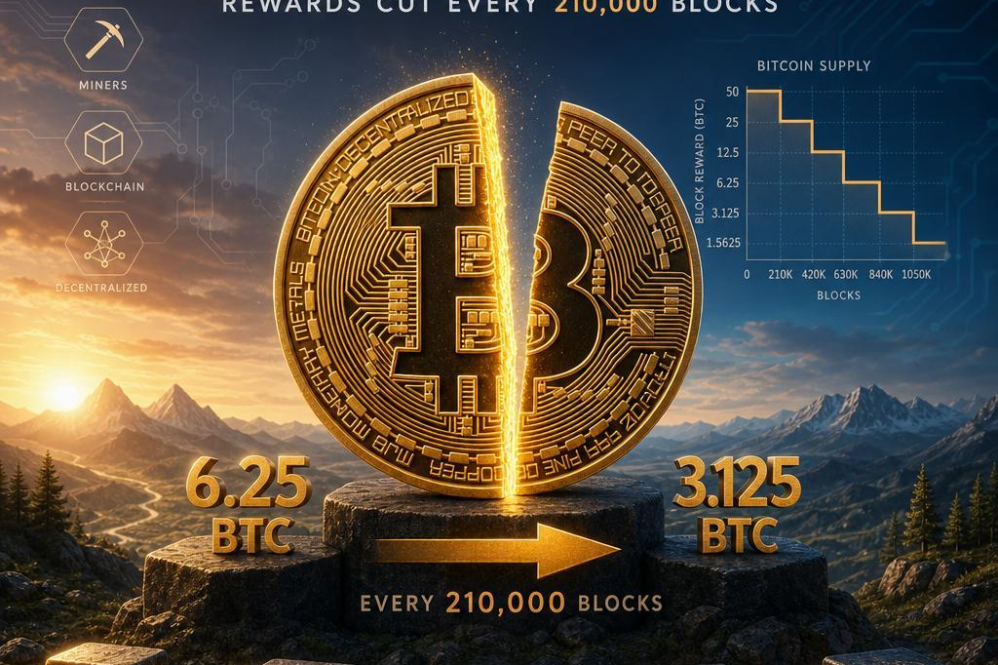
Every 210,000 blocks mined, the reward granted to bitcoin miners undergoes a intentional reduction by half. This event is pre-programmed into bitcoin’s code as a deflationary mechanism designed to control the total supply of bitcoin and sustain its value over time. As the block reward diminishes, miners receive fewer bitcoins for validating and adding transactions to the blockchain, directly influencing their revenue streams and operational sustainability.
Understanding the economic implications of this halving is crucial. Reduced rewards mean miners must optimize in several ways:
- Efficiency Improvements: Investing in more powerful, energy-efficient mining hardware to lower electricity costs per unit mined.
- Strategic Operation: Selecting locations with cheaper electricity and cooler climates to reduce overhead.
- Market Timing: Timing the sale of mined bitcoins to maximize returns amidst price volatility often triggered by halving events.
| Halving Event | Block Number | Block Reward (BTC) |
|---|---|---|
| 1st Halving | 210,000 | 25 |
| 2nd Halving | 420,000 | 12.5 |
| 3rd Halving | 630,000 | 6.25 |
This regimented halving enforces scarcity by slowing the rate at which new bitcoins enter circulation, theoretically driving demand and price appreciation over the long term. Though, from a miner’s perspective, the halving enforces a delicate balance: sustaining profitability despite declining immediate returns. The interplay between technological advancement, energy costs, and market conditions ultimately dictates the health of the mining ecosystem in the aftermath of each halving.
The Mechanism Behind the 210,000 Block Interval and Its Significance
The 210,000 block interval serves as a basic pacing mechanism in the bitcoin protocol, designed to trigger the halving of block rewards approximately every four years.This specific interval is carefully chosen to maintain a predictable supply and control the issuance rate of new bitcoins. By adjusting the reward after every 210,000 blocks, the system ensures bitcoin’s inflation rate steadily decreases, steering it towards its capped total supply of 21 million coins.
Understanding why this interval matters involves recognizing its role in balancing mining incentives with scarcity. Miners are incentivized to validate transactions through block rewards, but as these rewards halve, the diminishing returns encourage innovation and efficiency within the mining industry. Moreover, this periodic reduction acts as a deflationary mechanism, potentially increasing bitcoin’s value over time due to the reduced pace of new supply entering the market.
| Interval Aspect | Significance |
|---|---|
| Block Count | 210,000 blocks ≈ 4 years |
| Reward Reduction | 50% decrease in mining rewards |
| Supply impact | Decreases inflation, promoting scarcity |
- Stabilizes bitcoin’s monetary policy by systematically reducing supply.
- Encourages miner efficiency as rewards diminish over time.
- Enhances scarcity which may support asset appreciation.
Historical Trends and market Reactions Post bitcoin Halving Events
bitcoin halving events have historically acted as pivotal moments that shift market dynamics and investor sentiment. Approximately every four years, the reward miners receive for validating blocks is slashed by 50%, reducing the influx of new bitcoins into circulation. This programmed scarcity has led to significant price rallies in the months following each halving, as demand keeps pace with a tightening supply. However, these shifts don’t occur in isolation; broader economic conditions and market psychology also play crucial roles in shaping the aftermath.
Market reactions post halving often exhibit a characteristic pattern. Initially, there is a phase of heightened anticipation and speculative buying leading up to the event. This is frequently followed by increased price volatility as the immediate effects settle. Historical data highlights that in the first halving of 2012, bitcoin’s value surged from under $15 to over $1,000 within the subsequent year. Similarly, after the 2016 halving, prices climbed from about $650 to nearly $20,000 by the end of 2017. The 2020 halving once again preceded an unprecedented bull run, catapulting bitcoin to new all-time highs in 2021.
| Halving Year | Pre-Halving Price | Price 12 Months After | price Increase |
|---|---|---|---|
| 2012 | $12 | $1,000 | ~8,200% |
| 2016 | $650 | $19,700 | ~2,930% |
| 2020 | $8,800 | $58,000 | ~560% |
While past performance is not a guarantee of future results, these halving events remain one of the most reliable indicators of bitcoin’s long-term upward trajectory. They underscore the deflationary nature baked into bitcoin’s protocol, driving scarcity, encouraging holder convictionand often resetting the market’s narrative. Investors and traders alike watch these halving milestones closely, understanding that their ripple effects extend well beyond immediate price fluctuations, shaping the very essence of bitcoin’s economic design.
Long-term Implications for bitcoin Supply and Inflation Control
bitcoin’s controlled supply mechanism profoundly influences its long-term value proposition. Unlike fiat currencies, which can be printed endlessly, bitcoin implements a scheduled reduction in new coin issuance approximately every four years. This deliberate scarcity is designed to emulate precious metals like gold, fostering an ecosystem where inflation is tightly regulated through algorithmic precision rather than central bank policy. Over time,this ensures that the total number of bitcoins in circulation will never exceed 21 million,creating a deflationary environment as rewards diminish.
The halving process has significant economic implications for miners and investors alike. As block rewards decrease, miners face increasing pressure to optimize operational costs and mining efficiency to remain profitable. Meanwhile, market dynamics often respond to these halvings with heightened speculative interest, as the diminished supply growth can lead to upward price adjustments if demand remains steady or grows.This interplay between supply contraction and market behaviour forms the backbone of bitcoin’s inflation control, distinguishing it sharply from traditional monetary systems subject to discretionary expansion.
| bitcoin Halving Cycle | Block Reward | Supply Inflation Rate |
|---|---|---|
| 1st Halving (2012) | 50 BTC → 25 BTC | ~7.5% annually → ~3.75% |
| 2nd Halving (2016) | 25 BTC → 12.5 BTC | ~3.75% → ~1.8% |
| 3rd Halving (2020) | 12.5 BTC → 6.25 BTC | ~1.8% → ~0.9% |
| Future Halvings | Continues halving every ~210,000 blocks | Gradual approach to 0% inflation |
Ultimately, this diminishing issuance model supports bitcoin’s role as a hedge against inflation and a store of value in an increasingly digitized financial landscape. By structurally reducing the pace at which new bitcoins enter circulation, the halving mechanism strengthens the narrative of bitcoin as “digital gold,” offering a predictable and transparent monetary policy that contrasts sharply with unpredictable fiat inflation dynamics.
Strategic Adjustments for Miners and Investors in Response to Halving
The inevitability of the bitcoin halving compels both miners and investors to recalibrate their strategies. Miners, whose revenue is directly tied to newly minted bitcoins, face an immediate profit squeeze as the block reward is slashed. This frequently enough precipitates a shift towards enhanced operational efficiency, including investing in cutting-edge mining hardware and optimizing electricity consumption. Miners with higher operating costs might be forced to exit the network,consolidating power among those who can sustain margins,which could impact the decentralization of mining activities.
Investors, on the other hand, must anticipate the halving’s impact on market dynamics. Historically, halvings have acted as catalysts for increased scarcity, often driving up bitcoin prices over the medium to long term. Though, this price appreciation is not guaranteed to be immediate. Savvy investors diversify their portfolios and initiate position adjustments well in advance, factoring in market volatility and potential short-term sell-offs. Monitoring mining activity and hash rate fluctuations provides critical insight into network health and miner sentiment during these periods.
Both miners and investors benefit from understanding the cyclical nature of halvings through the following comparative overview:
| Aspect | Miners | Investors |
|---|---|---|
| Primary Concern | Profit margins & operational efficiency | Price volatility & investment timing |
| Typical Response | Upgrade hardware, reduce costs | Portfolio diversification, strategic accumulation |
| Risks | Network centralization risk, miner capitulation | Market unpredictability, liquidity traps |
Future Outlook and Preparing for Upcoming bitcoin Halving Cycles
As we look ahead to future bitcoin halving events, it’s imperative for investors, minersand enthusiasts to understand the potential implications on the cryptocurrency ecosystem. Each halving reduces the block reward by 50%, which historically has led to increased scarcity and significant upward pressure on bitcoin’s price over time.However, the exact market response can vary, influenced by broader adoption trends, regulatory developments, and macroeconomic factors.
Preparation strategies for the upcoming cycles should include:
- Diversification: Balancing bitcoin exposure with other assets to mitigate volatility risks.
- Mining Efficiency: Miners should continuously upgrade hardware and optimize operations to sustain profitability as rewards diminish.
- Market Analysis: Staying informed on global economic conditions that could impact demand and price trajectories.
| Cycle Phase | Typical Impact | Recommended Action |
|---|---|---|
| Pre-Halving | Heightened speculation and volatility | Evaluate entry points cautiously |
| Halving Event | Immediate reward reduction, market uncertainty | Monitor liquidity and avoid rash decisions |
| Post-Halving | Supply squeeze and potential price rally | Consider long-term holding strategies |