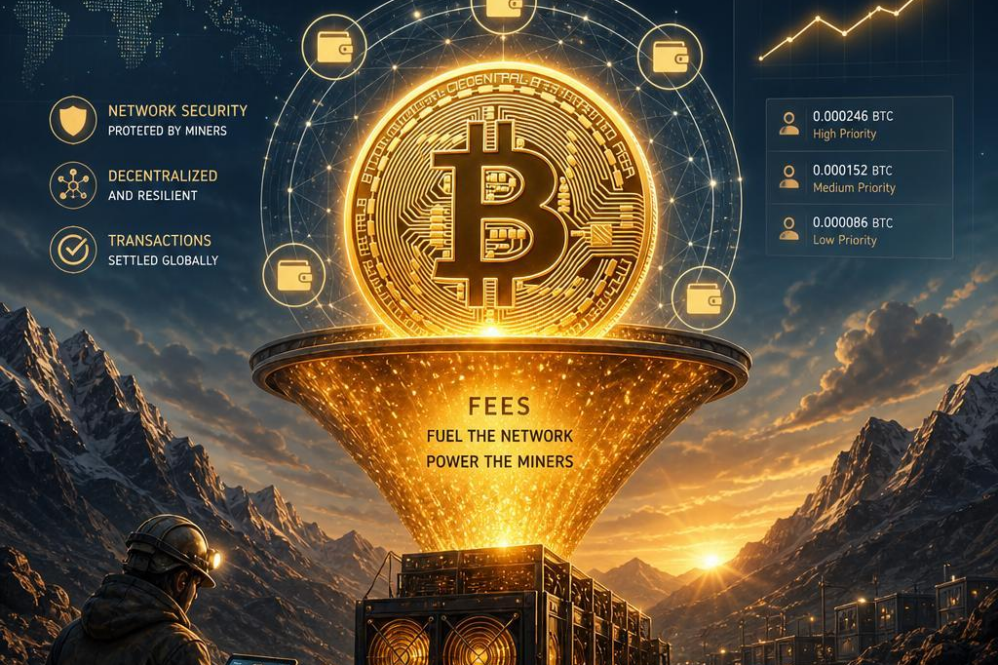
Understanding the Role of bitcoin Fees in Network Security
bitcoin’s fee structure plays a critical role in maintaining the network’s integrity as it complements the block rewards miners earn.While block rewards serve as an initial incentive for miners to secure the blockchain, these rewards decrease over time through a process known as “halving.” bitcoin fees ensure that miners remain motivated to validate transactions and add new blocks even as the block reward diminishes, thus securing the network continuously.
Miner incentives from transaction fees create a self-sustaining ecosystem:
- Fees incentivize miners to prioritize transactions, ensuring network efficiency during periods of high demand.
- They provide a scalable economic reward mechanism that survives beyond the fixed, predictable block subsidy.
- Transaction fees help mitigate spam and abuse on the network by requiring users to pay for blockchain space.
| Component | Role in Network Security | Long-term Impact |
|---|---|---|
| Block Rewards | Primary source of miner motivation today | Diminishes every 210,000 blocks |
| Transaction Fees | Supplemental incentive and spam deterrent | Becomes dominant incentive post-halving |
| Network Difficulty | Maintains block time consistency | Adjusts dynamically wiht hash power |
Analyzing the Decline of Block Rewards and Its Implications
As the scheduled halving events reduce the issuance of new bitcoins to miners, their block rewards diminish predictably over time. This gradual decline poses a essential challenge for network security: miners rely heavily on these rewards as their primary source of revenue.Without sufficient incentives, ther is a risk that mining operations could become less economically viable, potentially leading to reduced hash power and a less secure blockchain surroundings. Understanding the economic transition from block rewards to transaction fees is crucial for forecasting bitcoin’s long-term sustainability.
Transaction fees serve as the essential financial bridge that supports miners once block rewards taper off. Unlike block rewards, which undergo sudden reductions every four years, fees are dynamic and directly influenced by network demand and transaction volume. As block rewards decrease, fees compensated by users can increase, aligning miner incentives with actual network usage. This evolving fee market ensures miners remain motivated to validate and secure transactions, preventing the risk of network degradation due to insufficient compensation.
Several factors will influence how smoothly this shift unfolds, including:
- Network transaction volume and congestion levels
- Advancements in scaling solutions like the Lightning Network
- Technological improvements lowering mining costs and energy consumption
| Year | Estimated Block Reward | Projected Fee % of Miner Revenue |
|---|---|---|
| 2024 | 3.125 BTC | 15% |
| 2028 | 1.5625 BTC | 45% |
| 2032 | 0.78125 BTC | 75% |
Strategic incentivization through fees will likely become the norm, requiring users to prioritize transactions by attaching adequate fees during high-demand periods. This market-driven approach promotes efficiency and ensures that miners sort and validate blocks in economically optimal ways. Ultimately, the balance between declining block rewards and ascending fees will be a defining factor for bitcoin’s resilience and security in the decades to come.
Mechanics of Transaction Fees and Their impact on Miner Behavior
Transaction fees act as economic signals within the bitcoin network, guiding miners on which transactions to prioritize for inclusion in blocks. Each fee paid is an incentive that helps compensate miners for their computational efforts, especially as block rewards diminish over time. Unlike block rewards which are predetermined and reduce approximately every four years, transaction fees are dynamic and subject to network demand. This creates a feedback loop where higher network congestion elevates fees, encouraging miners to pursue transactions with greater returns.
Miners often rely on fee-based sorting algorithms to maximize profitability. These algorithms evaluate pending transactions based on their fee per byte, optimizing the total fees earned per block. the competition amongst miners to secure the most lucrative transactions fosters an ecosystem where users willing to pay more receive expedited confirmations. Conversely, when fees are low, miners may prioritize transactions selectively, sometimes leading to longer confirmation times for low-fee transactions.
| Factor | Miner Incentive Impact |
|---|---|
| Fee per Byte | directly affects transaction prioritization |
| Network Congestion | Increases average fees and competition |
| Block Reward Halving | Raises reliance on fees for compensation |
| Transaction Volume | Determines fee market activity intensity |
Economic Models Predicting Miner Incentive Sustainability
As the block reward steadily declines due to bitcoin’s halving schedule, miner profitability increasingly hinges on transaction fees. Economic models have been developed to analyze how miners will stay incentivized in this evolving landscape. These models generally converge on the principle that a stable and growing fee market is essential. Without sufficient fees, miners might find it economically unfeasible to maintain the network’s security, leading to potentially detrimental effects on blockchain integrity.
Key variables central to these models include:
- Transaction volume and user willingness to pay higher fees during periods of congestion.
- Hashrate competition and the operational cost structures of miners.
- Fee market equilibrium, balancing miner income and network usage.
Simulations often integrate game theory to forecast miner behavior under different fee scenarios, emphasizing the dynamic interaction between user demand for block space and miner incentives to contribute computational power.
| Model Component | Impact on miner Incentives | Long-Term Projection |
|---|---|---|
| Transaction Fee Growth Rate | Higher fees strengthen miner revenue | Promotes sustainable security post block reward era |
| Network Activity Level | Increases demand for block space | supports competitive fee bidding among users |
| Energy Cost & Mining Difficulty | Affects miner break-even point | Can discourage marginal miners if fees drop |
Ultimately, these economic frameworks underscore that miner incentives will be perpetuated by well-balanced fee mechanisms complementing diminishing block rewards. By anticipating shifts in fee structures and miner responses, policymakers and developers can better prepare for bitcoin’s secure and decentralized future.
Strategies to Optimize Fee Structures for Long-term Network Health
Optimizing fee structures to maintain network viability requires a nuanced understanding of miner incentives and user behavior. One effective strategy is the implementation of dynamic fee models that adjust based on real-time network congestion and transaction demand. This approach not only discourages spam transactions during peak times but also incentivizes miners to prioritize higher-value transactions, ensuring a balanced throughput that sustains the blockchain’s security and efficiency.
Fee decentralization mechanisms can further enhance long-term health by distributing transaction fees more equitably among miners of varying capacities. For example,fee-sharing pools or layered fee compensation models mitigate the dominance of large mining entities,fostering a resilient and competitive ecosystem. This balances the network’s economic incentives, promoting participation without centralizing control over transaction validation.
| Fee Strategy | Core Benefit | Potential Challenge |
|---|---|---|
| dynamic Fee Adjustment | Balances network load | Complex user fee estimation |
| Fee-Sharing Pools | Encourages miner inclusivity | Requires trust in pool management |
| layered Fees | Promotes fee fairness | Implementation complexity |
Lastly, clarity in fee structure and clear communication to users helps align miner incentives with network sustainability goals. Educating users about how fees contribute to the security and robustness of the bitcoin network fosters a cooperative environment where fee willingness reflects the value of long-term investment in network stability. These strategic approaches collectively enable the network to evolve beyond reliance on fixed block rewards, securing its integrity for future growth cycles.
Policy Recommendations to Balance User Costs and Miner Rewards
To ensure a sustainable balance between the costs borne by bitcoin users and the incentives awarded to miners, policymakers must consider dynamic fee structures that adapt to network demand and miner revenue needs.Implementing a flexible fee market,where transaction fees can auto-adjust based on congestion levels,can prevent exorbitant costs during peak periods while guaranteeing miners adequate compensation as block rewards diminish over time. This approach promotes fairness and aligns economic incentives across all stakeholders within the ecosystem.
Recommended strategies include:
- Fee Caps with Priority Tiers: Introduce fee ceilings coupled with priority tiers,ensuring smaller transactions remain affordable while users with urgent needs can pay premiums,sustaining miner motivation without alienating average users.
- Miner Revenue Smoothing: Develop mechanisms that smooth out income volatility for miners, such as pooled fee-sharing schemes that guard against sudden drops in block rewards.
- Obvious Fee Marketplaces: Enhance fee market transparency through public dashboards displaying real-time fee rates and miner revenues, empowering users to make informed transaction decisions.
| Policy Element | User Benefit | Miner Incentive |
|---|---|---|
| Dynamic Fee Adjustment | Lower fees during low demand | Stable income as block rewards decline |
| Fee Caps with priority | Affordability for small transactions | Revenue from premium transactions |
| Income Smoothing Pools | More predictable fees | reduced income volatility |