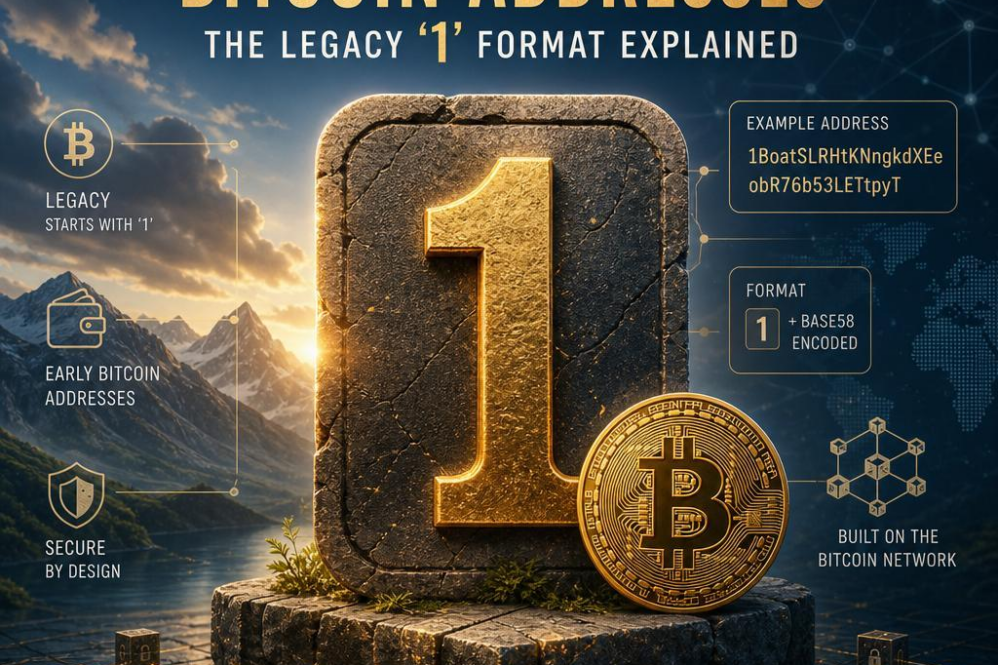
Understanding the Structure and Purpose of Legacy bitcoin Addresses
Legacy bitcoin addresses, instantly recognizable by their initial ‘1’, represent the original format established during bitcoin’s inception. Thes addresses are derived from the public key through a process known as Base58Check encoding, designed to create shorter and more user-amiable strings. Their structure begins with the prefix ‘1’, followed by a string of alphanumeric characters, optimized to minimize transcription errors.Although no longer the default choice for new wallets, these addresses maintain broad compatibility with most platforms and services due to their longstanding presence in the ecosystem.
The primary purpose of legacy addresses was to provide a straightforward vehicle for sending and receiving bitcoin within the network. Underlying this simple appearance is a robust cryptographic foundation that ensures each address is mathematically linked to its corresponding private key, thereby guaranteeing ownership and security. Additionally, the legacy format paved the way for higher transaction reliability at the time, though it lacks the enhanced efficiencies and cost optimizations introduced by newer address formats such as SegWit.
| feature | Legacy ‘1’ Address | Modern Alternatives |
|---|---|---|
| Prefix | 1 | 3 (P2SH), bc1 (Bech32) |
| Transaction Size | Standard | Reduced (SegWit benefits) |
| Compatibility | Worldwide | Selective (requires SegWit support) |
| Common Use | Sending/Receiving BTC from early wallets | Optimized for cost-saving and speed |
- Proven Reliability: Legacy addresses have a track record of unwavering service since bitcoin’s earliest days.
- Ease of Recognition: The consistent ‘1’ start makes them easily identifiable across wallets and exchanges.
- Broad Acceptance: Nearly all bitcoin-compatible services still accept these addresses, ensuring accessibility.
Decoding the Significance of the Leading ‘1’ in Legacy Addresses
The leading ‘1’ in legacy bitcoin addresses serves as a distinctive marker identifying the address format as part of the earliest standard in bitcoin history.Unlike modern address formats that start with different characters such as ‘3’ or ‘bc1’, this initial digit signals that the address is encoded using the Base58Check encoding scheme. This scheme was designed to avoid confusing characters and ensure a compact yet human-readable string for users. The presence of ‘1’ indicates the address is a Pay-to-Public-Key-Hash (P2PKH) type, representing a hash of the recipient’s public key embedded within the transaction.
understanding this legacy format is essential for grasping bitcoin’s evolution and security architecture. The legacy addresses starting with ‘1’ have a built-in checksum, which helps prevent errors when transcribing or sharing addresses. Additionally, these addresses follow a simple structure:
- Network Version Byte (indicated by the leading ‘1’)
- Hash of the public key
- Checksum for error detection
while the legacy format enjoys widespread compatibility, it lacks some efficiency improvements found in newer SegWit-enabled address types.In this very way, the leading ‘1’ stands as a ancient pillar-signifying both simplicity and robustness from bitcoin’s early days.
| Feature | legacy Address (‘1’ prefix) | Modern Formats |
|---|---|---|
| Prefix | 1 | 3 (P2SH), bc1 (Bech32) |
| Encoding | Base58Check | Base58Check, Bech32 |
| Purpose | P2PKH (Pay-to-Public-Key-Hash) | P2SH, SegWit |
| Transaction Efficiency | Standard, larger size | Optimized, lower fees |
Comparing legacy Addresses with Modern bitcoin Address Formats
bitcoin’s address system has evolved substantially as its inceptionand understanding the differences between legacy addresses and their modern counterparts is crucial for efficient wallet management and transaction processing.Legacy addresses, frequently enough beginning with a ‘1’, were the pioneering format used in early bitcoin transactions. These addresses adhere to the Pay-to-Public-Key-Hash (P2PKH) format, which directly encodes a hash of the public key, enabling straightforward validation by the bitcoin network.
Modern address formats, such as those starting with ‘3’ or adopting the Bech32 standard, introduce new features geared towards enhanced security, transaction efficiency, and scalability. Addresses beginning with ‘3’ represent pay-to-Script-Hash (P2SH) which allow multiple transaction types including multi-signature setups. Simultaneously occurring, Bech32 addresses, which start with ‘bc1’, offer benefits such as lower transaction fees and improved error detection due to their checksum capabilities and optimized encoding.
| Address Type | Prefix | Format | Key Features |
|---|---|---|---|
| Legacy | 1 | P2PKH | Simple, widely supported, less efficient |
| nested SegWit | 3 | P2SH | Supports multi-signature, backward compatible |
| Native SegWit | bc1 | Bech32 | Lower fees, better error detection |
- Compatibility: Legacy addresses work with nearly all bitcoin services, but modern formats increasingly dominate.
- Efficiency: Transactions from modern addresses are generally smaller, saving costs on network fees.
- Security: Advanced formats improve protection against address corruption and facilitate complex scripts.
Security Considerations When Using Legacy bitcoin Addresses
Legacy bitcoin addresses,starting with the numeral ‘1′,were the original format used in the bitcoin network. While they remain functional, these addresses bear certain security limitations that users must consider. Notably, legacy addresses do not support some advanced security features intrinsic to newer formats like SegWit (starting with ‘3′ or ‘bc1′). This means transactions made with legacy addresses often have higher fees and slower confirmation times,perhaps impacting both cost and speed.
Furthermore,legacy addresses are more susceptible to certain privacy risks. As each transaction made with a legacy address frequently reveals more blockchain data, it can be easier for third parties to trace the activity linked to these addresses. Enhanced privacy protocols embedded in modern address types help to obfuscate transaction histories, providing users with a more secure and confidential experience when managing their bitcoin holdings.
| Aspect | Legacy (‘1′ addresses) | Modern (SegWit ‘3’ & Bech32 ‘bc1′) |
|---|---|---|
| Transaction Fees | Higher | Lower |
| Processing Speed | Slower | Faster |
| Privacy | Limited | Improved |
| Security Features | Basic | Enhanced |
To mitigate these concerns, users shoudl periodically review and consider migrating their bitcoin holdings to addresses that support SegWit or Bech32 formats. This not only optimizes transaction efficiency but also strengthens protection against common blockchain analysis techniques. Security-conscious users may also want to employ wallet tools that encourage address upgrades, ensuring their assets remain safeguarded under evolving network standards.
Best Practices for Managing and Storing Legacy bitcoin addresses
When dealing with legacy bitcoin addresses,meticulous management is paramount to ensure security and accessibility. These addresses, identifiable by their leading ‘1’, rely on the now less prevalent Pay-to-Public-Key-Hash (P2PKH) format, which requires careful handling to avoid compatibility issues with newer wallet technologies. One of the core strategies is to always keep a robust, encrypted backup of the private keys associated with these addresses. By doing so,you safeguard against potential loss due to hardware failure or software malfunctions,which can be more challenging to recover when using legacy formats.
Storage solutions for these old-format addresses should emphasize both physical and digital security. It’s advisable to use cold storage methods, such as hardware wallets or air-gapped devices, to minimize exposure to online threats. Meanwhile, for digital backups, employing multi-layered encryption and storing copies across geographically dispersed locations can further mitigate risks. Additionally, it’s vital to regularly verify wallet compatibility as software updates may phase out support for legacy address types, necessitating timely migration of any remaining funds.
To effectively track and manage balances across legacy addresses,employing specialized portfolio management tools designed to recognise all bitcoin address formats can provide clarity and convenience. Here’s a quick guide to prioritize key management tasks:
- Regular key backups: Refresh and securely store backups in multiple locations.
- Firmware updates: Keep hardware wallets updated to maintain compatibility.
- Migration planning: Prepare to transition funds to SegWit or Bech32 addresses to benefit from reduced fees and increased efficiency.
| Best Practice | Reason | Action |
|---|---|---|
| Encrypted Backups | Protects private keys from theft and loss | Use strong encryption tools and keep offline copies |
| Cold Storage | prevents exposure to online hacks | Utilize hardware wallets or paper wallets stored securely |
| Regular Compatibility Checks | Ensures accessibility as software evolves | Test legacy addresses on updated wallets periodically |
Future Outlook and Recommendations for Transitioning from legacy Formats
The evolution of bitcoin address formats is certain as blockchain technology advances and user needs diversify. While the legacy ‘1’ addresses were instrumental during bitcoin’s early adoption phase, they lack certain efficiencies and security features inherent in modern formats such as SegWit and Bech32. Transitioning away from these legacy formats not only reduces transaction fees but also enhances network scalability and error detection mechanisms. Stakeholders need to prioritize educational initiatives highlighting these benefits to overcome user hesitation and resistance to change.
Strategically, service providers, exchanges, and wallet developers should collaborate to facilitate smooth migrations. Practical recommendations include:
- Automating address updates: Implement backend systems that auto-convert legacy addresses to newer formats without disrupting user experience.
- Clear communication: provide transparent guidance on why transitions matter, accompanied by tutorials and FAQs tailored for various technical proficiencies.
- Incentivizing adoption: Offer reduced fees or bonus features for users embracing new address standards promptly.
| Address Type | Key Advantage | Recommended Action |
|---|---|---|
| Legacy ‘1’ | Wide compatibility | Phase out with grace period |
| SegWit ‘3’ | Lower fees & faster validation | Promote as standard for new transactions |
| Bech32 ‘bc1’ | Maximized efficiency & error detection | Encourage for advanced users & wallets |