June 23, 2026

Capitalizations Index – B ∞/21M

Bernie Sanders’ Economic Policy Would Send Population Buying Bitcoin

Bernie sanders’ economic policy would send population buying bitcoin

Bernie Sanders’ Economic Policy Would Send Population Buying Bitcoin

By CCN: Hold onto your bitcoin. Stephanie Kelton, U.S. economist and senior economic advisor for Bernie Sanders 2020, just declared war on the U.S. dollar, tweeting:

“The carpenter can’t run out of inches. The stadium can’t run out of points. The airline can’t run out of FF miles. And the USA can’t run out of dollars.”

Banks printing more money would only lead to hyperinflation, which would open the floodgates to bitcoin investing as it has done in countries such as Venezuela.

Yeah, good luck with that.

Bernie sanders, federal reserve

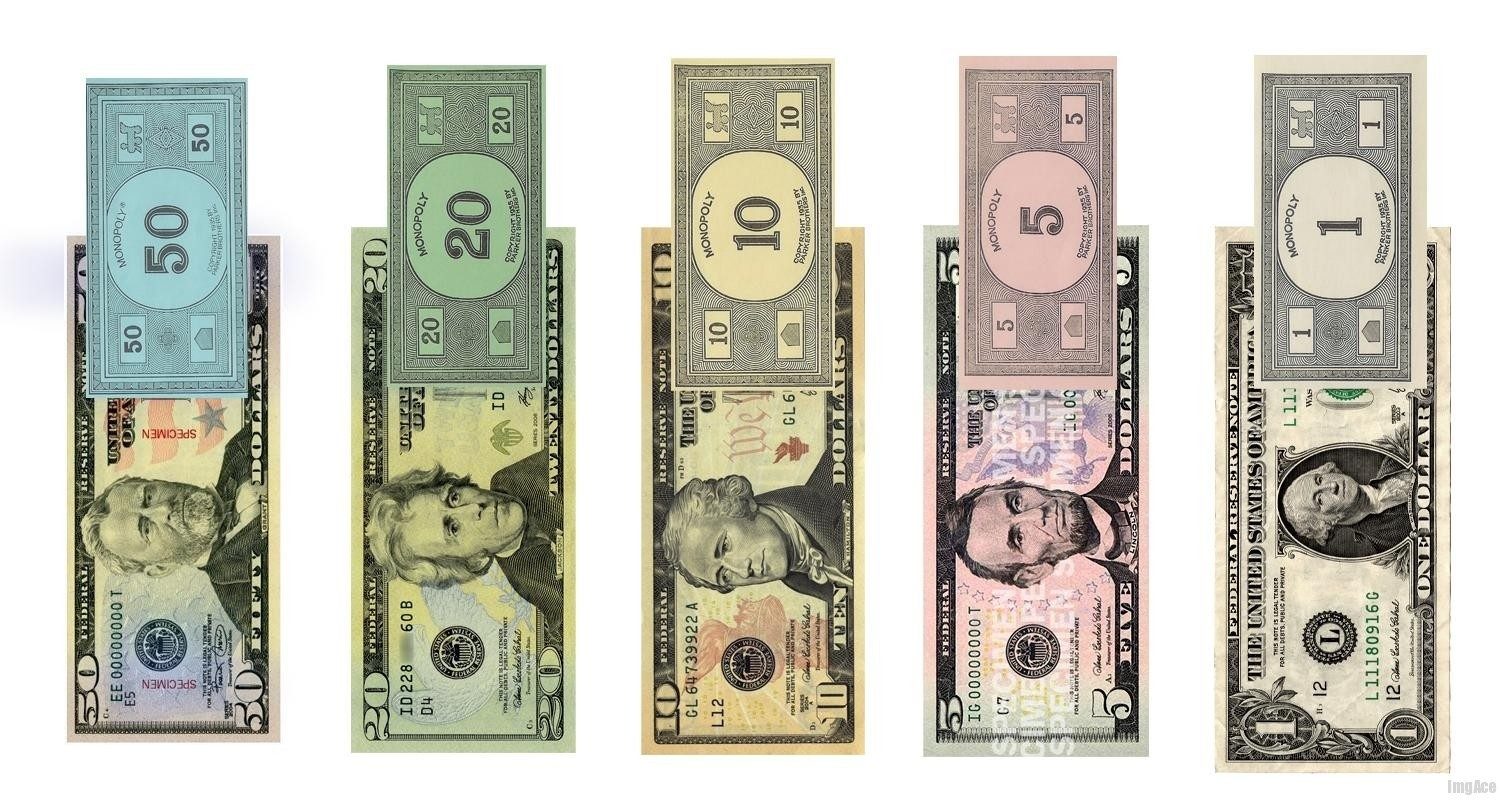
Bernie Sanders, a supposed man of the people, wants to lord the U.S. Federal Reserve monopoly on money creation over the rest of the economy. | Source: Imgur

As Morgan Creek Digital Co-Founder Anthony Pompliano stated, “bitcoin is the general population’s attempt to stop the madness.”

The Economic Illiteracy of Bernie Sanders

This is a terrible analogy and not very clear thinking by a university economics professor.

The carpenter has no shortage of inches but has to fill them with a scarce resource – building materials – and most importantly the carpenter’s expertise and labor.

Athletes in a game can earn as many points as they’d like, sure. But they have to work for them. The referees don’t just start awarding more points and say the teams have done better. And neither does the airline just start handing out frequent flyer miles for nothing. It gives them to frequent fliers in return for their continued business.

The airline would go bankrupt if it did with frequent flier miles what Bernie Sanders’ economic advisor Stephanie Kelton not to mention Alexandria Ocasio Cortez advise we do with the economy.

Bernie Sanders and AOC Would Cause Hyperinflation

This is frankly a terrifying thing for an advisor to a major presidential candidate to say. Anyone with a firsthand or even cursory knowledge of the history of hyperinflation knows what a total catastrophe this kind of thinking is in practice.

In Germany, hyperinflation ravaged the economy when the government decided to monetize its war debts after World War I. This directly led to the horrifying nightmare of World War II by leaving Germans poor and desperate. Times of economic uncertainty are opportunities for totalitarian dictators. Ambitious would be despots never let a good crisis go to waste.

In Zimbabwe in the 1990s, the government printed up so much money that trillion dollar bills became as common as twenties are in America. That episode of hyperinflation made Zimbabweans all trillionaires, but it definitely did not make any of them richer.

In Venezuela right now, the hyperinflationary, print-and-spend policies of Hugo Chavez and his successor Nicolás Maduro, have led to rampant economic devastation. There can be no doubt that the socialist money printers like Bernie Sanders and Alexandria Ocasio Cortez pattern their economic thinking precisely after the tenets Chavist socialism.

That’s not to mention the hordes of adoring socialist celebrities who back socialism in the United States even though it failed so catastrophically when practiced by Hugo Chavez.

Sanders Economy Is Only Barely Radical Anymore

The important thing to remember is that Bernie Sanders isn’t very radical to think this way. The difference between Sanders and Trump, Obama, or Bush is only a matter of degree.

The U.S. government does spend dollars as though they can never run out; thanks to the Federal Reserve system, it can’t. This is why more and more savers and investors are looking to protect their wealth in inflation-proof savings like gold and silver, real estate, and deflationary cryptocurrencies such as bitcoin.


Published at Sat, 27 Apr 2019 18:36:17 +0000

Previous Article

Bitcoin Trading Volume Surges 250% in Thailand After ‘Seasteading’ Fiasco

Next Article

What Is Ydentity IEO – All ICO Lister –

You might be interested in …

Introducing a Programming Language so Simple, It “Fits on a T-shirt”

http://plas2017.cse.buffalo.edu/

Blockstream is introducing Simplicity, a new programming language for blockchain-based smart contracts, intended for inclusion in Blockstream’s sidechains and eventually in bitcoin. The new language was presented by its creator, Russell O’Connor, Infrastructure Tech Developer at Blockstream, at the ACM SIGSAC Workshop on Programming Languages and Analysis for Security (PLAS 2017).

“Simplicity is a blockchain programming language that is so simple, it fits on a t-shirt,” O’Connor told bitcoin Magazine. “It is critical that smart contracts behave in ways that all participants expect, and applying formal verification to Simplicity allows us to achieve that.”

Simplicity is still a Blockstream Research & Development project, but there’s potential for its use in Blockstream products in the future, according to the company’s announcement.

“Simplicity is flexible enough that I anticipate many new, domain-specific, languages will generate Simplicity, and this will give users the freedom to generate smart contracts using the tools that most suit their needs,” added O’Connor.

O’Connor’s paper, titled “Simplicity: A New Language for Blockchains,” presents Simplicity as “a new programming language, designed to be used for cryptocurrencies and blockchain applications, which aims to improve upon existing cryptocurrency languages, such as bitcoin Script and Ethereum’s EVM [virtual machine], while avoiding some of the problems they face.”

bitcoin script is limited by design and unsuitable for complex smart contracts that need more than a small set of simple templates to perform tasks like digital signature verification. Ethereum, on the other hand, includes a more expressive and flexible, Turing-complete programming language, which allows for arbitrarily complex smart-contracts in principle.

But, in practice, Ethereum doesn’t support static analysis to pre-determine the computing resources that a program will require and, thus, filter out too costly contracts and infinite loops. Therefore, pre-paid “gas” fees are lost when an Ethereum program “runs out of gas.” The simpler bitcoin scripting, which supports static analysis, doesn’t present similar issues.

In a post to the bitcoin-dev mailing list, O’Connor proposed Simplicity as an alternative to bitcoin Script, noting that static analysis is important for both node operators and for Simplicity program designers.

“Static analysis is a technique that provides a universal algorithm to determine how much any Simplicity program will cost to run before you stake your money on it,” O’Connor told bitcoin Magazine.

Simplicity can be seen as a more flexible alternative to bitcoin scripting, not Turing-complete but expressive enough to build useful smart contracts for blockchain applications, or as an alternative to Ethereum, which will support static analysis and other desirable features including improved safety, formal semantics, and Merkelized Abstract Syntax Trees (MASTs).

While Simplicity is intended as a low-level language for smart contracts, O’Connor envisages the possibility of compiling programs written in higher-level languages (like Ethereum’s Solidity) to Simplicity.

“Ivy and the Σ-State Authentication Language are existing programming language development efforts that may be suitable for being compiled to Simplicity,” notes O’Connor in the paper. “For the time being, generating Simplicity with our [Haskell] and [Coq] libraries is possible.”

The next step in Simplicity’s development will be a bare-bones SDK (Software Developer Kit) that will include formal semantics and correctness proofs in Coq, a Haskell implementation for constructing Simplicity programs and a C interpreter for Simplicity. Then, the new language will be ready for initial deployment in the Elements project, Blockstream’s open-source codebase for sidechains, so that developers can start experimenting with the code.

But, as O’Connor stated on bitcoin-dev, “Only after extensive vetting would it be suitable to consider Simplicity for inclusion in bitcoin.”

The post Introducing a Programming Language so Simple, It “Fits on a T-shirt” appeared first on Bitcoin Magazine.

Tether will issue trc-20 usdt tokens on tron’s blockchain

Tether Will Issue TRC-20 USDT Tokens on Tron’s Blockchain

Tether Will Issue TRC-20 USDT Tokens on Tron’s Blockchain There are always peculiar developments in the cryptocurrency to take note of. Especially where stablecoins are concerned, there are plenty of things to take into consideration. […]

Deutsche Bank Strategist: Reign of Fiat Money Will Soon End, Will Bitcoin Take Over?

Deutsche Bank lead strategist Jim Reid believes the reign of fiat money could soon end and cryptocurrencies like bitcoin could take over the global financial market.

In a recently released research paper, Reid delve extensively into the unstable fiat currency system and firmly stated that the fiat currency system will highly likely come to an end in the upcoming years.

Reid stated:

“Central banks and governments which have ‘dined out’ on the 35 year secular, structural decline in inflation are not able to prevent it rising as raising interest rates to suitable levels would risk serious economic contraction given the huge debt burden economies face. As such they are forced to prioritise low interest rates and nominal growth over inflation control which could herald in the beginning of the end of the global fiat currency system that begun with the abandonment of Bretton Woods back in 1971.”

Will bitcoin Evolve Into a Competitor Against Fiat Currency

In his paper, Reid essentially criticized the centralized nature of fiat currencies and the ability of governments, authorities, and central banks to manipulate virtually aspect of paper money, including inflation rates. Due to the existence of centralized authorities within the fiat currency system, Reid emphasized that it is vulnerable once it loses its leverage over the global economy, likely triggered by the emergence of decentralized currencies like bitcoin.

“It’s possible that inflation becomes more and more uncontrollable and the era of fiat currencies looks vulnerable as people lose faith in paper money,” added Reid.

He further noted that cryptocurrencies like bitcoin, despite the growing interest from the traditional financial industry in blockchain technology, have the potential to take over fiat currencies and operate as the global monetary system, given their open structure and decentralized systems.

As security and bitcoin expert Andreas Antonopoulos previously explained, bitcoin has an advantage over fiat currencies because it is voluntary. It does not enforce any regulations and policies through violence, and it does not require a certain group of individuals and businesses to use the digital currency for leverage. Anyone can choose to use bitcoin as a currency, a store of value, and a safe haven asset at their will and demand.

For this reason, Reid stated that there exists a possibility of cryptocurrencies eventually competing against national currencies and the fiat currency system.

“Although the current speculative interest in cryptocurrencies is more to do with blockchain technology than a loss of faith in paper money, at some point there will likely be some median of exchange that becomes more universal and a competitor of paper money,” Reid noted.

Long-Term Growth of Bitcon as a Global Currency

The long-term price targets of prominent financial analysts like Max Keiser at $100,000 assume that bitcoin will evolve into a major global currency and penetrate the market of gold. If bitcoin can compete with fiat currencies in the upcoming years, the market valuation of bitcoin would likely be able to reach a few trillion dollars, which is an optimistic long-term indicator for bitcoin investors.

The post Deutsche Bank Strategist: Reign of Fiat Money Will Soon End, Will Bitcoin Take Over? appeared first on NEWSBTC.