May 6, 2026

Capitalizations Index – B ∞/21M

US Trade Regulator Launches Blockchain Working Group

Us trade regulator launches blockchain working group

US Trade Regulator Launches Blockchain Working Group

Us trade regulator launches blockchain working group

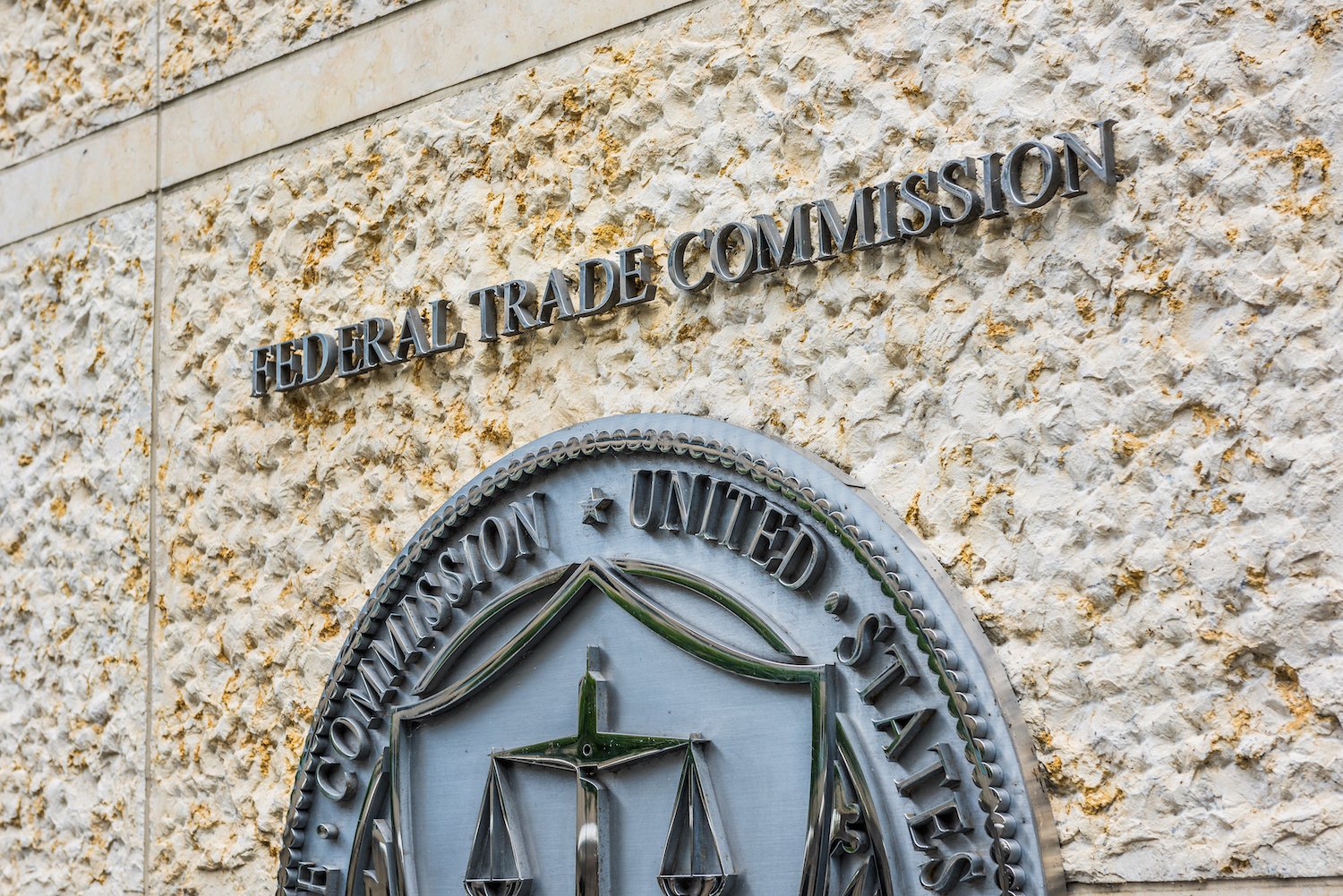
The U.S. Federal Trade Commission (FTC) has created a Blockchain Working Group to examine the ways in which the technology, particularly cryptocurrencies, will affect its objectives.

“We believe this working group is an important step to ensure the FTC can continue its missions to protect consumers and promote competition in light of cryptocurrency and blockchain developments,” Neil Chilson, the agency’s acting chief technologist, wrote in a blog post Friday.

The group will aim to “build on FTC staff expertise in cryptocurrency and blockchain technology through resource sharing and by hosting outside experts.” It will also strive to improve coordination and communication of enforcement actions both within the agency and externally.

The creation of the group coincided with an FTC announcement that it is pursuing a lawsuit against four individuals associated with bitcoin Funding Team and related operations My7Network and Jetcoin, who allegedly used bitcoin in fraudulent “chain referral schemes” – the first case of its kind for the agency.

“It is no surprise that fraudsters might use cryptocurrencies in their scams,” Chilson wrote of the case in Friday’s blog post, continuing:

“As the primary federal general consumer protection agency, the FTC has seen this pattern before. Fraudsters often attempt to capitalize on the excitement and confusion around hot new technologies, and they are quick to dress up old schemes in the clothes of the latest and greatest innovations.”

The FTC has been involved the crypto industry since 2015, when it filed its first cryptocurrency-related case over an app containing mining malware. It has since prosecuted at least one other crypto-related lawsuit, and held a public forum on blockchain technology in 2017.

In February, the commission published a blog post that outlined the risks associated with cryptocurrency investments for consumers.

The FTC is not the first government agency to form a blockchain working group. The State Department announced a similar initiative in January of 2017. Additionally, the Financial Stability Oversight Council, which assesses risks to the financial system, announced that it formed a cryptocurrency-focused working group in January of this year.

FTC image via Shutterstock

The leader in blockchain news, CoinDesk is a media outlet that strives for the highest journalistic standards and abides by a strict set of editorial policies. CoinDesk is an independent operating subsidiary of Digital Currency Group, which invests in cryptocurrencies and blockchain startups.

Published at Mon, 19 Mar 2018 15:30:18 +0000

Regulation[wpr5_ebay kw=”bitcoin” num=”1″ ebcat=”” cid=”5338043562″ lang=”en-US” country=”0″ sort=”bestmatch”]


Previous Article

Stellar Goes In On Lightning with 2018 Launch Target

Next Article

Ovato to Revolutionize the Loyalty and Rewards Industry

You might be interested in …

Programmer Gets 16 Months Jail Time for Bitcoin Laundering Scam

Yuri Lebedev, an immigrant from Ukraine, was sentenced to 16 months of jail for his role in a bitcoin scam that used an illegal bitcoin exchange, Coin.mx, for laundering money for a global hacking ring.


No matter how smart or lucky a criminal is, they usually end up facing the long arm of the law. The latest perpetrator to face justice is Yuri Lebedev, a Florida programmer who had emigrated to the US from Ukraine as an exchange student when he was 16. Now he’s being sentenced to 16 months in jail for his role in a bitcoin scam featuring the illegal exchange, Coin.mx.

Using Technology for Criminal Enterprise

Yuri Lebedev is 39, married, and the father of three children. He’s also the tech guru behind Coin.mx, an illegal bitcoin exchange that authorities say laundered money for a global hacking network. The court found that Yuri Lebedev did not actually launder any funds himself or be personally involved in any hacking, but he was found guilty of setting up and maintaining the illegal exchange.

The group behind Coin.mx targeted financial and publishing firms, such as JPMorgan and Dow Jones & Co., to steal customer data. They then targeted millions of victims to spam “pump and dump” penny stock schemes. The cryptocurrency they received for their attacks was then laundered through the Coin.mx exchange. Yuri Lebedev had set up an array of servers to process the transactions, which were disguised to banks as restaurant delivery charges and online purchases of collectible items in order to be converted into cash. The actual operator of Coin.mx was Anthony Murgio, who was sentenced to 5 1/2 years of prison. The man behind the hacking scheme itself is Gery Shalon, an Israeli citizen, who was recently released from jail after agreeing to pay of fine of $403 million USD.

Shining Opportunity Squandered

As for Yuri Lebedev, he explained his part in the scheme as wanting to create “cutting edge technology” and build something “that would make me exceptional.” He added that he “got carried away.” However, he is lucky in that he did not get the full ten years that he was facing.

It’s a sad twist as Yuri Lebedev had done a lot to improve his lot in life. He was born in Russia and raised in Ukraine. He was abandoned by his alcoholic father when he was 8 and raised by his mother, who was a scientist. He came to the US as an exchange student when he was 16. He graduated from Valdosta State University with degrees in physics and computer science, and he then went on to gain a Masters of Science and Physics from Florida State University. As one could see, Yuri Lebedev is an extremely bright individual and actually didn’t need to turn to crime for money.

An interesting twist on the federal case is that the judge ruled that Bitcoin is money. US District Judge Alison Nathan ruled:

Bitcoins are funds within the plain meaning of that term. Bitcoins can be accepted as a payment for goods and services or bought directly from an exchange with a bank account. They therefore function as pecuniary resources and are used as a medium of exchange and a means of payment.

Do you think that Yuri Lebedev squandered his opportunity by being part of a bitcoin scam? Does such laundering schemes hinder the wider acceptance of cryptocurrency? Let us know in the comments below.


Images courtesy of Pixabay, Flickr, and Public Domain Pictures.

The post Programmer Gets 16 Months Jail Time for Bitcoin Laundering Scam appeared first on Bitcoinist.com.

The Crypto Show: Jeff Berwick & Danny From Acapulco

On tonight’s episode of “The Crypto Show,” Danny joins us from Jeff Berwick’s house in Acapulco. Jeff gives us the rundown on the upcoming fourth annual Anarchapulco Conference in Acapulco, including some of the speaker highlights, first and foremost among them, Ron Paul. We talk about some of the topics and themes for this year’s conference, the workshops and extracurricular activities, and some of the other things that attendees can expect this year. We also discuss the future of bitcoin and what are some promising altcoins in Jeff’s opinion. Lastly, Danny fills us in on some Dash ATMs that he is helping to get installed locally here in Austin, Texas, as well as on the work that he is doing with a local orphanage in Acapulco.

Sponsored by: Dash, CryptoCompare and Defense Distributed

Links

LogosRadioNetwork

https://www.amazon.com/dp/1119365597/ref=cm_sw_r_sms_c_api_IQPczbQHWJKP8

TheCryptoShow

FreeRoss

Social Media

The Crypto Show on Facebook

@TheCryptoShow

@The_Crypto_Show

@the_crypto_show instagram

The Crypto Show YouTube

Tip with Crypto

BTC: 139R6K7fxTYaFf2aXTid84Le1ayqMVvSCq

Dash: XoeHNrTMKcLWxZpKfUnDMpRbHFNgFmRrLF,LTC: LUTJtk4QqXLiDkK8pDKK3jM73VVwbp7oSr

ETH: 0x10cfd6916832566e82b3ab38cc6741dfd7e6164fo