Case Sensitivity and Its Impact on bitcoin Security Measures
When dealing with bitcoin transactions, attention to detail is crucial, especially . A single typo or mistake in the character casing can lead to irreversible losses. bitcoin addresses consist of a mix of uppercase and lowercase lettersand entering them incorrectly can result in sending funds to a completely different wallet address or even a non-existent one. This oversight not only risks your funds but can also lead to an increase in fraudulent activity in the bitcoin network.
To further understand the gravity of case sensitivity, consider a scenario where you’re copying a bitcoin address from a website or application. The address you receive might be a perfect replica except for the case of a few letters. In such cases, you might assume the address is correct without double-checking, which is why users are encouraged to verify by reading it aloud or using a checksum mechanism to ensure accuracy. Another common mistake is failing to distinguish between uppercase I, lowercase L, and the number 1, which can easily be confused and lead to errors.
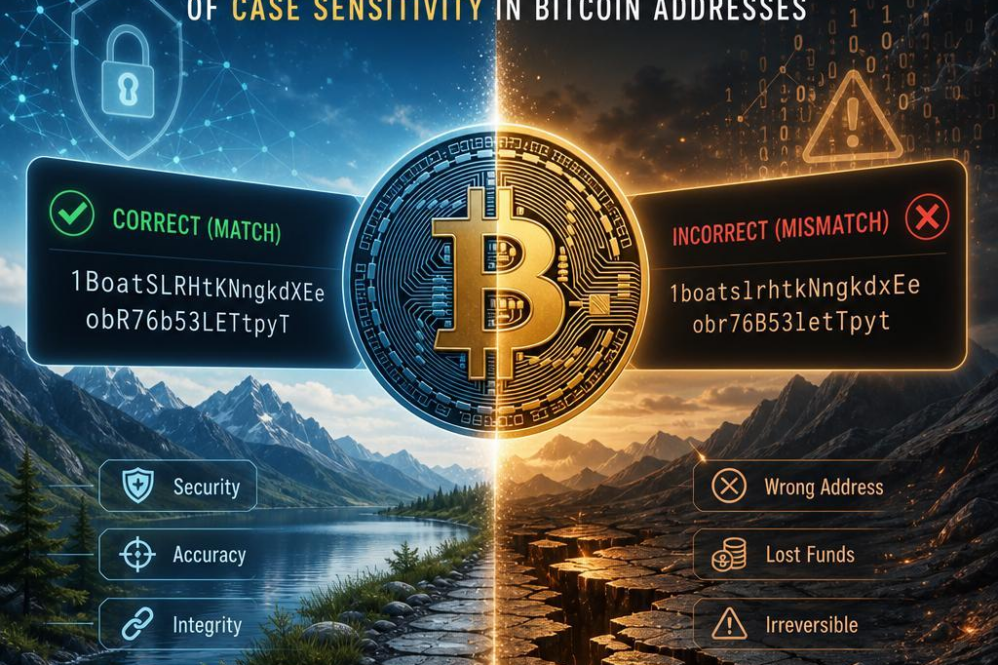
Maintaining case sensitivity in bitcoin addresses is a critical aspect of personal security practices, but implementing it also adds another layer of protection against casual fraud.As an example, scammers may attempt to create addresses that look very similar to legitimate ones, hoping that users will type addresses incorrectly. However, the combination of strict case sensitivity and diligent user behavior can mitigate these risks.Below is a simple comparison highlighting the importance of case accuracy in a few common mistaken entries:
| Correct bitcoin Address | Incorrect Typo Example | Result of Sending Funds |
|---|---|---|
| bc1q… | BC1q… | Funds will go to a different address. |
| 1KJ…1 | 1k… | Transaction may be rejected or go to a non-existent wallet. |
| 38…1B | 38…1b | Can possibly be directed to a scam wallet. |
The Anatomy of bitcoin Addresses and the Role of Case Sensitivity
When discussing bitcoin addresses, it’s crucial to understand that they’re not just strings of random letters and numbers but a precise structure built to ensure openness and security within the blockchain network. A bitcoin address typically consists of a series of alphanumeric characters, starting with the prefix “1” or “3” for legacy and P2SH addresses, respectively, and more recently, addresses starting with “bc1” for the newer Bech32 format. Each address is unique and irreversible once linked to a bitcoin transaction, making the accuracy of entering these addresses paramount.
The intricacies of bitcoin addresses are underscored by the sensitive role that case sensitivity plays in their construction and validation. Unlike most human-readable strings, bitcoin addresses are case-sensitive, meaning a small uppercase “C” can drastically change an address from valid to invalid.This critical feature adds a layer of complexity and duty for users, who must ensure precision when copying and pasting these addresses to avoid losing funds due to a simple oversight. A single incorrect uppercase or lowercase letter can result in funds being sent to the wrong address or funds becoming inaccessible.
To illustrate the importance of case sensitivity even further, consider the subtle yet meaningful differences between uppercase and lowercase characters in bitcoin addresses. An example of how a single character variation can affect an address is provided in the table below. Notice how one uppercase character can alter an address entirely when compared to its lowercase counterpart, leading to potential financial losses due to misdirection or errors.
| A Address | B Address |
|---|---|
| abc1… | aBC1… |
Mitigating Risks: Best Practices for Handling bitcoin Addresses
Case sensitivity is a critical aspect when handling bitcoin addresses, as even a slight oversight in uppercase and lowercase letters can lead to massive consequences. A single mismatched letter can result in funds being sent to the wrong address,often making recovery impossible. To ensure you manage your bitcoin addresses correctly,start by being meticulous about the characters you enter. Double-check every single address before finalizing a transaction. You can also use address verification tools that automatically check for case sensitivity and other common errors, offering a safeguard against costly mistakes.
Another best practice involves maintaining robust records of your transactions and addresses. Keep detailed logs of all addresses both receiving and sending bitcoin. If you ever suspect an error or if you need to reference old transactions, having a comprehensive log is invaluable. never rely solely on your memory. Rather, use a secure and encrypted digital wallet that logs all of your addresses and transaction details. This not only reduces the risk of human error but also helps in managing a large number of addresses more efficiently. Implement a system where you regularly review and update your address records, ensuring they are accurate and up-to-date.
consider diversifying your method of address verification. Apart from the traditional practice of manually checking each character, you can adopt a combination of manual and automated methods. use checksums or other validation techniques that quickly scan and confirm an address’s integrity. Moreover, educate yourself and those who handle your bitcoin addresses about the importance of case sensitivity. Conduct regular training sessions or workshops to reinforce these critical practices. By integrating these strategies, you substantially reduce the risks associated with incorrect bitcoin addresses, safeguarding your investments more effectively.
Case Sensitivity in bitcoin Transactions: A Comprehensive Guide
Case sensitivity is a critical aspect of handling bitcoin transactions due to the unique format of bitcoin addresses. Each bitcoin address, a string typically composed of 26-35 alphanumeric characters and a few special characters, is case-sensitive. This means that while “1A2b3cD” might be a valid address,”1a2B3C” would most likely be invalid. Understanding the nuances of case sensitivity is essential,especially as mistaking a capital ‘B’ for a lowercase ’b’ can lead to funds being sent to the wrong address or worse,funds being lost entirely.
To minimize such errors, it is vital to pay close attention to the display of bitcoin addresses, especially those with a mix of uppercase and lowercase letters. A small oversight,such as using an incorrect letter case,can result in irreversible financial losses due to bitcoin’s decentralized nature. It’s a common practice among bitcoin users to copy and paste addresses to avoid any manual input errors,but even then,double-checking the pasted address before confirming the transaction is crucial.
Using third-party services or tools to verify that the address matches the expected format can also provide an additional layer of security. While these measures go a long way in ensuring that you’re sending funds to the correct address,staying vigilant is the most effective safeguard.Consider setting up mnemonic phrases or seed words that outline the specific case requirements for the address. This can help in identifying potential discrepancies before funds are irreversibly sent. Below is a simple table that highlights the importance of case accuracy in a typical bitcoin transaction scenario:
| Stage of Transaction | Importance of Case Sensitivity |
|---|---|
| Address Entry | Ensures funds are sent to the intended recipient without errors. |
| Cross-Verification | Reduces risk of misaddressing transactions due to case-related mistakes. |
| Completion | Confirms that the transaction has the correct case to ensure its validity. |
Ensuring Accuracy: Tools and Techniques for Verifying Case Sensitivity
When dealing with bitcoin addresses, accuracy is paramount.A single character mistake, notably can result in funds being sent to the wrong address. This is why developers and users alike rely on a range of tools and techniques to ensure their addresses are exactly as they should be. For instance, checksums are an invaluable method for verifying the integrity of bitcoin addresses. By running a checksum, you’re essentially checking that no characters, particularly case-sensitive letters, have been altered or misread.
A popular approach among developers is to use software tools like the bitcoin Address Decoder. This tool checks if a given address is lowercase, which is the standard for bitcoin addresses (although some wallets allow uppercase characters). Another option is to manually compare the address against the original source, such as a seed phrase or a written backup, but be wary of any discrepancies in case sensitivity. Moreover, web-based tools such as Blockchain.info’s bitcoin Address Lookup offer a rapid way to double-check addresses, but always exercise caution with external services.
Tables can also serve as a handy reference when dealing with case sensitivity. For instance,a simple table comparing the hexadecimal format of letters with their lowercase and uppercase values can provide a concrete visual aid. | Hexadecimal | Lowercase | Uppercase | | — | — | — | | 61 | a | A | | 5A | z | Z | This table highlights the binary difference, emphasizing why case matters when you’re dealing with alphanumeric strings in bitcoin addresses. Remember, no tool is foolproof; user diligence remains crucial in preventing errors.