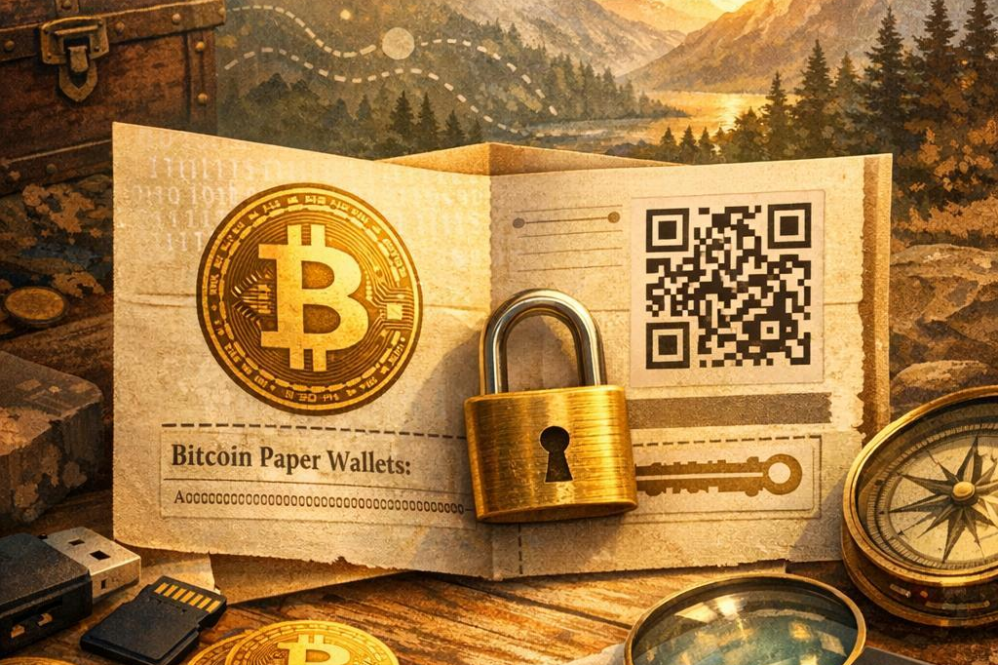
Understanding the Fundamentals of bitcoin Paper Wallets
bitcoin paper wallets offer a unique method for securely storing cryptocurrency by fully disconnecting private keys from the digital sphere. unlike online wallets, they are generated offline and typically printed on physical medium, such as paper, thereby eliminating risks associated with hacking, malware, or phishing attacks. This offline storage is especially valuable for long-term holders who want to minimize exposure to cyber threats.
Creating a paper wallet involves generating a pair of cryptographic keys: a public key, which functions as your bitcoin address for receiving funds, and a private key, necessary to access or spend those funds. These keys are usually represented as QR codes alongside the alphanumeric strings, facilitating easy scanning for transactions while also maintaining security by keeping the keys offline. It is essential to produce paper wallets on a secure, malware-free device and ideally offline, to avoid interception or leakage of your private keys.
Paper wallets the advantages of:
- Enhanced Security: Complete isolation from the internet dramatically reduces hacking risks.
- Cost-Effectiveness: No need for expensive hardware; a simple printout suffices for cold storage.
- Longevity: Properly stored paper wallets can remain secure for years without degradation.
| Aspect | Paper Wallet | Online Wallet |
|---|---|---|
| Security | Very High (Offline Storage) | Moderate to Low (Internet Exposure) |
| Accessibility | Offline, Requires Physical Access | Anytime, From Any device |
| ease of Use | Requires Manual handling | User-Pleasant Interfaces |
Security Advantages and Risks of Offline storage
Storing bitcoin offline via paper wallets offers substantial security benefits by isolating private keys from online vulnerabilities. Since these keys never touch an internet-connected device, risks such as hacking, malware, and phishing attacks are drastically minimized. By keeping the private keys physically secured, users can prevent unauthorized digital access, making paper wallets a highly effective method for long-term cold storage.
However, offline storage carries inherent risks that demand careful consideration. Physical damage or loss-due to fire, water, or accidental disposal-can permanently erase access to the stored funds. Additionally, the process of generating the wallet must happen in a secure environment, as exposure during creation could compromise the keys. Unlike online wallets,recovery options are almost non-existent unless backups are meticulously maintained.
| Security Aspect | Advantages | Risks |
|---|---|---|
| digital Exposure | Eliminates hacks and malware | None, if properly generated offline |
| Physical Handling | Complete control over access | Prone to theft, loss, or destruction |
| Backup Necessity | Simple physical duplication possible | Human error in duplicating or storing backups |
- Enhanced privacy: No digital footprint linking keys to users
- Complete ownership: Absolute control of funds without third parties
- Vulnerable to physical threats: Requires secure environment and handling
Step-by-Step Guide to Creating a bitcoin Paper Wallet Safely
To begin creating your bitcoin paper wallet, start by choosing a trusted and secure offline environment. Ensure your computer is disconnected from the internet to prevent any potential hacking attempts during the wallet generation process. Use a reputable paper wallet generator, preferably one you can download and run locally rather then an online service. This precaution significantly reduces exposure to malicious scripts or phishing attacks. Print the wallet on a high-quality, acid-free paper to preserve the longevity of the physical copy.
Next, follow these essential steps carefully:
- Generate your key pair: Use the offline tool to create a unique public and private key.
- Print the wallet: It should clearly display the QR codes and alphanumeric keys for easy access and backups.
- Verify the printout: Double-check the private key against the generator output to ensure accuracy.
- Secure storage: Place the paper wallet in a waterproof, tamper-proof sleeve or safe to guard against physical damage or theft.
| Step | Action | Purpose |
|---|---|---|
| 1 | Use offline generator | Prevent online compromise |
| 2 | Print wallet securely | Physical backup with easy access |
| 3 | Store properly | Protect against loss or damage |
Best Practices for Storing and Managing bitcoin Paper Wallets
Secure storage begins with the physical protection of the paper wallet itself. It is critical to keep the paper wallet in a cool, dry place, away from direct sunlight, moisture, and high temperatures that could cause fading or damage. To add layers of protection, consider using a protective sleeve such as a plastic or laminate cover, but avoid lamination that uses heat which can distort the ink. Many enthusiasts recommend storing wallets inside fireproof and waterproof containers or safe deposit boxes to guard against natural disasters and theft.
Handling and accessibility require careful procedures to maintain confidentiality and usability. Always generate paper wallets from trusted, offline, and open-source software sources to ensure the security of private keys during creation. Never share images or digital copies of your wallet, as any exposure online compromises security. It is advisable to create multiple copies of the wallet and store them in geographically separate locations, enabling redundancy without increasing risk.When accessing funds, ensure your environment is malware-free and offline when importing keys into a wallet application to avoid leaking sensitive facts.
| Best Practice | Benefits | Key Considerations |
|---|---|---|
| Offline Generation | Minimizes exposure to hacking | Use verified offline tools and USB drives |
| Multiple Copies | Prevents loss from physical damage | Store copies in separate secure locations |
| Physical Security | Protects from fire,water,and theft | Use fireproof safes or bank safety boxes |
