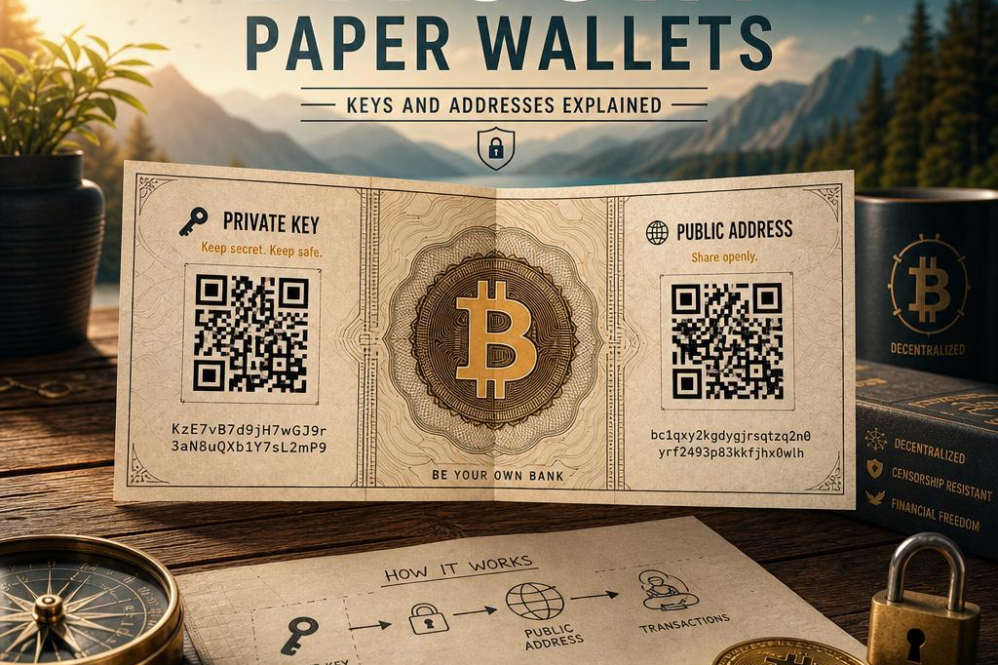
The Fundamentals of bitcoin Paper Wallets and Their Security Benefits
bitcoin paper wallets represent a essential approach to cold storage by physically printing the private keys and public addresses onto paper.This method ensures that the keys remain completely offline, safeguarding them against digital theft and hacking attempts. By generating a wallet in an air-gapped habitat (a computer disconnected from the internet), users create a secure hold of their cryptocurrency private keys – the essential secret required to authorize bitcoin transactions.
Key components of paper wallets include:
- Public Address: A hash of the public key shared with others for receiving bitcoin.
- Private Key: The cryptographic secret permitting the spending or transferring of funds.
- QR Codes: Machine-readable formats for easier scanning and importing into wallets.
Consider the following table to visualize their roles:
| Element | Description | Security Benefit |
|---|---|---|
| Public Address | Used to receive bitcoin | Can be shared openly without risk |
| private key | Used to spend bitcoin | Never exposed online, mitigating hacking |
| Paper Medium | Physical storage of keys | Immune to digital breaches but must be protected physically |
decoding the relationship Between Private Keys and Public Addresses
private keys serve as the cornerstone of bitcoin ownership, acting as secret codes that grant absolute control over the funds in a bitcoin paper wallet. These keys are essentially large, randomly generated numbers that must be kept confidential at all times. With the private key, users can authorize transactions, proving ownership without revealing sensitive data publicly. because anyone with access to the private key can spend the bitcoins, it is imperative to store it securely offline, often on paper wallets or hardware devices, rather than online platforms vulnerable to hacking.
Conversely, public addresses are the user-amiable representations derived from the private key, functioning like a digital bank account number. These addresses are generated through complex cryptographic algorithms, transforming the private key into a string of characters for receiving bitcoins. Importantly, public addresses can be safely shared and distributed, enabling others to send bitcoins without compromising security. This one-way relationship ensures privacy and trust within the blockchain network, where the address acts as the visible identifier while the private key remains concealed.
| Key Aspect | Private Key | Public Address |
|---|---|---|
| Function | Authorize transactions | Receive bitcoins |
| Visibility | must remain secret | Publicly shareable |
| Format | Random large number | Encoded string |
| Security Risk | High, if exposed loses control | Low, only for receiving |
Understanding the mathematical and cryptographic link between these two components is crucial for anyone delving into bitcoin paper wallets. The private key generates the public address through one-way cryptographic hashing and filtering processes that assure the integrity and uniqueness of each wallet. This asymmetric relationship not only underpins the security model of bitcoin but also enables safe and verifiable transactions across the blockchain network. Essentially, your private key is the master keyand your public address is the digital mailbox to which bitcoins are delivered.
Step-by-Step Guide to Creating and Safely Storing a bitcoin Paper Wallet
To begin the process, first generate a bitcoin paper wallet using a reputable offline tool. This ensures your private keys are created in a secure environment, free from internet vulnerabilities. Typically, the tool will produce two critical components: the public address and the private key. The public address is what you share to receive bitcoins,while the private key grants access to spend them. Never share or expose your private keyand always use offline methods such as a freshly booted live USB system to generate these keys for optimum safety.
Once generated,it’s crucial to carefully print or write down the wallet details. Use high-quality, water- and fade-resistant paper or even consider specialized archival materials. To further enhance security, store your paper wallet in a physically secure location-such as a fireproof safe or a safety deposit box. Many users also create multiple copies, stored in geographically separate locations, to mitigate risks like theft, physical damageor loss. avoid digital copies that could be hacked or compromised.
Below is a simple overview of the key elements of a bitcoin paper wallet with recommended best practices for storage:
| Wallet Element | Description | Storage Suggestion |
|---|---|---|
| Public Address | Recipient address to receive bitcoin | Can be freely shared; store with the wallet |
| Private Key | Secret code to spend bitcoin | Keep offline; store securely and never share |
| QR Codes | Scannable format of keys and addresses | Print clearly; avoid smudges or damage |
| Paper Quality | Material for wallet printout | Use archival paper or similar durable material |
best Practices for Managing and Using Paper Wallets to Protect Your Investments
Maintaining the security of your paper wallet starts with proper storage. Store your wallet in a waterproof, fireproofand tamper-evident container to protect it from physical damage and unauthorized access. Avoid leaving it in easily accessible places-think like a bank vault rather than a desk drawer. Additionally, consider making multiple copies of your paper wallet and storing them in geographically diverse, secure locations to ensure recovery in case of local disasters.
When it comes to using your paper wallet, limit exposure by minimizing the frequency of transactions. Each time you “sweep” or import the private key to spend funds, the risk of digital compromise rises. Preferably, move your funds into a hardware wallet for everyday use after initial withdrawal, rather than spending directly from the paper wallet. always use trustworthy wallet software when accessing your paper wallet’s keys and verify that you are operating offline or using secure, air-gapped devices to prevent hacking attempts.
| Best Practices | Why It Matters |
|---|---|
| Use strong encryption before printing | adding a password layer protects against theft if the paper is found |
| Do not share your private keys online | Private keys must remain confidential to prevent theft of funds |
| Regularly verify wallet integrity | Ensures your keys and addresses remain intact and accessible |