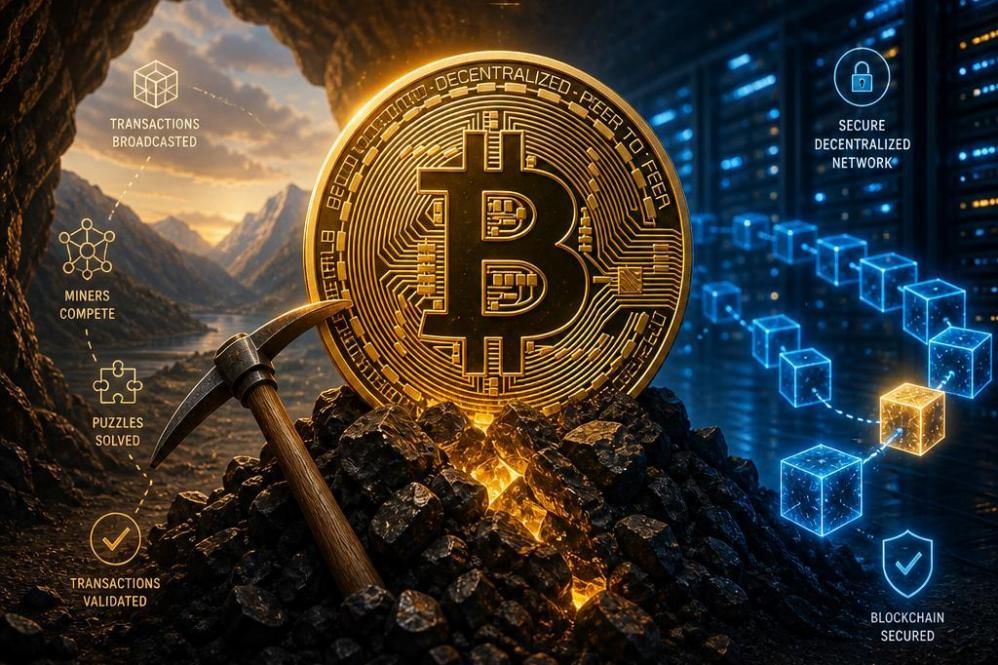
The Mechanics of bitcoin Mining Explained
When it comes to the heart of bitcoin, mining is a crucial piece of the puzzle, driving the network’s validation process and serving as a backbone for security.This activity is not about extracting gold or other precious metals from the earth but rather about using powerful computers to solve complex mathematical problems. Miners aim to be the first to find a solution, a process that confirms transactions and adds them to the blockchain, the public ledger that records every bitcoin exchange.
At the core of the mining process is the concept of proof of work. When a miner successfully solves one of these problems, they create a new block.This block contains a batch of transactions, along with the solution itself. The solution is a unique hash that must meet certain criteria set by the bitcoin network. This is where the idea of cryptographic puzzles comes from, as miners use algorithms to generate hash functions quickly until they find one that fits. To add a block, miners must use a tremendous amount of computational power, making it an extremely resource-intensive endeavor.
To keep the system fair and distributed, bitcoin’s protocol dynamically adjusts the difficulty of the mining puzzles. This difficulty level changes every 2,016 blocks, or roughly every two weeks, depending on the network’s total computing power. A more substantial amount of computing power means a higher difficulty, maintaining a balanced pace of block creation. Miners don’t operate alone but often join mining pools, collaborative groups that share their computing resources and split the rewards from blocks they collectively mine. This pooling enhances the efficiency and reliability of the process, allowing many individuals to contribute to and benefit from the network’s growth.
Ensuring Integrity Through Transaction Validation
bitcoin mining plays a crucial role in ensuring the integrity and security of transactions within the blockchain network. Validators, often referred to as miners, are responsible for verifying transactions and adding them to the blockchain. They do this by solving complex mathematical puzzles, which not only validates transactions but also maintains the trust and reliability of the entire system. Without these checks, the bitcoin network would be vulnerable to fraudulent activities and double spending.
Miners operate a process called proof of work,where they race to solve cryptographic puzzles that are generated based on the latest transactions in the network. The miner who solves the puzzle first gets the opportunity to validate the batch of transactions and add them to the blockchain. This validation process is essential because it prevents fraudulent transactions from being added to the blockchain, ensuring that all transactions are legitimate and secure. The triumphant validation also comes with a reward of newly minted bitcoins for the miners.
To ensure the integrity of transactions, miners must adhere to strict rules and follow the decentralized protocol of the bitcoin network. They must use powerful computers to solve the puzzles, which consumes meaningful amounts of electricity and computational resources. This rigorous process requires a consensus among the network participants, making it nearly unachievable for a single entity to manipulate the transaction history.In essence, the complexity and decentralized nature of bitcoin mining act as a safeguard, ensuring that the network remains robust and reliable.
Securing the Blockchain Against Threats
Secure your digital assets by understanding the fundamental aspects of . While blockchain technology inherently offers a high level of security through its decentralized nature, it is not immune to external threats or vulnerabilities. A critical layer of protection lies in the hands of miners, who play a pivotal role in maintaining the integrity of transaction records and preventing potential attacks.
To mitigate the risk of attacks, such as double-spending or Sybil attacks, miners must rigorously validate transactions and protect the blockchain from tampering.This process involves verifying the authenticity of each transaction within a block before it is added to the ledger. Transaction validation is achieved through the consensus mechanism, typically Proof of Work (PoW) in the case of bitcoin. Miners compete to solve complex mathematical puzzles as a proof of their contribution to the network’s security.
Preventive measures extend beyond transaction validation. An essential step is ensuring that the nodes participating in the network are secure and up-to-date. Malicious actors frequently enough attempt to infiltrate through outdated nodes to compromise the integrity of the blockchain. Regularly updating software, using robust security protocols, and implementing multi-factor authentication are crucial steps to fortify the network. educating users on best practices reduces the risk of common threats like phishing and malware attacks.
Optimizing Mining Operations for Efficiency
Efficient mining operations are not just about processing transactions and maintaining the integrity of the blockchain; they’re also crucial for profitability and sustainability in the bitcoin ecosystem. Operators must focus on reducing energy consumption and increasing computational efficiency to stay competitive in an ever-evolving market. One approach to achieving this is by optimizing the hardware used in mining operations, ensuring that rigs are equipped with the latest and most energy-efficient mining equipment.
Another critical factor is the management of the network infrastructure. This includes optimizing the connection between mining rigs and the internet to minimize latency and improve transaction validation speeds. Internet connectivity is vital for the mining nodes to stay informed of the latest transactions and blocks, ensuring they operate at peak efficiency. A stable and fast internet connection can substantially impact the mining rig’s ability to validate transactions and secure the blockchain.
Lastly,operational efficiency can be enhanced through better management practices and software solutions. As an example, monitoring tools and automated software can definitely help manage the workload and identify inefficiencies in the mining process. Implementing proper cooling systems to manage heat, which is a byproduct of high-performance mining equipment, is also essential. Proper cooling not only extends the life of the equipment but also prevents costly downtime.