

March 31, 2026

Capitalizations Index – B ∞/21M

Tidbits: Peter Todd on Passphrase Memorization, Antonopoulos Explains Transaction Fees

Tidbits: peter todd on passphrase memorization, antonopoulos explains transaction fees

Tidbits: Peter Todd on Passphrase Memorization, Antonopoulos Explains Transaction Fees

Todd recommends memorizing random passphrases, antonopoulos explains transaction fees

Tidbits is a roundup of talking points from across the cryptosphere. In this edition, Peter Todd suggests memorizing randomly generated passphrases to secure recovery keys. Amaury Séchet explains how the BCH community faces an uphill battle with adoption, and Andreas Antonopoulos explains why transaction fees don’t show up as a transaction output in the block explorer. 

Also read: Hollywood Actor Kevin Connolly Directs New Television Pilot ‘Cryptos’ 

Peter Todd Recommends Memorizing Randomly Generated Passphrases

Cryptographer Christopher Allen recently asked his followers if they keep redundant copies of their own recovery keys. One commentator responded to the thread, arguing that it was safe to keep multiple copies of recovery keys as long as they are properly protected by a good passphrase. Adding to that train of thought, bitcoin pundit Peter Todd explained that it was important to use and memorize randomly generated passphrases to protect recovery keys. Todd also practices this himself, because unauthorized access of recovery keys is riskier than losing access to them.

Amaury Séchet on BCH’s Uphill Battle With Adoption

bitcoin ABC lead developer Amaury Séchet has explained how he has been warning the crypto community about negative merchant adoption since 2017. In the past, BTC users were able to purchase Dell computers, Steam games and goods from numerous merchants with BTC.

Séchet went on to explain that BCH has fixed the issues that caused merchants to stop accepting BTC as a means of payment, but the BCH community is now facing an uphill battle to reboot merchant adoption. He finished the thread on a hopeful note, explaining that increased merchant adoption could help hasten the return of a crypto bull market.

Andreas Antonopoulos Explains Transaction Fees

Mastering bitcoin author Andreas Antonopoulos recently put out a video explaining why transaction fees don’t show up as a transaction output in block explorers.

Antonopoulos explained that transactions do not include a specific output for fees in the block explorer, because fees are not explicitly part of the transaction. One of the reasons fees are not part of the output is that the address of the miner is unknown at the time the transaction is made. Also, if fees were an output, then there would be an extra output in every transaction. So if there were 4,000 transactions in a block, there would be 4,000 extra outputs for fees. This would not make sense, as all the fees of the transactions in that block would go to one miner or one mining pool.

Instead, fees are just the difference between the inputs and outputs of a transaction. bitcoin users create a fee in a bitcoin transaction by funding the transaction with inputs, and then spending less than the entire amount. Whatever is left over goes to miners as fees.

What do you think about the concept of memorizing randomly generated passphrases? Let us know in the comments below.


Images courtesy of Shutterstock.


bitcoin is a decentralized digital currency that enables near-instant, low-cost payments to anyone, anywhere in the world. bitcoin uses peer-to-peer technology to operate with no central authority: transaction management and money issuance are carried out collectively by the network. Read all about it at wiki.bitcoin.com.

The post Tidbits: Peter Todd on Passphrase Memorization, Antonopoulos Explains Transaction Fees appeared first on Bitcoin News.

Published at Wed, 23 Jan 2019 09:59:40 +0000
Previous Article

Bitcoin Price Analysis: BTC Won’t Go Quietly, Risk of Rally Grows

Next Article

McAfee to Lead 2020 Presidential Campaign ‘in Exile’ After Alleged IRS Indictment

You might be interested in …

After Second Hack This Year, South Korean Exchange Youbit Closes Down

After Second Hack This Year, South Korean Exchange Youbit Closes Down

South Korean exchange Youbit announced on its website today that it is closing down after a hack early Tuesday, December 19, 2017, that resulted in the loss of 17 percent of its assets.

The exchange, previously known as Yapizon, did not indicate how many bitcoins or other cryptocurrencies were stolen or what the total fiat value of the attack amounted to, but it was enough to lead to bankruptcy.

This was the second hack the exchange suffered this year. A prior attack in April 2017, resulted in the loss of 3,816 bitcoins, worth around $5 million at the time.

Youbit said hackers broke into its hot wallet, the online account used to pay out cryptocurrencies instantly. While hot wallets offer greater convenience, they also put funds at greater risk because they are connected to the internet.

The remaining coins were kept offline in a cold wallet, the exchange said, resulting in no additional losses. The exchange indicated that customers could withdraw up to 75 percent of their balances, and the rest would be tallied out after the final settlement.

Korea Internet & Security Agency (KISA), the state agency that responds to cyberattacks, is investigating the incident, as reported in Reuters. KISA has maintained that North Korean hackers were behind the first hack.

Chris Doman, threat engineer at software security company AlienVault, told bitcoin Magazine, he suspects BlueNoroff, a subgroup of North Korea’s cyber crime group Lazarus is responsible for the second Youbit attack. Lazarus is known for the November 2014 hack on Sony Pictures Entertainment, one of the biggest corporate breaches in history.

While attacks by Lazarus have mainly been aimed at social disruption, recent reports indicate the group is increasingly going after money. With the value of bitcoin surging to all-time highs, exchanges are becoming a lucrative target.

“The first time I saw them target a bitcoin company was in May this year — the same month they unleashed WannaCry,” Doman said in a statement shared with bitcoin Magazine.

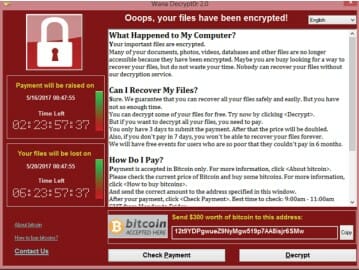
The exchange that Doman was refering to is South Korean bitcoin exchange Bithumb. Around that same time, WannaCry ransomware attacks were encrypting user’s computers and offering to de-encrypt them in exchange for bitcoin. Analysis of the techniques used in the WannaCry attacks show strong links to Lazarus.  

Doman added, “They’ve also used related malware to opportunistically mine Monero coins on compromised servers. Clearly they have a large interest in cryptocurrencies as an easy method for economic gain, as well as an opportunity to economically weaken their enemies.”

Although Youbit is one of the smaller bitcoin exchanges, the hack underscores the risk involved in leaving funds on an exchange, where control of those funds is handed over to a third party and is only as safe as whatever security measures that exchange chooses to use.

Throughout the history of bitcoin, hacks have amounted to painful losses. When bitcoin exchange Mt. Gox began liquidation proceedings in April 2014, the company announced that approximately 850,000 bitcoins were missing, an amount valued at more than $450 million at the time. In August 2016, the bitcoin exchange Bitfinex announced hackers stole approximately 120,000 BTC, worth $72 million at the time.

The post After Second Hack This Year, South Korean Exchange Youbit Closes Down appeared first on Bitcoin Magazine.

It’s officially alt season!

It’s Officially Alt Season!

It’s Officially Alt Season! This morning a plane crashed en route from Addis Ababa to Nairobi killing 157 people.  Given the cause of the crash is still unknown, and this is the second such incident […]