March 16, 2026

Capitalizations Index – B ∞/21M

Threats on Voat, Censorship-Free Reddit, Heat Up

Threats on voat, censorship-free reddit, heat up

Threats on Voat, Censorship-Free Reddit, Heat Up

Threats on voat, censorship-free reddit, heat up

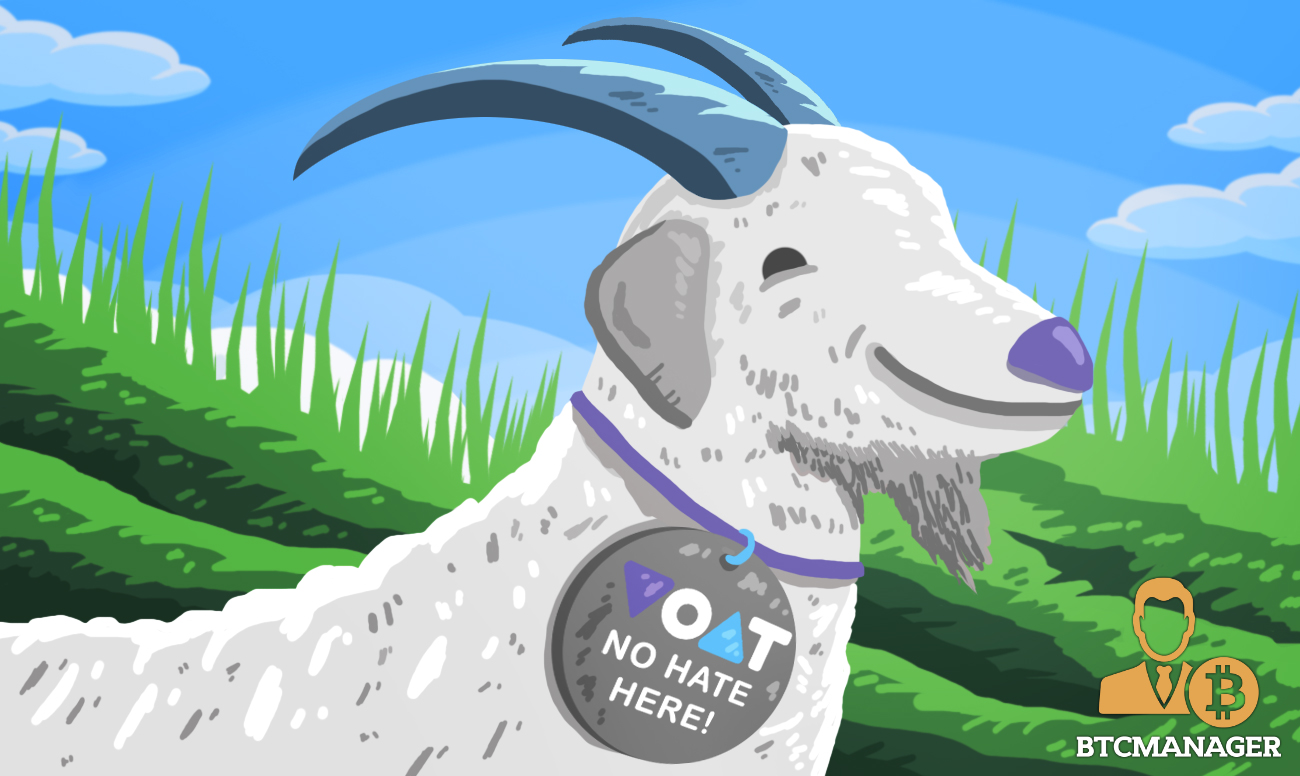
Justin Chastain, CEO of Voat, a censorship-free Reddit, said that American authorities contacted him regarding death threats posted by users on the platform. Following this, the CEO requested users to “chill on the ‘threats,’” reported Motherboard on April 26, 2019.

The Voat Community Responds

Chastain took to Voat to notify users that a U.S. agency contacted him, that he didn’t name, to warn him against the increasing content that crosses the limits to making threats. On a lighter note, he said, “We are better than this.”

He said that the platform stands for free speech, but they also need to cooperate with law enforcement and not operate outside the law. The CEO also told users that if any content is in the gray area, they might remove it upon request.

Unsurprisingly, the community didn’t take that message well. The first comment following Chastain’s request insinuated the annihilation of the Jewish people.

“The Voat user cited a 1969 First Amendment Supreme Court case involving a Ku Klux Klan leader who gave a televised speech targeting certain races, arguing that the court ruled a threat needs to be specific to be illegal. The user then gave an example of a specific call for violence against a specific synagogue on a specific day.”

The comment, as reported by Motherboard, was still up at the time of writing.

A License to Hate Mongers?

While creators who envision the concept of imparting censorship-free platforms to people for practicing free speech might not have the same ideology in the back of their mind, but they often end up fueling the fire that burns within hate mongers.

In October 2018, the Pittsburgh Synagogue shootings that caused the death of 11 people and left six injured was done by a user of Gab, another censorship-free version of Twitter, who was behind several anti-Semitic messages shared on the site.

Though the crypto community stands for censorship-free everything as far as it can be afforded, these incidents leave many questioning human instincts and whether imparting absolute freedom does more bad than good.

Like BTCMANAGER? Send us a tip!
Our bitcoin Address: 3AbQrAyRsdM5NX5BQh8qWYePEpGjCYLCy4

Published at Tue, 30 Apr 2019 22:00:05 +0000

Previous Article

Bernie Sanders Shows His True Colors in Avengers-Fueled Disney Diss

Next Article

Is Transaction Fee Mining Broken? – Ethex –

You might be interested in …

South Korea Moves to Regulate Domestic Bitcoin Trading, Exchanges

South Korea Moves to Regulate Domestic Bitcoin Trading, Exchanges

Since late November 2017, South Korea has looked to regulate cryptocurrency trading in domestic exchanges, including Bithumb, Coinone and Korbit,  The Korea Herald reports. Now, trying to tame the wave of wild cryptocurrency speculation in the country, South Korea is imposing trade bans for minors and looking for ways to impose taxes on investment returns.

South Korea is the world’s third largest market in bitcoin trading, after Japan and the U.S., and the largest exchange market for ether, accounting for more than 33 percent of its market share, according to a recent MIT Technology Review report. The country is also home to two of the top 15 global digital-currency exchanges (Bithumb and Coinone) and believed to have about one million registered daily traders in virtual currencies, which is equivalent to about one out of every 50 citizens.

This is worrying the South Korean government. In September 2017, the country’s Financial Services Commission (FSC) ordered a ban on Initial Coin Offerings (ICOs). In November 2017, the head of South Korea’s Financial Supervisory Service said that the agency was monitoring cryptocurrency trading inside the country, and the country’s National Tax Agency revealed that it was considering a value-added tax, a capital gains tax or both on cryptocurrency trades. If the plan is implemented, South Korea will become one of the few countries to tax cryptocurrency-to-cash exchanges.

The government’s concern is also motivated by the risk of cyberattacks from the country’s rogue neighbor, North Korea. According to South Korea’s National Police Agency, North Korean hackers could be targeting South Korean bitcoin exchanges.

With these newest measures, North Korean banks that offer accounts for cryptocurrency trading will have to verify the identification of new account holders and prohibit minors from opening accounts. Woori Bank and Korea Development Bank will shut down virtual accounts offered to cryptocurrency exchanges before year-end, according to the banks.

The regulators will also bar financial institutions from investing in or obtaining cryptocurrencies, and is considering ways to oblige cryptocurrency exchange operators to verify users’ real names, strengthen storage security of encryption keys, and disclose purchase price and order volumes. The authorities will also take strong-handed punitive actions against the perpetrators of cryptocurrency-related scams.

In a press release, the government said that the new regulations were necessary “to prevent a general public without expertise from suffering losses by participating in virtual currency investments that have massive fluctuations.”

These issues were discussed on Wednesday, December 13, 2017, in a meeting presided over by Hong Nam-ki, minister of the Office for Government Policy coordination, and attended by officials from the ministries of justice, finance, and science and ICT, as well as from the Financial Services Commission, the Korea Communications Commission, the Fair Trade Commission and the National Tax Service.

While some news headlines are presenting this as a catastrophic development that will shut down the cryptocurrency industry in South Korea, the initiative of the South Korean authorities is in line with current trends toward stronger cryptocurrency regulations in China, Europe and the U.S.

“A right set of regulations will rather nurture the (virtual currency) market, and we would welcome that,” Bithumb representatives told Reuters, adding that such a code of conduct could add legitimacy to the market.

The post South Korea Moves to Regulate Domestic Bitcoin Trading, Exchanges appeared first on Bitcoin Magazine.