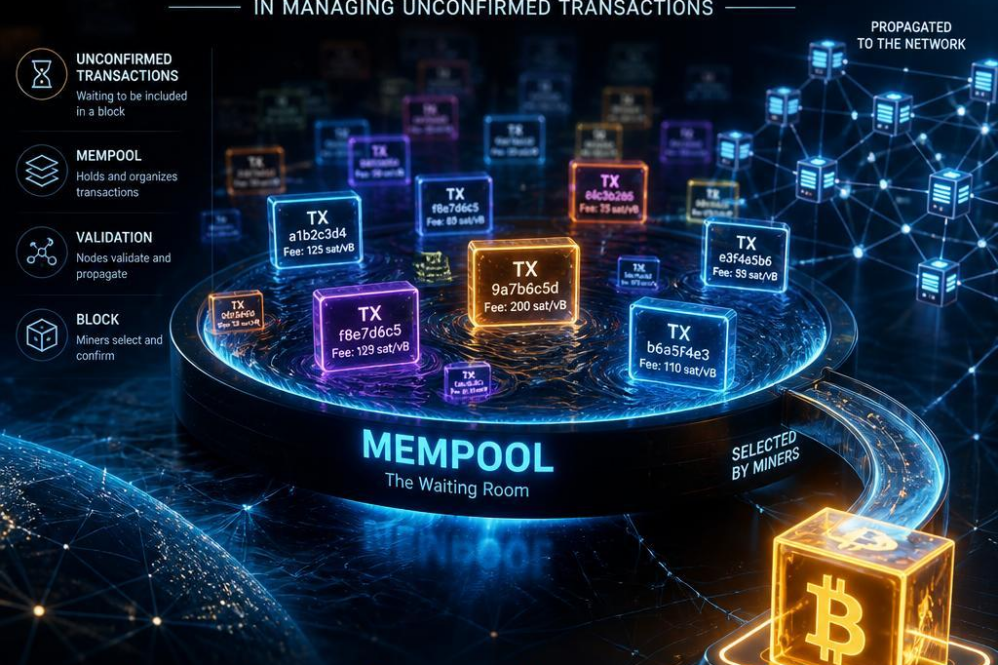
Understanding bitcoin’s Mempool Dynamics
bitcoin transactions depend heavily on its mempool to handle outstanding payments efficiently before they become confirmed transactions in a block. The mempool acts like an intermediary waiting room where unconfirmed transactions reside until miners decide which ones will be included in the next block and earn fees for doing so. When users send bitcoins, these transactions aren’t promptly accepted by nodes; instead, nodes check if the funds are available in the sender’s wallet and then hold onto the transaction for some time while it awaits confirmation.
Understanding how the mempool operates is crucial to managing bitcoin transactions effectively. Transactions enter the mempool with varying fee levels attached based on urgency and capacity of the network at that moment. Users can adjust their fees accordingly, ensuring faster confirmations during peak times when the number of unconfirmed payments surges. This dynamic surroundings requires regular monitoring to stay ahead of potential delays or cost spikes. A well-managed transaction flow helps prevent bottlenecks and ensures reliable, timely transfers.
To visualize this process better, imagine a table comparing four different scenarios in the mempool ecosystem:
| Scenario | Mempool Size (tx) | Average Fee per VByte ($) | Transaction Confirmation Time |
|---|---|---|---|
| Low Load Times: | < 50,000 | $0.01-0.02 | < 30 minutes |
| Peak Times: | > 250,000 | $0.15 or more | > 3 hours |
Such conditions highlight the importance of observing the mempool and adjusting strategies accordingly to navigate through varying network pressures without incurring unnecessary delays or excessive costs.
The Impact of Transaction Fees on Mempool Management
Transaction fees in bitcoin play a crucial role in managing the mempool and ensuring efficient transaction processing. Higher fees encourage miners to include your transaction sooner rather than later, effectively reducing the time you spend waiting for confirmation. Though, this system can introduce an economic barrier for users who wish to send smaller amounts of BTC but don’t want to pay larger fees. This dynamic often leads to fee fluctuations based on network congestion, where transactions with higher fees are prioritized over cheaper ones during periods of heavy activity.
The mempool acts as a critical holding area for unconfirmed transactions before they get picked up by miners and added to the blockchain. When this pool fills up due to high transaction volumes-or when there’s a sudden surge in fees-the backlog can stretch confirmation times significantly, affecting liquidity within both exchanges and wallets that rely on near-instantaneous confirmations. Miners aim to optimize their block space usage for maximum profit, which means they might prioritize larger transactions over smaller ones, widening the gap between those who can afford higher prices and those constrained by budget limitations.
To mitigate issues stemming from mempool congestion, some solutions have emerged. Such as, segwit (Segregated Witness) addresses allow users to reduce their transaction size, thereby lowering total cost while still getting confirmed faster than standard transactions. second-layer scaling technologies like the Lightning Network offer near-immediate settlement between participating nodes without relying on direct inclusion within blocks. These innovations reflect broader efforts within the bitcoin community to balance accessibility and performance, making it easier for everyday users to manage their finances smoothly despite high fees and variable network conditions.
Strategies for Minimizing Unconfirmed Transactions Wait Times
bitcoin’s mempool acts like an overflow tank for transactions waiting to enter the blockchain. When users broadcast their bitcoin transactions, they linger in this digital queue until miners include them in a block.A congested mempool means longer wait times as new transactions must battle older ones in line. To manage this, adopt several strategies that can significantly reduce unconfirmed transaction durations.
Firstly, consider setting higher transaction fees to prioritize your bitcoin through the crowded mempool. Including a generous fee not only gives miners an incentive but also cuts down competition from lower-paying senders. You might think of it as adding your name to various waiting lists in exchange for special treatment at different checkout counters.
Secondly, be proactive by checking the current transaction congestion and adapting accordingly.Tools like offer real-time insight into network conditions, allowing you to gauge optimal fee amounts. These insights can save both time and money in the long run.
Another effective approach is using Segregated Witness (SegWit) addresses for sending transactions.By default, bitcoin transactions are inefficient when sharing information such as signatures that don’t belong directly with the payment data itself. This method reduces the size of each transaction within the mempool without changing the actual amount. Consequently, it allows more TXs to fit inside a single block, thereby easing congestion and shortening your wait time.
| Transaction Method | Cost Efficiency* |
|---|---|
| Legacy Transactions | (5text{ LTC}) |
| SegWit-enabled TXs | (3.5 text{ LTC}) |
*emph{Assumed Cost Estimate-Actual fees vary based on network condition}
Best Practices for Scaling Application-Level Integration with Mempool Changes
When dealing with bitcoin’s mempool changes, scaling your application-level integrations becomes crucial for maintaining efficient transaction processing. As transactions flood in from various sources,understanding how to optimize your system can significantly enhance performance and user experience. Here are some best practices to consider:
Firstly, implement a robust monitoring strategy that tracks the volume of incoming transactions and the capacity of your mempool. This allows you to adjust dynamically as network conditions change. Such as, if the number of unconfirmed transactions spikes during peak times, your system can automatically allocate more resources or scale out horizontally. Incorporating alerts for unusual activity also helps prevent bottlenecks.
segmenting transaction types can provide better management and prioritization within your application. For instance, you might handle smaller, lower-value transactions differently from larger ones that require confirmation quickly. Implementing a tiered system ensures each type of transaction receives the attention it needs without unnecessary delays for other users. This approach not only improves efficiency but also enhances trust with clients who rely on timely confirmations.
Lastly, consider integrating rate limiting to prevent overwhelming your mempool and causing congestion issues. By setting limits based on past data or real-time analysis, you guard against unpredictable spikes that can disrupt service stability. A flexible rate limiter should balance between allowing sufficient throughput and enforcing necessary restrictions to maintain system health. This ensures smoother operations even under high load conditions.
Navigating Mempool Congestion: Insights and Recommendations for Users
Navigating bitcoin’s mempool efficiently is crucial for users who wish to ensure their transactions are processed with minimal delay and cost-effectively. Mempool congestion, a common issue in the bitcoin network during periods of high transaction volume, can significantly impact users’ experience by causing delays and increasing fees. To help users better manage unconfirmed transactions amidst a crowded mempool, here are several insights and practical steps.
Firstly, understanding how the mempool works is key to dealing with congestion effectively. Transactions get queued up in the mempool based on their fee rates; higher-fee transactions generally move faster through the queue. Users can monitor current network conditions using popular tools like or BlockCypher. These platforms provide real-time data that show average transaction fees and typical confirmation times, allowing users to make informed decisions about how they submit transactions.
Secondly, consider using fee estimation services offered by various bitcoin wallets. Tools like bitcoin.com Wallet’s “Smart Fee” feature automatically adjust your fee based on current network conditions. This not only helps in avoiding overpaying but also ensures priority during heavy loads. some wallets offer segregated witness (SegWit) transaction support, which can be more efficient and cost-effective compared to legacy transactions.
| Type of Transaction | Typical Fee Rate ($/KB) | Estimated Confirmation Time (hrs) |
|---|---|---|
| Legacy Transaction | $1.40 | 3 |
| SegWit Transaction | $1.20 | 2 |
Lastly, implementing a strategy of patience can also be beneficial. Sometimes, waiting an extra hour or two before submitting your transaction can make all the difference in reducing fees and improving confirmation speed without sacrificing too much usability. Always keep an eye on the mempool before making crucial transactions to avoid unnecessary complications.
Navigating through bitcoin’s mempool requires both awareness and strategic maneuvering. By staying informed about current network conditions, using fee estimation toolsand employing patience when necessary, users can more effectively manage their unconfirmed transactions during times of high congestion.