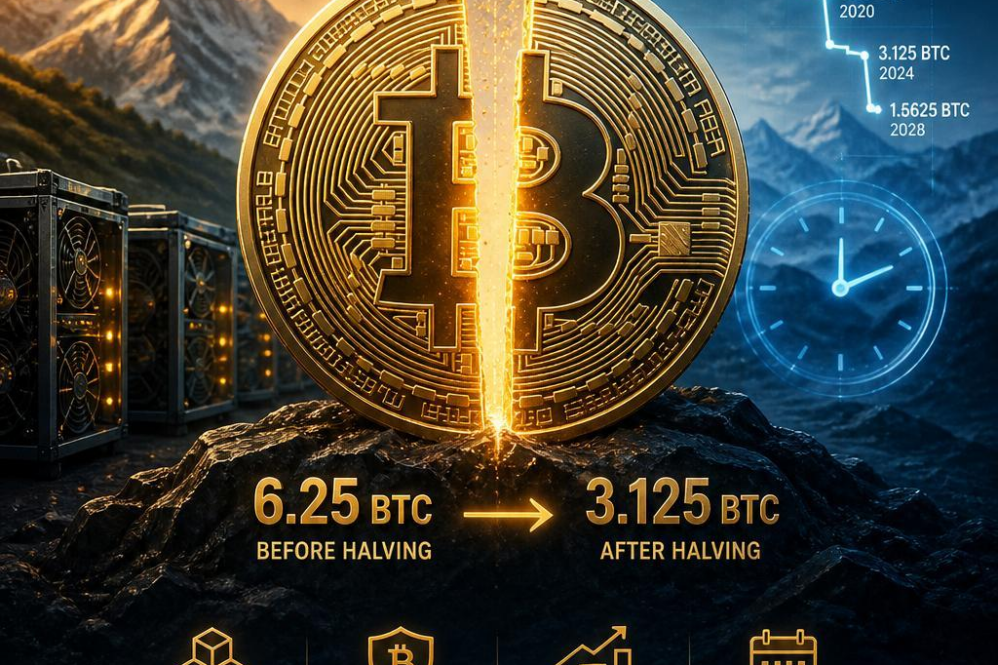
Understanding bitcoin Halvings and Their Impact on Mining
bitcoin halvings are a important event in the cryptocurrency world, where the reward for mining a block is cut in half. This process typically happens every four years and is a key part of bitcoin’s design, aiming to limit the total number of bitcoins to 21 million. When halvings occur, less efficient miners often get phased out, allowing more robust operations to dominate the landscape.
One crucial factor that comes to the fore during halvings is the increase in mining costs. These costs, which include electricity, hardwareand maintenance, remain constant despite the reduction in rewards. This scenario often forces miners to innovate and optimize their processes to maintain profitability. Miners might adopt newer, more energy-efficient hardware to lower operational expenses, or they might form mining pools to share the risk and rewards among a larger group. These strategic moves are critical for long-term survival and sustainability within the industry.
To illustrate the potential shifts in the mining industry post-halving, consider this simplified comparison.Before the halving, a miner might earn 12.5 BTC per block at a cost of $1,000 per month in operational expenses. After the halving, the reward drops to 6.25 BTC, but operational costs remain the same. This stark reduction forces miners to reassess their financial models. Many turn to more sophisticated mining rigs and pool their resources, as shown in the table below:
| Halving Pre-event | Halving Post-event | |
|---|---|---|
| Reward per block (BTC) | 12.5 | 6.25 |
| Operational Costs (USD) | 1,000 | 1,000 |
| Net Profitability (USD) | Varies based on coin price, but initially positive | Dependent on coin price, may become negative without optimization |
Strategic Recommendations for Investors Amidst Halving
Amidst the impending bitcoin halving, investors should consider several strategic recommendations to navigate through the new economic conditions that arise from reduced block rewards. First, it’s crucial to monitor how exchanges and market makers adapt their strategies. They will likely adjust their order book sizes and liquidity provisions in response to decreased mining rewards, which can impact liquidity levels and influence volatility and price action.Investors should also be cautious of potential market manipulation during this period, as lower transaction volumes during periods of low liquidity can sometimes exacerbate price swings.
Investors should explore diversifying their portfolio by adding altcoins that offer unique value propositions and potential for growth, given the shifting landscape in the crypto market. For instance, blockchain projects that are actively focused on scalability, sustainabilityor the growth of decentralized finance (DeFi) applications could present lucrative opportunities. The halving event can often draw new participants to the market, providing a window for less prominent cryptocurrencies to gain more attention and traction. However, it’s significant to thoroughly research and understand the underlying technology and community support before making any significant investment decisions.
Lastly, staying informed about regulatory developments around the world is pivotal. Governments and financial institutions continue to adjust their stances on digital currencies. Many countries are currently reassessing their approaches to cryptocurrencies,with some looking to regulate or integrate them into the existing financial framework,while others remain cautious or restrictive.Understanding these regulatory changes can help investors make more informed decisions about where and how to allocate resources effectively.
Exploring the Economic Implications of Reduced bitcoin Supply
The reduction in bitcoin’s supply through the halving process creates a complex economic situation that impacts the cryptocurrency’s value and the mining industry significantly. As fewer new bitcoins enter the market every four years, scarcity naturally drives up demand, perhaps leading to increases in the price per unit. This phenomenon is akin to the limited edition release of a product in the real world, where scarcity often translates to higher perceived value. Though, the direct impact on miners is notably stark. When block rewards drop, miners must rely more on transaction fees for their income rather than the considerable block reward. This shift requires miners to become more efficient to compensate for the lower rewards, which could lead to consolidation in the mining industry as smaller operations find it harder to compete.
The economic ripple effects of the halving go beyond just the price and the miners. As fewer new bitcoins are generated, the total supply available for new investors decreases, possibly making entry into the cryptocurrency market more challenging for newcomers. This could limit broader adoption and accessibility, as those who miss the earlier stages of the halving cycles might find themselves looking at a much higher barrier to entry than before. Moreover, the diminishing returns from block rewards encourage miners to seek out more efficient hardware and to form larger mining pools to share resources and distribute risk. This trend towards greater efficiency and scale can lead to a more centralized mining landscape, which contrasts sharply with the decentralized vision of bitcoin’s original design.
While the halving is a essential part of bitcoin’s architecture, it also introduces volatility, making it a key topic for debate within the cryptocurrency community. Critics argue that increased scarcity can lead to hyperinflationary conditions if demand exceeds the available supply, reminiscent of the dot-com bubble in the early 2000s. Proponents, however, contend that this scarcity is integral to bitcoin’s role as a store of value and a hedge against inflation. As we approach the next halving event, it’s crucial for stakeholders to understand the historical context and economic implications. Below is a simple timeline showing when previous halvings took place and their impacts:
| Halving Event | Date | Previous Block Reward (BTC) | New Block Reward (BTC) | Key Impact |
|---|---|---|---|---|
| First | November 28,2012 | 50 | 25 | Strengthened the foundation of bitcoin’s value,leading to increased adoption. |
| Second | July 9,2016 | 25 | 12.5 | Sustained price volatility and marked the growth of the mining industry. |
| Third | May 11, 2020 | 12.5 | 6.25 | Increased focus on efficiency in mining operations,leading to larger mining pools. |
