
In Thursday’s installment of The Daily, we report on a highly anticipated stablecoin project that’s failed before it’s even launched, and explore the strangely centralized world of crypto Twitter. First though, we’ll start with the news that a third party app has made it possible to pay for your Uber ride using BTC.
Also read:
Fold Brings bitcoin to Uber
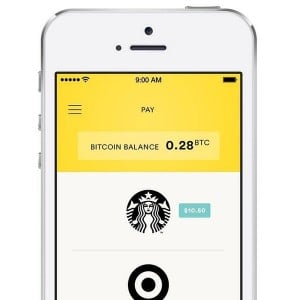 , an app dedicated to making it easy to spend BTC in the real world, has added one of its biggest integrations yet. “We are excited to welcome Uber to Fold lineup,” the team in a blog post. “You can now use bitcoin to purchase your next Uber ride. Simply select the dollar amount, send your bitcoin, and then ride safely to your next event.” The app, which also enables BTC to be spent at stores such as Starbucks and Dunkin’ Donuts, works by converting cryptocurrency into a corresponding gift card balance within the Fold wallet that can then be redeemed by scanning a code in-store.
Developers Pull the Plug on Basis Stablecoin
It’s being reported that Basis, the largest stablecoin project to date based on early stage funding, has been sunsetted. The algorithmic stablecoin, which had been categorized in the same bracket as , raised $133 million in venture funding from the likes of a16z, Bain, DCG, Metastable, Pantera Capital, Polychain, Lightspeed, and Google Ventures. The bulk of that funding is now believed to have been returned, with the Basis team reportedly having been spooked by regulatory concerns. While the technical skills of the Basis team have generally been praised within the crypto space, was convinced by the merits of their algorithmic stablecoin. Back in May, Messari Crypto’s Qiao Wang that Basis would “fail catastrophically”.
 Commenting on the rumored shutdown of Basis, Three Arrows Capital CEO Su Zhu “I hope the industry thinks more critically about what the shape of a good project is in this space. You can’t just cobble together ex-bigtech/bankers, raise [nine figures], and then pop the champagne. More importantly I hope LPs ask their VCs harder questions.” Stablecoin skeptic Preston Byrne was equally unimpressed, linking to a he had penned a year ago in which he called Basis “the worst idea in cryptocurrency.”
bitcoin Cash and Ripple Dominate Crypto Twitter
Social sentiment service has been looking at what crypto Twitter’s had to say over the last few weeks. It’s plotted the change in sentiment for the top five cryptocurrencies, with a view to extrapolating actionable insights for the benefit of traders. The platform found bitcoin cash (BCH) and ripple (XRP) to be the most active Twitter communities over the past month, the former on account of the hard fork that got everyone talking, and the latter because the Ripple army is famed for its slavish devotion to its altcoin through good times and bad. How much of that discourse comes from unique accounts, however, is debatable.

“While accounting for only 3 percent of overall trading volume, XRP accounts for 8.97 percent of total conversational volume on Twitter. On average, 50 percent of daily tweets come from unique accounts, which means that much of the conversation is driven by the same accounts,” reported The Tie. The platform shared the above image with news.bitcoin.com, which it claims “highlights how XRP has a centralized strong community.” Its acolytes might harp on about ripple’s “inherently decentralized” nature, but the coin’s community is as centralized as it gets.
What are your thoughts on today’s news tidbits as featured in The Daily? Let us know in the comments section below.
Images courtesy of Shutterstock.
Need to calculate your bitcoin holdings? Check our section.
The post appeared first on .